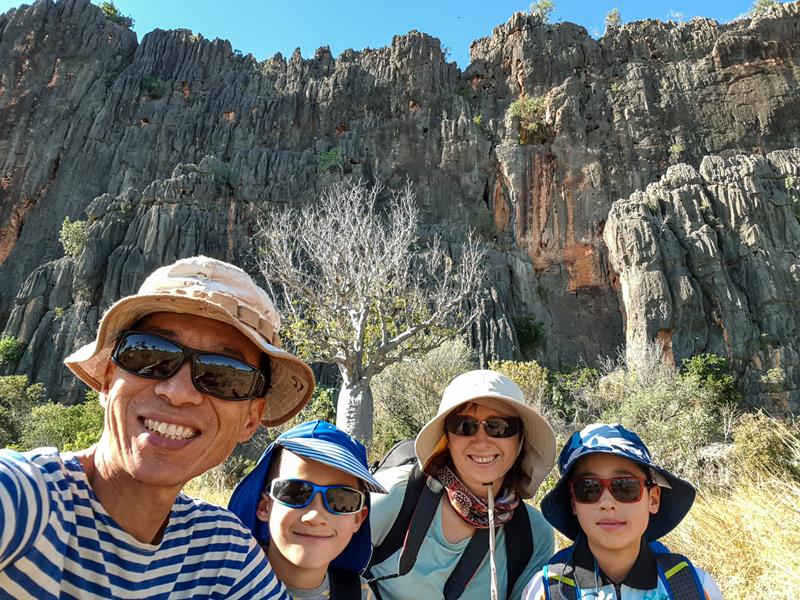
We are a family of four and are nuts about traveling. Our name reflects this! We love sharing the joy and love of traveling and adventure! Let's the fun begin!
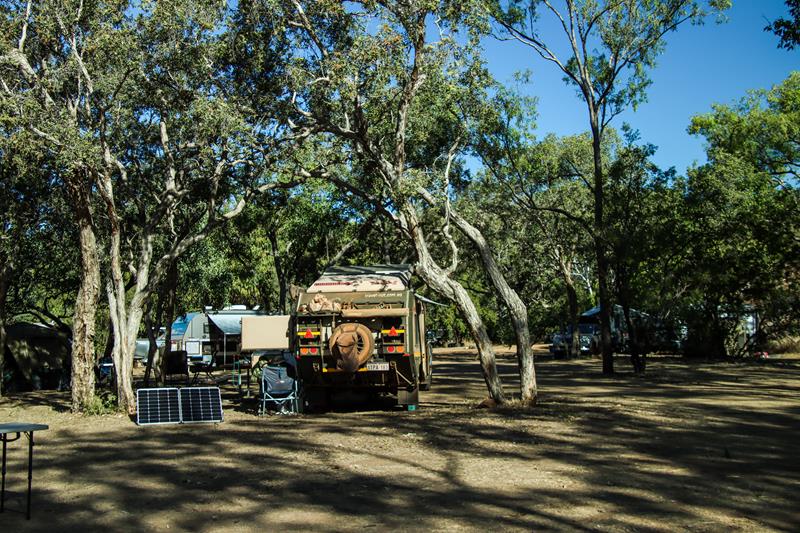
Silent Grove (Dulundi) is a popular stop on the Gibb River Road, and can be used as a base to explore nearby Bell Gorge. Roughly 19km off the Gibb River Road, it is an easy drive from Windjana Gorge. We decided to stay there 2 nights so that we could rest, enjoy and explore this place a bit more. It turned out to be one of our favourite camp grounds on the Gibb (it could have been so because we had the time to enjoy it!). It is similar to Windjana Gorge in terms of the facilities (flushing toilets, solar powered showers and tap water from the creek). Yet Silent Grove campground has a different feel with more tropical look. This is due to lush Pandanus trees, which are distinctive to the Kimberley region.
Pandanus tree fruit (above left). Crossing on the way to Silent Grove (above right).
Like Windjana Gorge campground, it is managed by DPAW and can booked online. But being very spacious you can still get a spot even if you don’t book. Silent Grove campground has a lot more shade and privacy than Windjana Gorge.
Silent Grove campground
Although not mentioned in any brochures or sign boards, there are some walks around the campground. You can climb up the rocks edging the campground for a bird eye view of the place or you can take a short walk to the creek which supplies the water to the campground. You can also walk around the campground, which is huge.
We were lucky to spot pythons there and also see beautiful Blue Water Lilies in the creek.
Silent Grove is a bird lovers paradise. Below are just only a few birds that we could take decent pictures of (bird photography being still a new hobby for us :)).
Great Bowerbird (above left). Double-barred Finch (above right).
Little Corellas
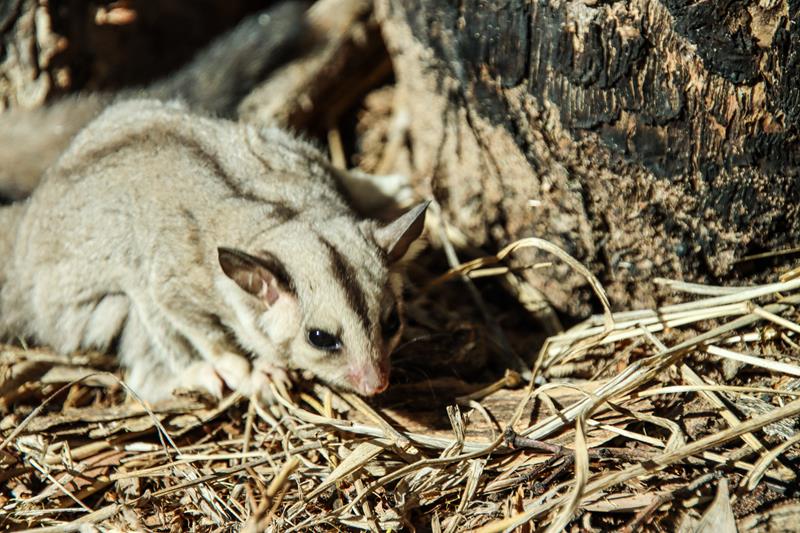
It is also a place to spot some interesting unique animals, like this Sugar Glider, that was on the Eucalyptus tree next to our camping spot. We were lucky enough to watch it feeding on the nectar of the Eucalyptus tree flowers.
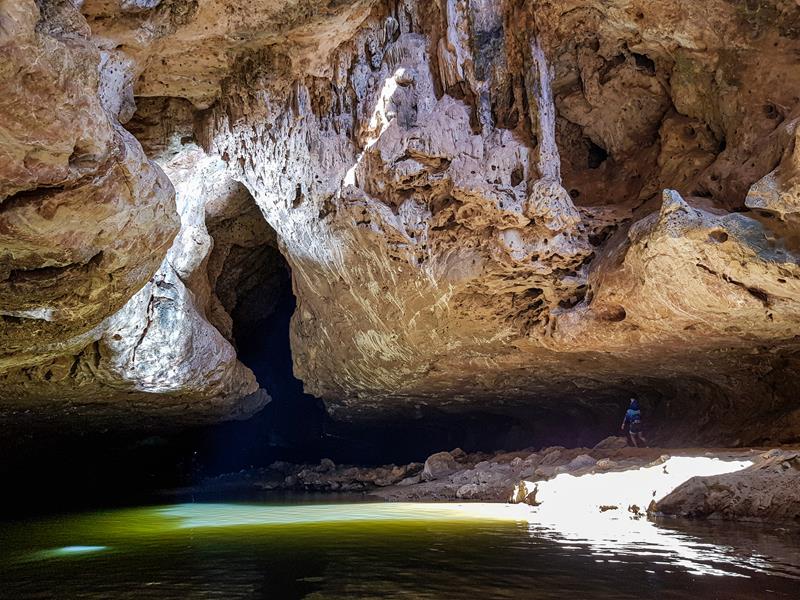
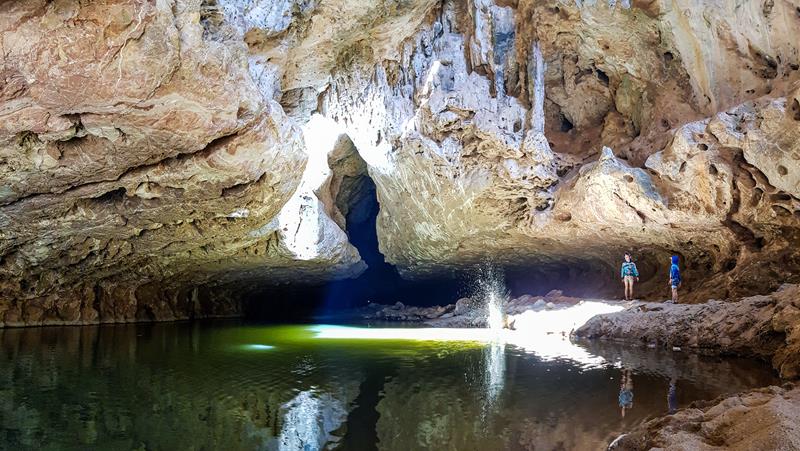
Tunnel Creek (Dimalurru) National Park is 36km south from Windajana Gorge and is a great highlight of the Gibb River Road. It takes about an hour to get there from Windjana Gorge. The time depends on your driving, vehicle and whether you are towing. You can also reach Tunnel Creek from Fitzroy Crossing. A creek flows through a tunnel beneath the limestone of the Napier Range, which is part of an extensive fossilized barrier reef formed 360 million years ago. The Tunnel has a geological significance. It also tells a legend of Jandamarra – Aboriginal freedom fighter who used the place as a hideout in late 19 century.
The Tunnel is 750 meters long, up to 20 meters high and 20 meters wide. It holds permanent pools of fresh water which inhibit fresh water crocodiles and many species of fishes. You can take an easy 400meter return Tunnel View Trail to the entrance. This is an excellent opportunity to observe the patterns, texture and colours of the limestone of the rock face. Most people feel adventurous enough to attempt Subterranean 2km return Trail (at least part of it). Here you would need to be prepared by wearing rock shoes and bathers. The trail requires you to scramble over the rocks and waddle through the water pools to get to the other side of the Tunnel. Not surprisingly, the water is chilly and sometimes deep (nearly up to the hips).
You would need at least a couple of hours to explore Tunnel Creek (excluding driving).
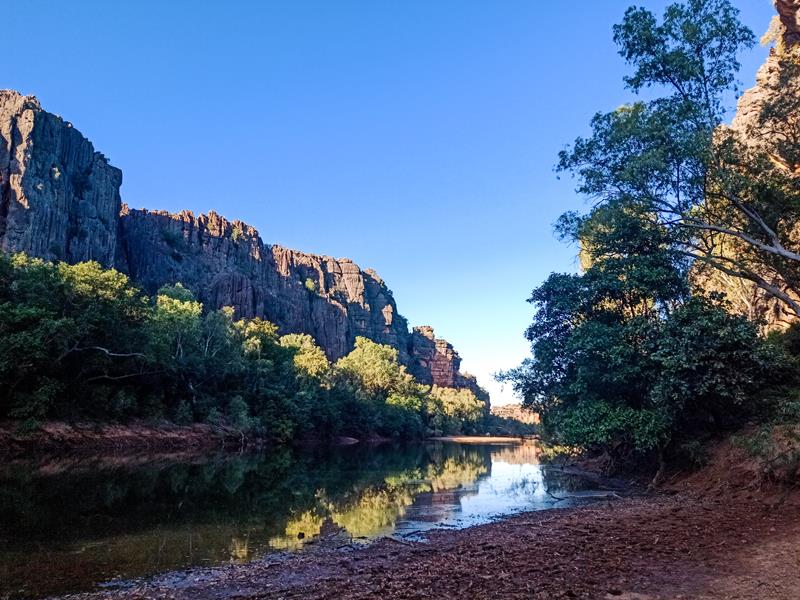
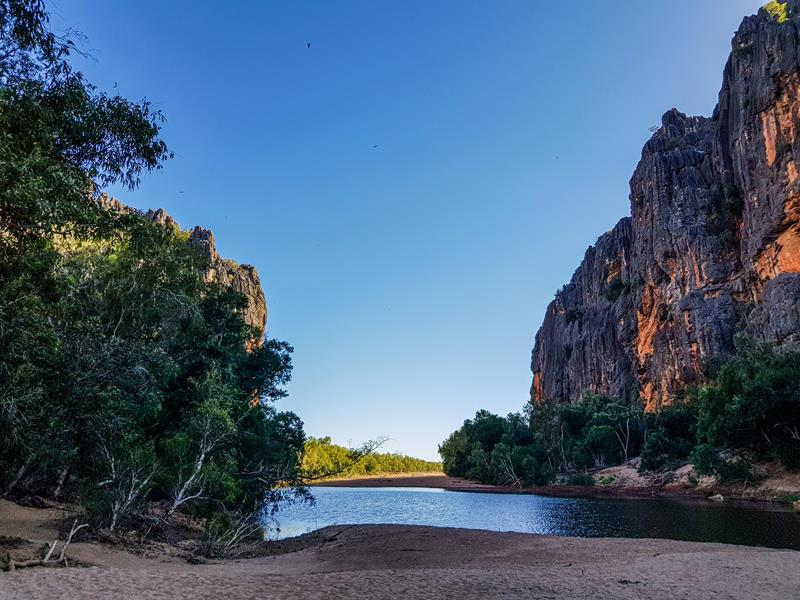
Our first stop on the Gibb River Road was Windjana Gorge (Bandilngan). Located 155km from Derby and 21km off the Gibb River Road on Fairfield Leopold Road, it was an easy drive from Derby (with 21km being the only unsealed section of the drive for us that day). Windjana Gorge is a great introduction to the whole Gibb River Road experience and in our opinion is a must.
Campground
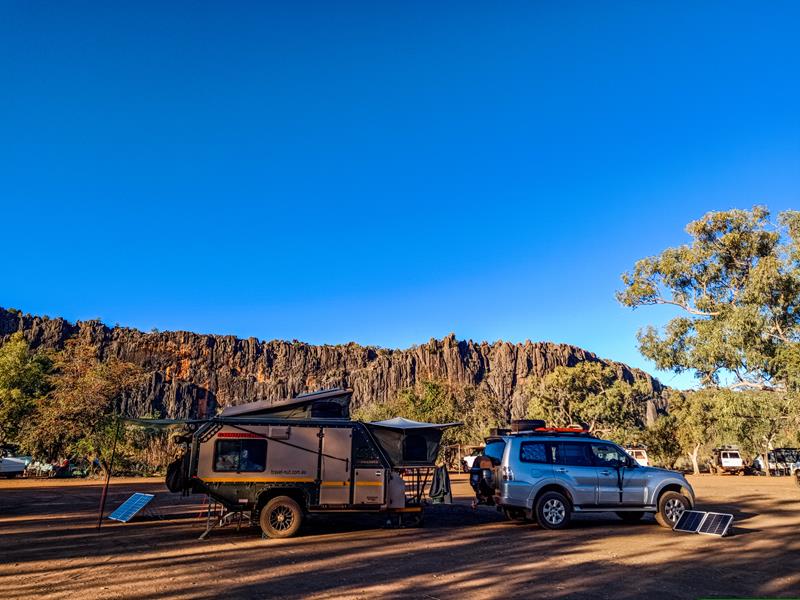
Windjana campground is very spacious. Bookings can be made online via Parks stay WA. But you can still rely on getting a spot if you arrive late and during the peak season. Just be prepared to move if you are asked by the ranger. We watched a number of campers had to move because they put their tents too close to the bush. For $17 a night per person (in 2022) you get access to clean flushing toilets, solar powered showers and tap water from the nearby creek. The showers might be hot or not – depending on how busy the campground is.
Windjana Gorge campground
Exploring the gorge
The national park entry fee (separate) allows you to explore the gorge, which is in walking distance. There are a couple of hiking trails there.
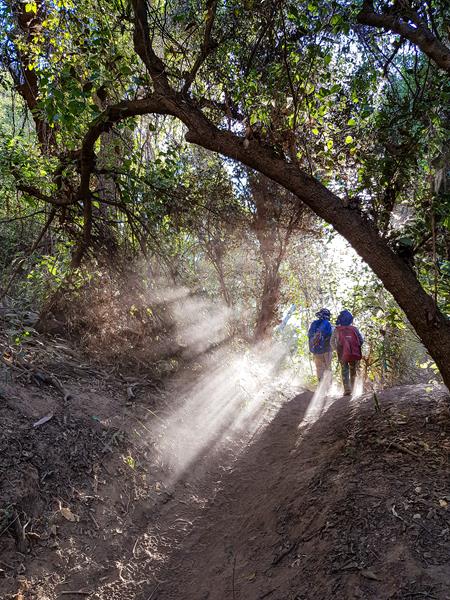
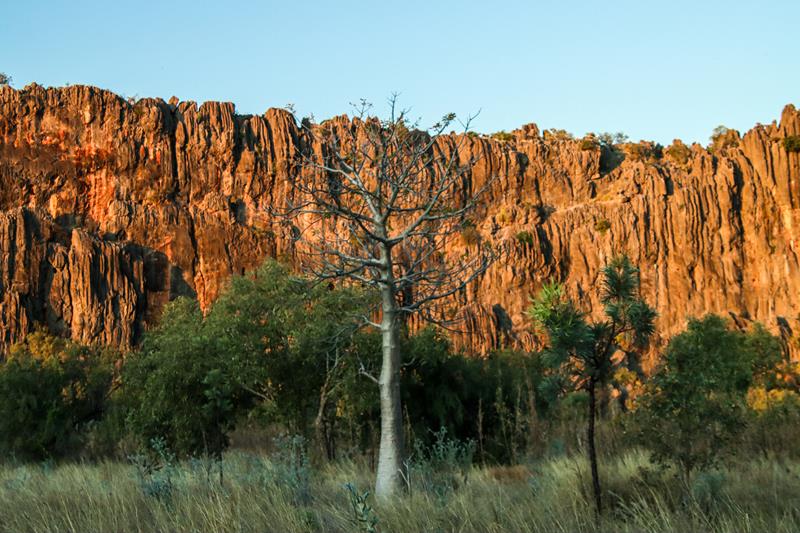
The Savannah walk is an easy 1km return loop walk that gives you a closer look at the ridges and boab trees growing there.
Walking this trail at the sunset gives you a different perspective, as the setting sun colours the rocks in orange.
The Savannah trail at sunset
The 5km return Gorge trail allows you to experience the profile of the Devonian Reef.
The trail follows the Lennard River, offering picturesque views.
Look for a fossil of Trilobite – an extinct marine arthropod, thought to be more than 250 million years old – and also and giant spiders at the beginning of the trail.
Fresh water crocodiles
Windajana Gorge is one of the best places on the Gibb River Road to see fresh water crocodiles.
There are two types of crocodiles found in Australia (and both are in Kimberley) – saltwater or estuarine crocodiles and freshwater or Johnston’s river crocodiles. Saltwater crocodiles are big (up to 7 meters long) and are dangerous to humans and we’ve only seen from the far distance. Contrary to their name, they live in fresh waters too, up to 200km away from the coast and can attack in less than a second. Fresh waters crocodiles are much smaller (not more than 3 meters long), have smaller teeth and narrow snout. They live in creeks, rivers, billabongs and are often seen sunbathing on the shore. While they are considered non-aggressive, they can bite if disturbed, so they are still better admired from the distance.
Windjana Gorge is home to many more animals, as well as birds.
A lot of people only stay for one night at Windjana Gorge and then move on. We stayed 2 nights and found that it was the right decision. When you take your time while travelling, you can appreciate the beauty of the place and notice little things you would otherwise miss. Where are we travelling next? Tunnel Creek!
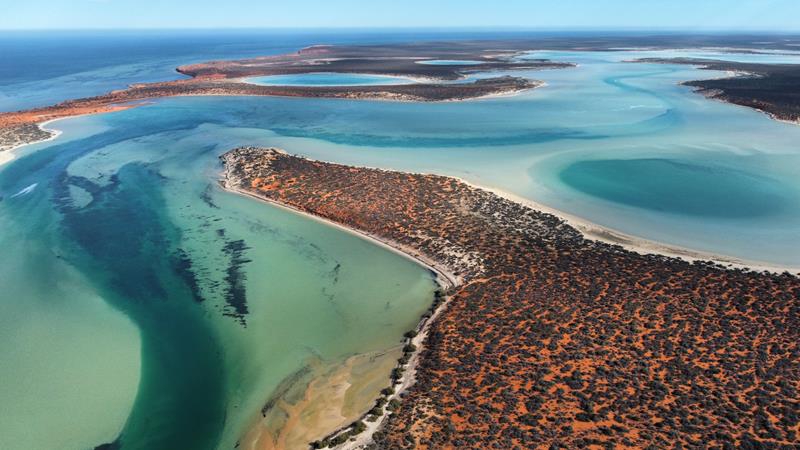
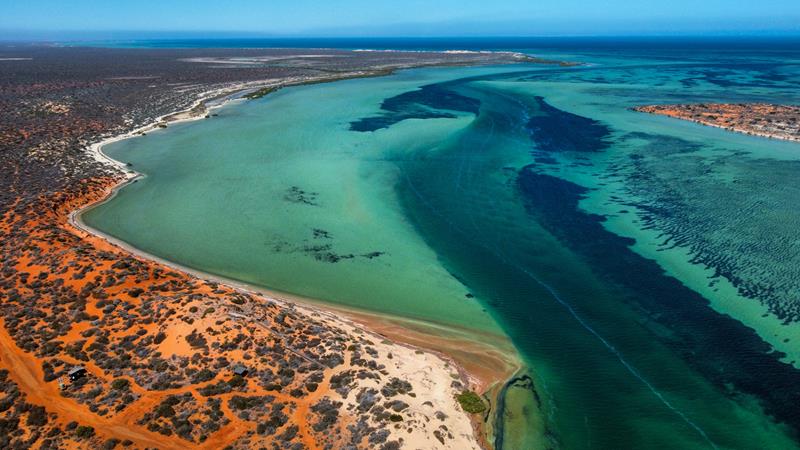
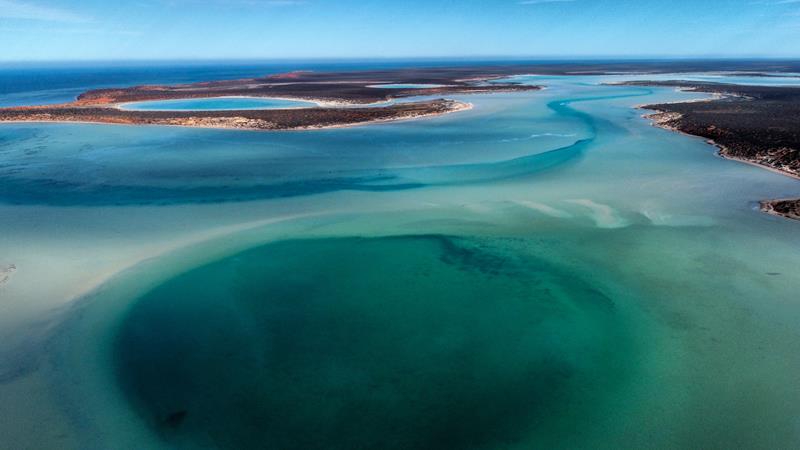
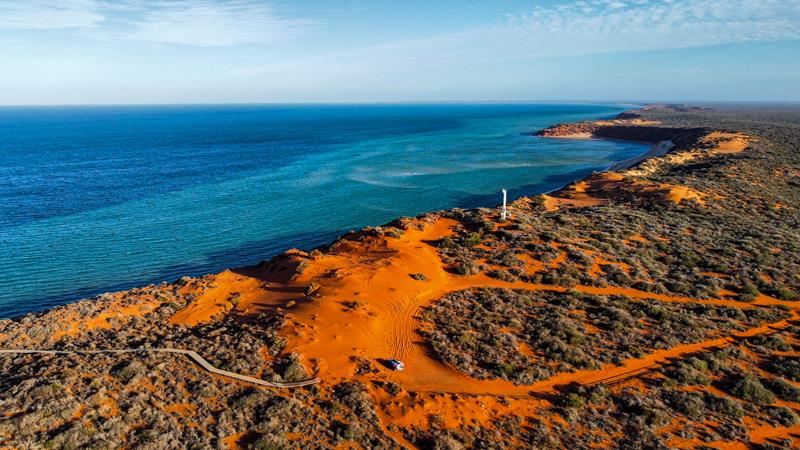
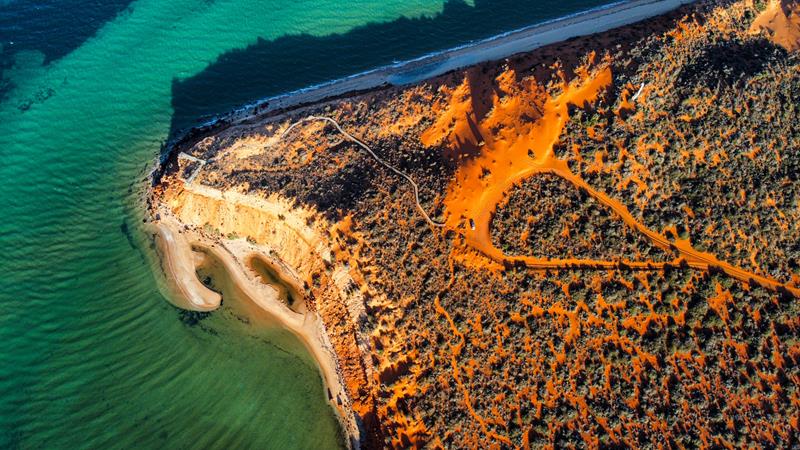
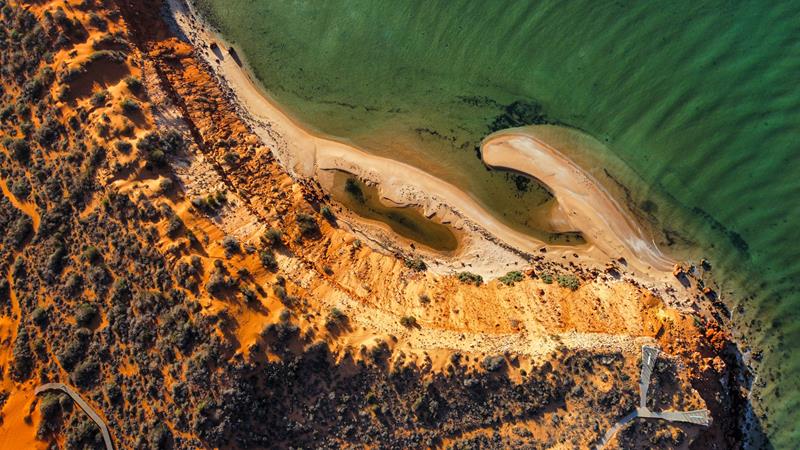
Francois Peron National Park in the Shark Bay region along Australia’s Coral Coast is one of our favourite travel destinations. It is a combination of immense raw beauty of red dirt deserts, clear blue ocean waters and white sands, rough 4WD tracks and unique flora and fauna that makes this place so attractive and captivating.
Bush camping at Francois Peron National Park
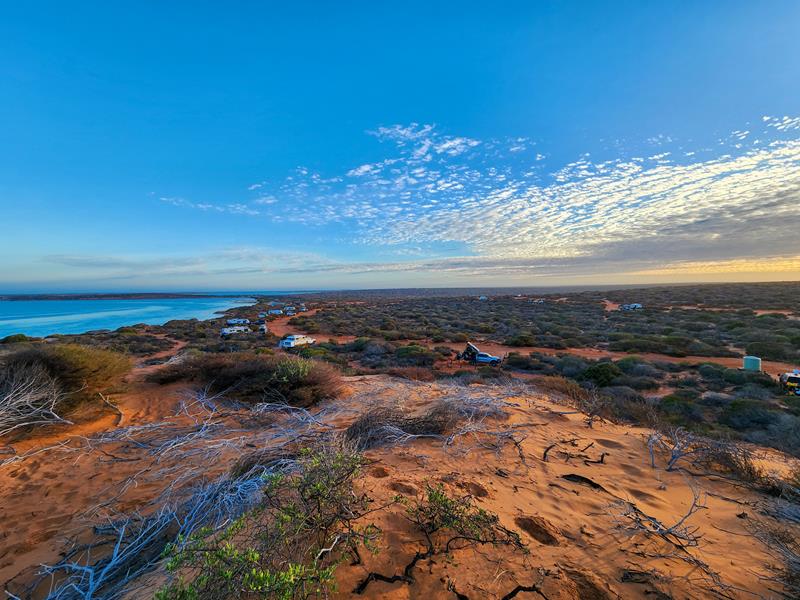
There are 5 bush campgrounds at Francois Peron National Park – South Gregories, Gregories, Bottle Bay, Herald Bight and Big Lagoon. There are only basic facilities (toilets and some campgrounds have a bbq). Bookings do not apply to these campgrounds but camping fees ($15 per night per person) and park entry fees do apply. The campgrounds are close to the beach. There is no drinking water and no rubbish bins. There is a large skip bin at the entrance to the park where you inflate and deflate the tyres. You would need a 4WD to get to those campgrounds.
G
The magic of Bottle Bay
We stayed at Bottle Bay campground in 2022 and absolutely loved our 4 day stay there!
Nature painted pictures – patterns, colours and shapes uniquely crafted by wind, rain and time.
Crafted by nature
Big Lagoon
We love Francois Peron Naitonal Park and visited it several times. Every time we endevour to stay at different campgrounds. So, in 2024 after our trip to Dirk Hartog Island we stayed at Big Lagoon.
Big Lagoon is a series of small picturesque lagoons closer to the entrance to Francois Peron National Park. You have a boat or a kayak, you can explore the little lagoons within the sanctuary zone (you can access it only by boat).
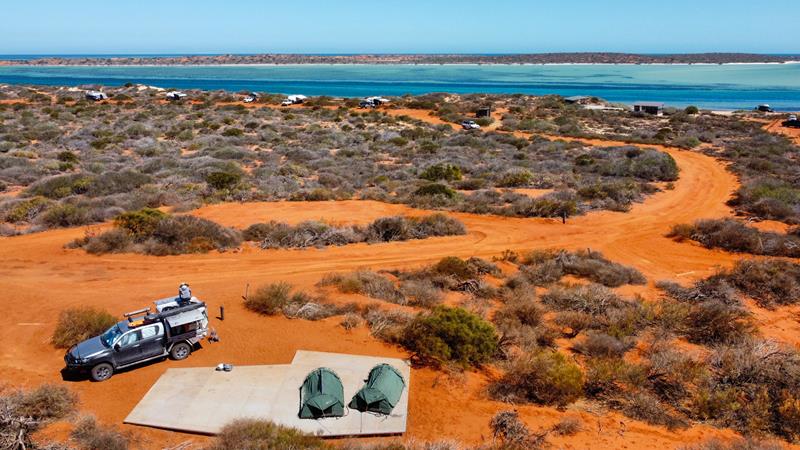
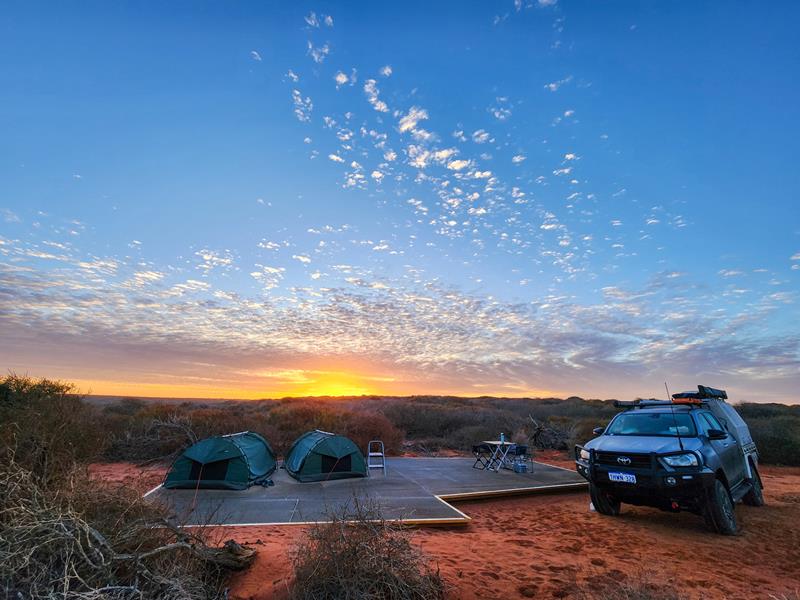
Another way to enjoy this lovely place is to have a picnic or camp there. Big Lagoon campground is the biggest within Francois Peron National Park. There are 19 sites of various sizes and layout but all are quite big. Some sites are drive through. Others have metal raised platforms for tents and swags. All sites can accommodate minimum 2 vehicles. Facilities include 4 long drop well maintained toilets in various parts of the campground. There is also adjacent day use picnic area with sheltered decking, tables, BBQs. Sites are non-bookable. You can fish from the shores of the lagoon near the campground.
Wildlife
Every morning during our stay at Bottle Bay in Francois Peron National Park we woke up to find interesting tracks on the ground and sand. Every time we tried to figure out who made those numerous tracks. We understood that the animals were nocturnal, hiding during the day, making it a complete mystery for us. We saw a beetle, but whom do the rest of the tracks belong to?
Tracks
We were lucky to see an echidna in Shark Bay (thanks to our older son, Ariel who has spotted it from the car). That is how close we managed to get to echidna before it went hiding.
Echidna
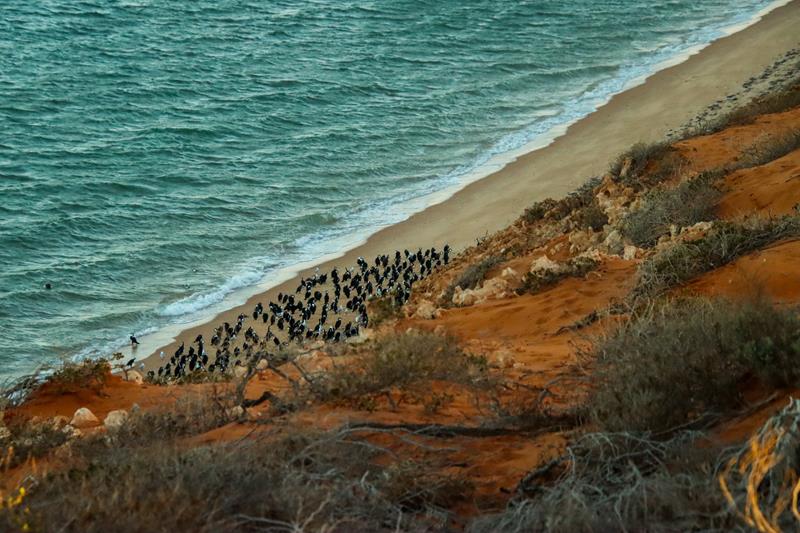
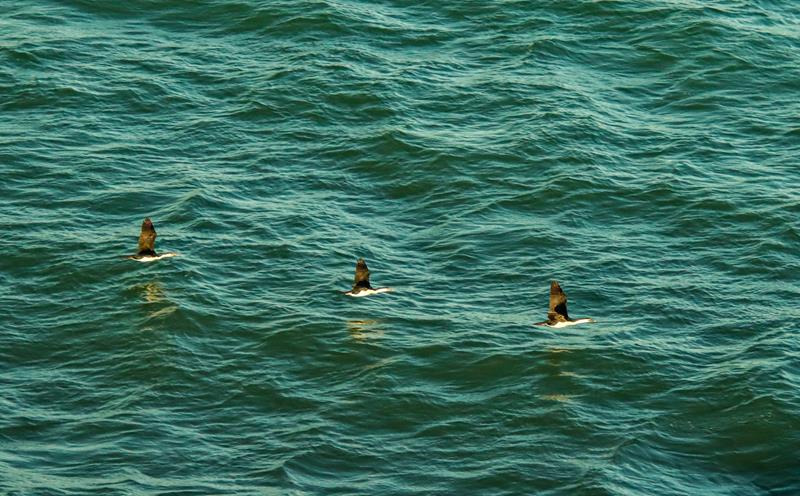
While we didn’t see many animals (but many tracks), we saw plenty of birds in Shark Bay. Pied Cormorant is quite abundant there, as is the Pacific gull, which is a very large gull native to the coasts of Australia. Interestingly, the young pacific gull is mottled-brown-greyish in colour.
Juvenile Pacific GullPied CormorantSome of the birds in Francois Peron National Park
Sunrise and sunset
When there is not enough sun during the day, looking at the pictures of sunrise helps to boost the mood. 😍
Sunrise at Bottle Bay
Sunset is equally therapeutic.
Sunset at Bottle Bay
Birridas
Birridas (also spelled Birrada) or gypsum claypans were once saline lakes, between sand dunes, isolated from the ocean. A drop in sea level dried the lakes turning them into what is now known as birridas. There are large areas of birridas in Francois Peron National Park, of different shapes and sizes (with the massive patch between Herald Bight and Gregories). Birridas look quite magnificent (probably, even more so from high above). They are among Shark Bay’s visual attractions, contributing to the region’s World Heritage status through the listing in ‘superlative natural phenomena’ category. Birridas look like they are hard but actually are soft and very unstable, so driving over them is extremely risky and prohibited.
Birridas in Francois Peron National Park
How we got bogged in Francois Peron National Park
We managed to tow our caravan safely to Bottle Bay and nearly all the way back, past the most soft and corrugated parts of the road between Cattle Well and Gregories. But just before Kraskoe’s Tank, we got bogged! There was a lot of ongoing traffic on our way back from Bottle Bay and in an attempt to consider others, we moved to the side of the track, giving way to ongoing traffic. It seems that the sand was blown into a pile and it happened to be very soft there. So we got bogged, blocking the track to a couple of vehicles behind us and ahead of us.
However, being bogged is not a big issue. It is always a test to how the vehicle can handle the terrain, as well as the test of our 4WD skills. As we were a bit more experienced now, we managed to dig ourselves (thanks to Maxtrax) within 10 minutes.
Digging out
Kids did a good job of helping out too!
Cape Peron
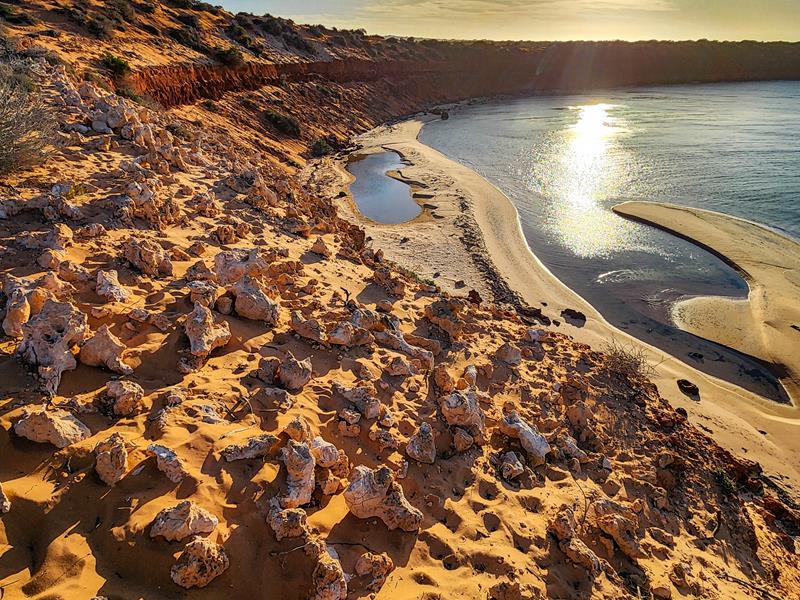
Cape Peron is at the tip of Francois Peron National Park. It is a place of contrasting colours, where red sandstone meets whitish sand and blue ocean waters. This place is abundant in wildlife. For lovers of hiking, there is Wanamalu trail, 1.5km one way, which connects Cape Peron and Skipjack Point.
Interestingly, Wanamalu is Aboriginal name for Cormorants, which can be seen gathering in crowds along the water’s edge at Cape Peron.
Skipjack Point
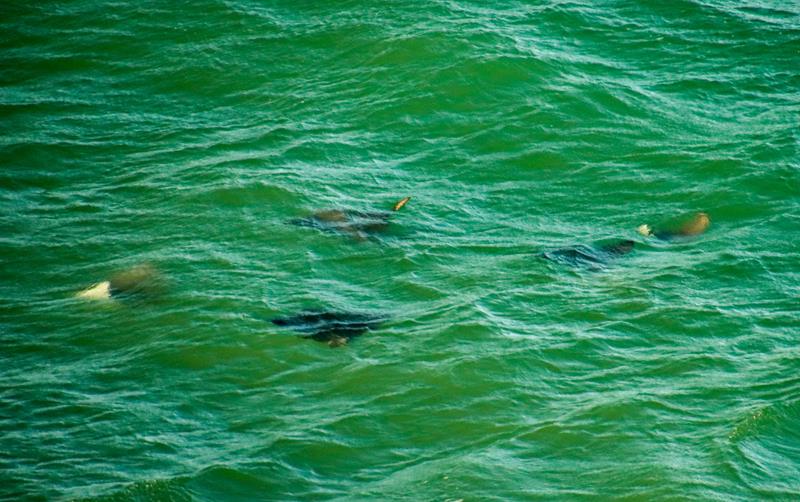
1,5km from Cape Peron is Skipjack Point, which is another beautiful place to admire. It has a viewing platform from which you can view marine wildlife in abundance. Every time we visit it, we see lots of wildlife swimming in the ocean. Here you can also get the same contrasting view of red, iron rich earth and blue waters, which is truly mesmerizing.
Skipjack Point
Interestingly, the red sand of Peron Peninsula is mostly made of quartz with a layer of iron oxide. It is the same compound that forms when irons rusts, giving the sand its unique colour. The deposits of these red sand are thought to be at least 250,000 years old. While this red sandstone underlies most of Shark Bay, it is exposed only on Peron Peninsula.
Do you know that Skipjack Point is named after golden trevally, which are locally known as “skipjacks” and are abundant in those waters?
How to get to Francois Peron National Park
Francois Peron National Park is on the Peron Penninsular in Shark Bay region, 726km north of Perth, along Australia’s Coral Coast. You can assess the park off the Monkia Mia Road, 4km east of Denham. The road to the Peron Heritage Precinct is unsealed by you can get there with a 2WD. The rest of the park is 4WD only.
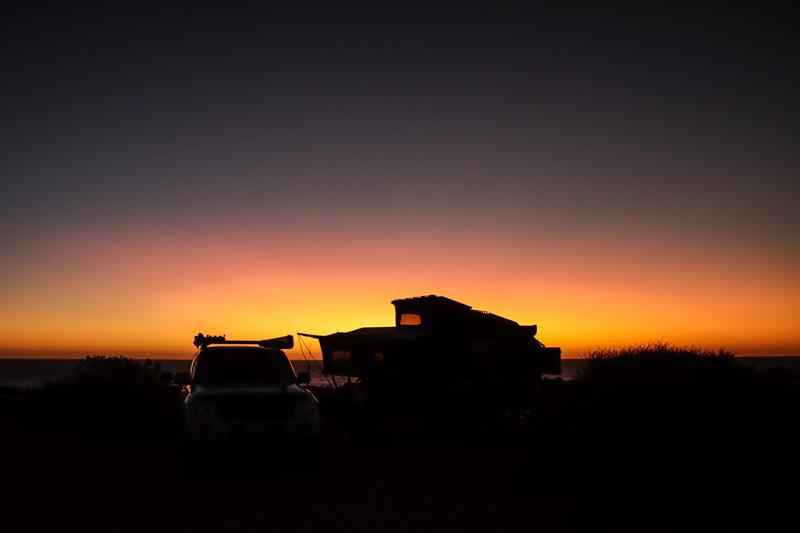
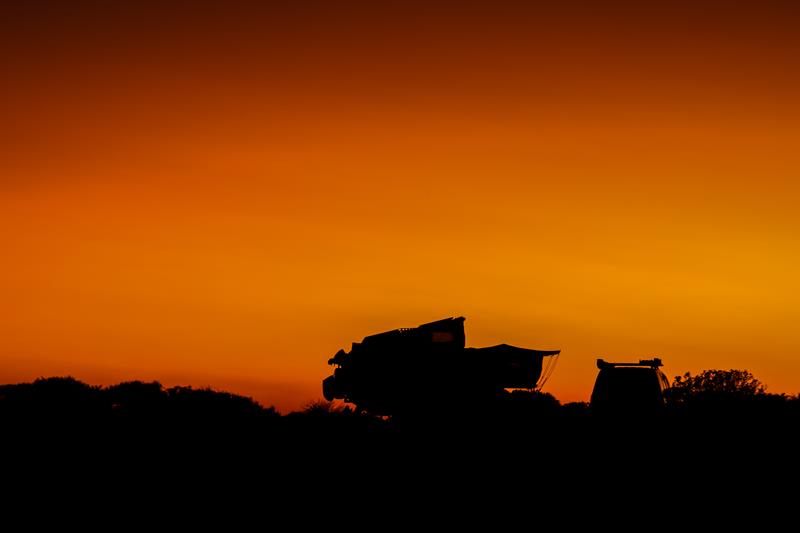
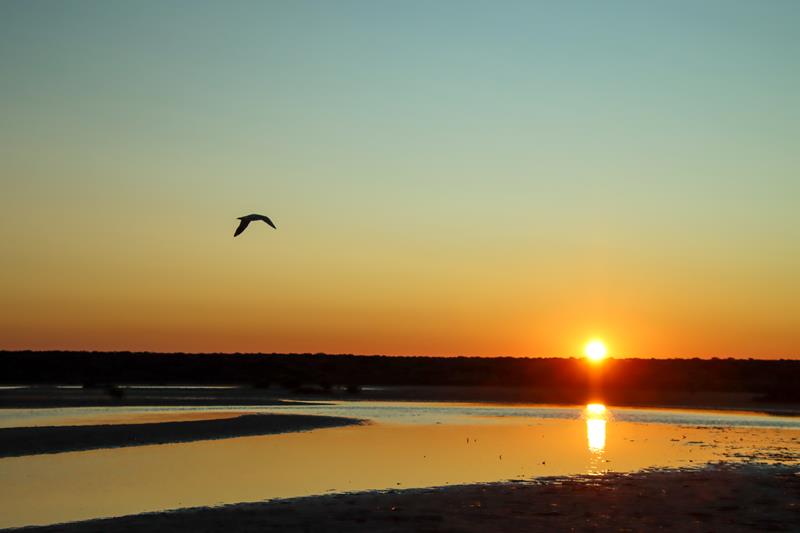
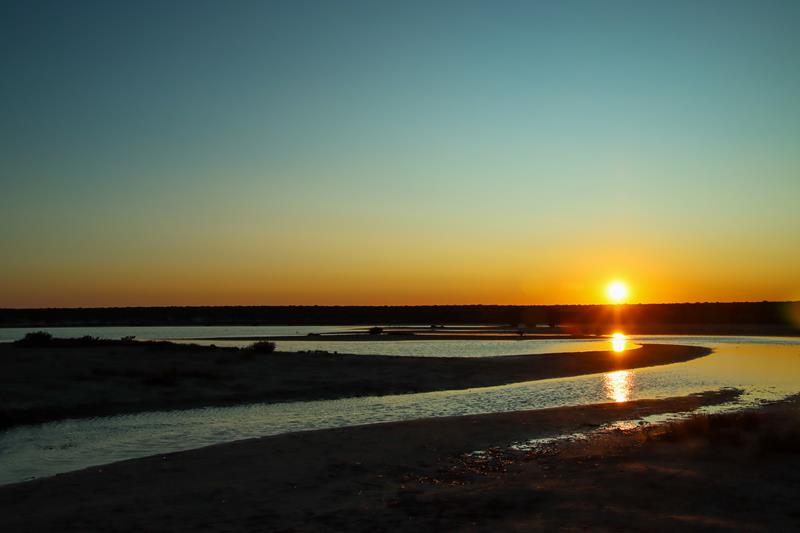
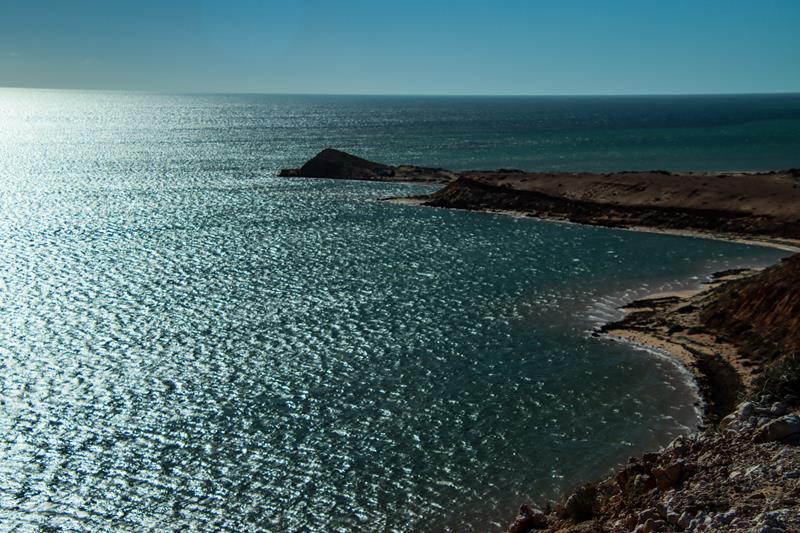
Eagle Bluff is a coastal camp site south of Denham in Shark Bay area along Australia’s Coral Coast. It can be accessed via a 2WD dirt road (turn off from Shark Bay Road). The campsite is not marked, so you can choose your own spot. There are only 4 cars that can camp there at any one time. To camp there you must have a permit, which costs $15 per night (in 2022), obtainable from Shark Bay Visitor Centre in Denham. There are no facilities and you can only stay there for 24 hours. We think that to pay $15 for the right to camp on the edge of the cliff in the pristine place in the World Heritage listed area is well worth it. The best things for us were the amazing sunset and sunrise.
The changing colours of the setting sun, painting the sky in red, yellow and orange
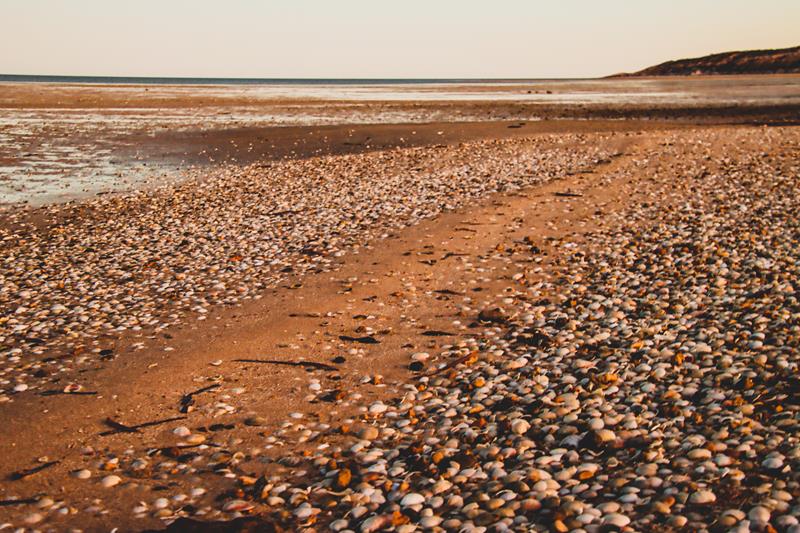
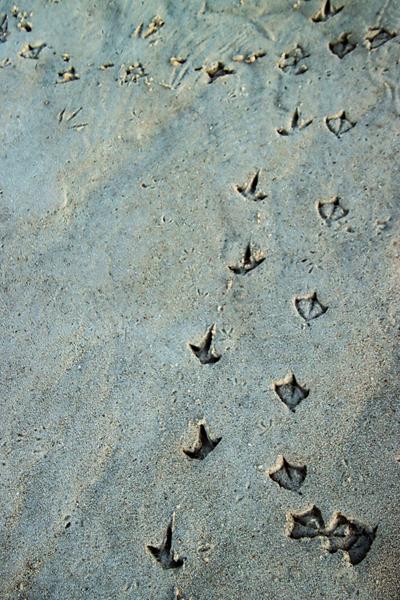
Walking on the beach early in the morning is not only an exercise but also an opportunity to spot something interesting.
Many pebbles
Footprints
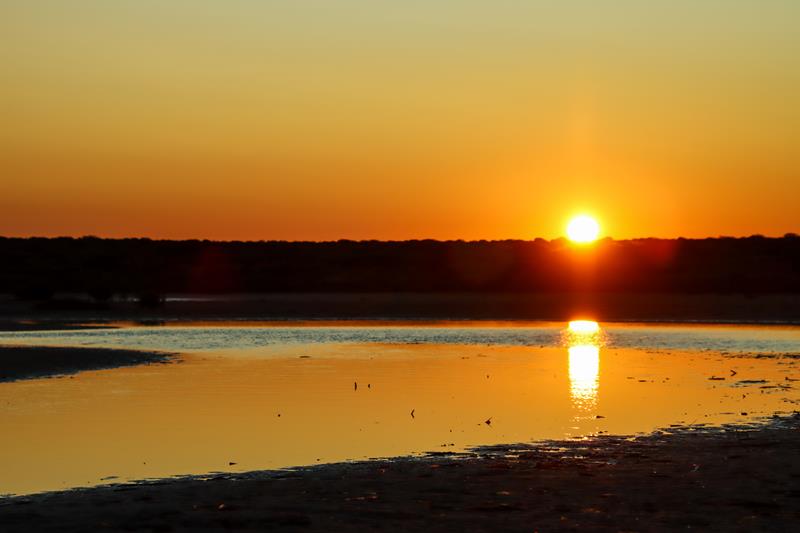
Unlike other campgrounds near Denham in Shark Bay, Eagle Bluff has a small lagoon, which makes a perfect sunrise photo.
Sunrise over the lagoon
Only a couple of kilometers away from the Eagle Bluff camp site is a viewing platform from which you can enjoy the vast views of the ocean and spot some marine life.
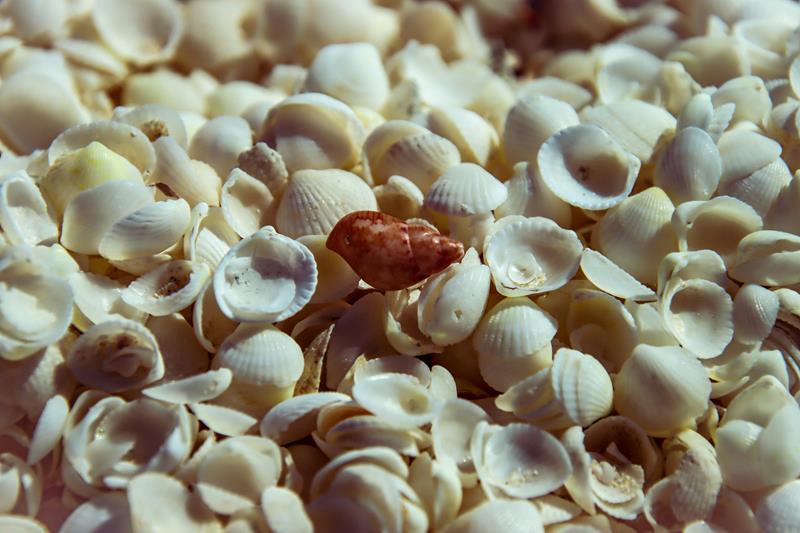
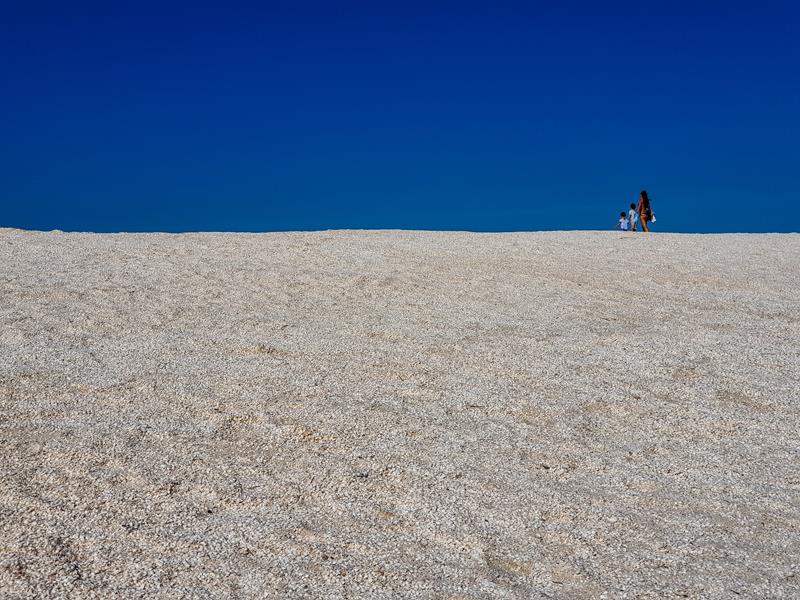
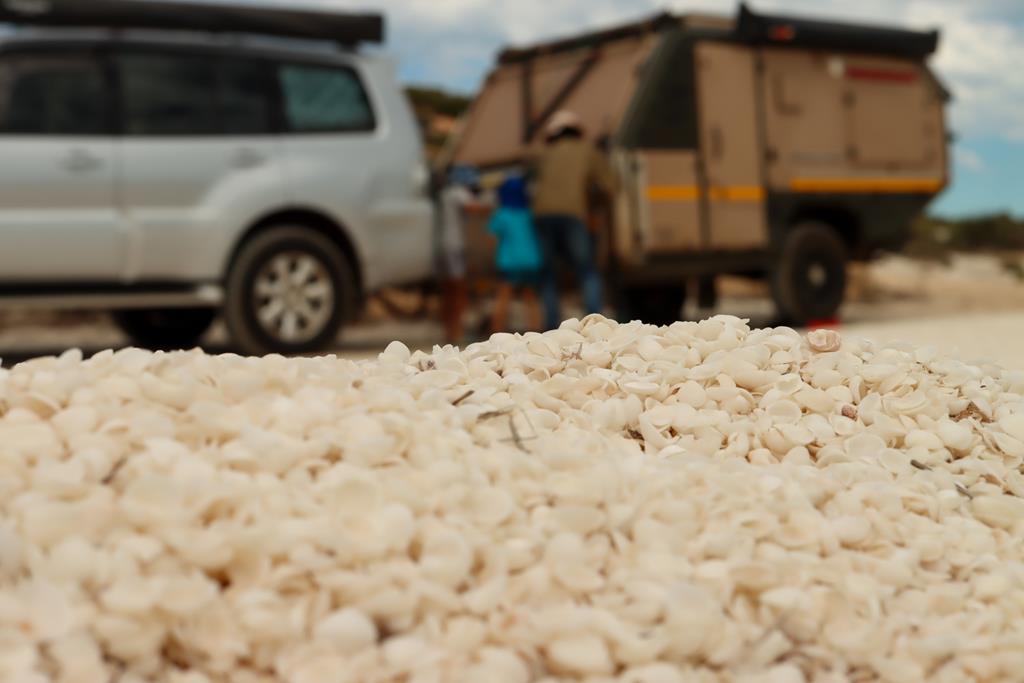
Shell beach, 45km from Denham, in Shark Bay along Australia’s Coral Coast, is one of only a handful of places on earth where the beach is made entirely from shells. Stretching for over 70km, it is a very picturesque place, attracting many visitors. After 4000 years of being washed onto the beach, the shells have reached the depth of 9 meters in some places. Interestingly, the shells are from just one type of animal, the Shark Bay cockle, making the beach truly unique. The waters in Shell Beach are highly saline and shallow. This contributes to the incredible abundance of this marine species in just one place.
the Shark Bay cockle
In early 1900s, before Shark Bay got its World Heritage listing, locals quarried and used shells for construction of buildings in nearby Denham.
Shell Beach
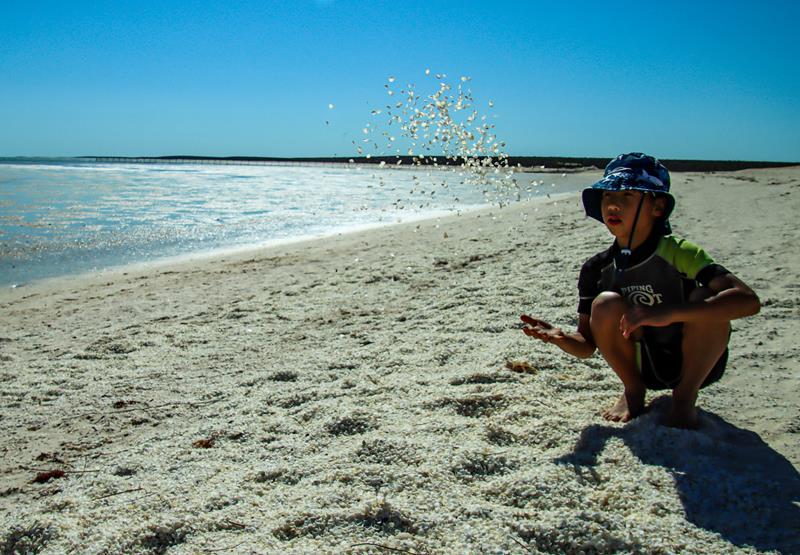
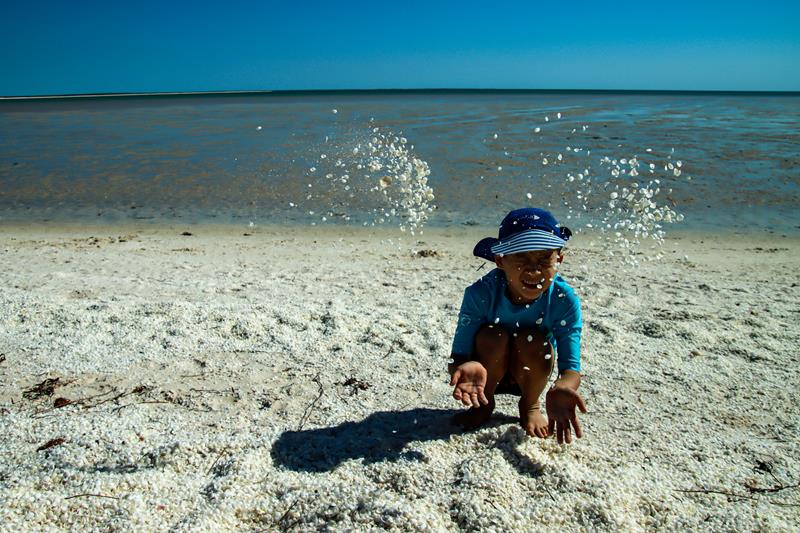
We have visited Shell Beach a few times. During our last visit in April 2022 we noticed upgrades to the beach with the toilets and undercover picnic areas. The waters were too shallow for swimming at that time but kids had great fun playing with the shells.
Playing with the sand at Shell Beach in Shark Bay
Interestingly, just a few kilometers away from Shell Beach, but on the opposite side, there is a mini version of Shell Beach, where we camped in April. The place is Goulet Bluff.
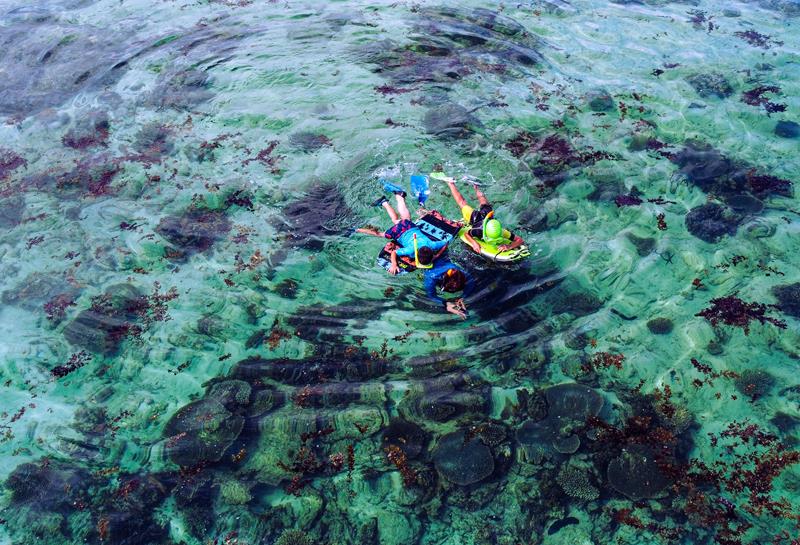
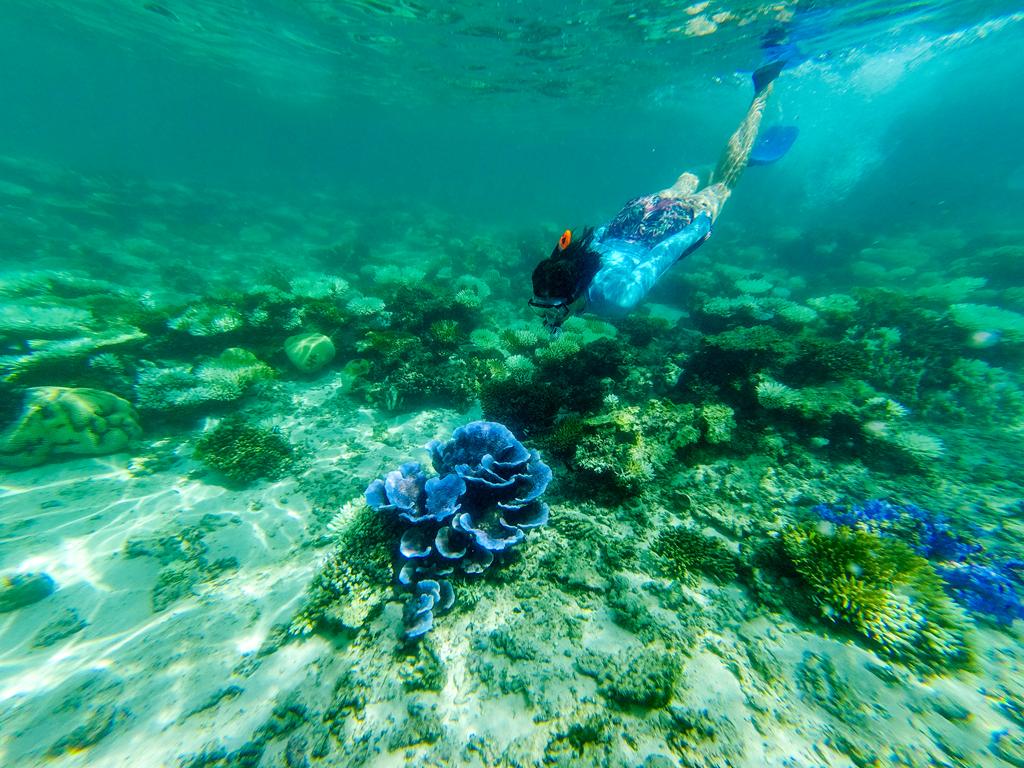
Five Fingers Reef, 4,5km south of Coral Bay, offers the best snorkelling experience near Coral Bay. When we were in Ningaloo Reef in April this year (2022), we were told that while the corals in Coral Bay were affected by bleaching, Five Fingers Reef corals were in much better condition. It is a 10-minute drive from Coral Bay over the sand dunes and a 4WD is required to travel along the track which leads you right onto the beach.
Five Fingers Reef is a popular 4WD destination
Interestingly, the name Five Fingers comes from the way the reef looks like. There are five strips (or fingers) of parallel reef running from the beach to around 200 meters offshore. The waters there are very calm and shallow, with lots of corals and other amazing marine life underneath. A great place to visit for a day or a few hours.
The underwater life at Five Fingers Reef is amazing! From a variety of corals, fishes to blue spotted rays, giant clams, sea cucumbers!
Montipora plate coralBluespotted fantail rayBlue ChromisGiant Clam and Sea CucumberMarine life at Five Fingers Reef
Want to see more corals? We have a big library of underwater photos that we took at Cape Range National Park near Exmouth. Did we mention that at Five Fingers you’ll find the best snorkelling near Coral Bay? We are not the only ones thinking that way.
Warroora Coastal Reserves are part of the Ningaloo (Nyinggulu) Coastal Reserves, adjacent to and part of World Heritage listed Ningaloo Marine Park that stretch for 220 kilometres.
You can get there via Minilya-Exmouth Road (from the north or from the south). 2WD can get you to the Warroora station and 14 Mile beach camp, but to get to all other campgrounds you would need a 4WD as the road is not only corrugated but also can be soft, rocky and with slopes in some places.
Along Warroora Coastline
Warroora Coastal reserves are managed by DPAW and can be booked online. There are 11 campgrounds to choose from – some only have a few sites and others are bigger and more popular. There are no amenities at any of the campgrounds. You are required to bring a chemical toilet to this place (which can also be hired at the Warroora station). Dogs are allowed.
For $10 per adult ($5 per child) you get a permission to camp on a beautiful coast with access to some amazing corals only a short driving distance away. If you don’t want to be cramped like sardines in one of the caravan parks in the close-by Coral Bay, camping in nature might be the way to go. It certainly is for us!
Stopping on the way to enjoy the scenery and little things
Black Moon Cliff
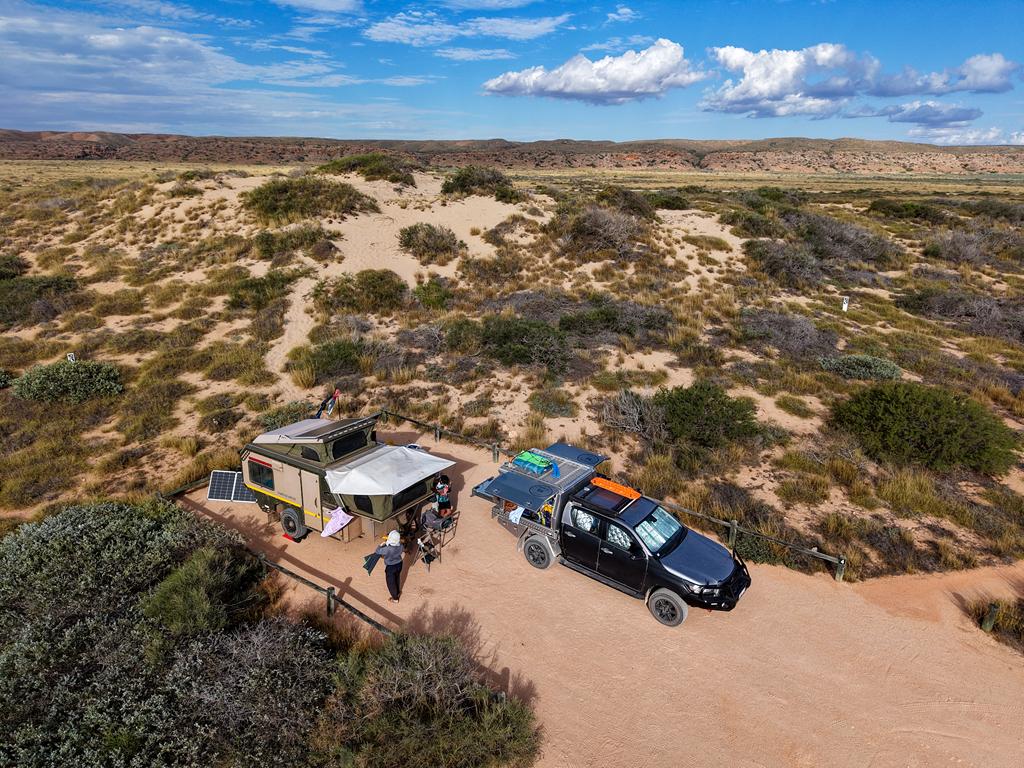
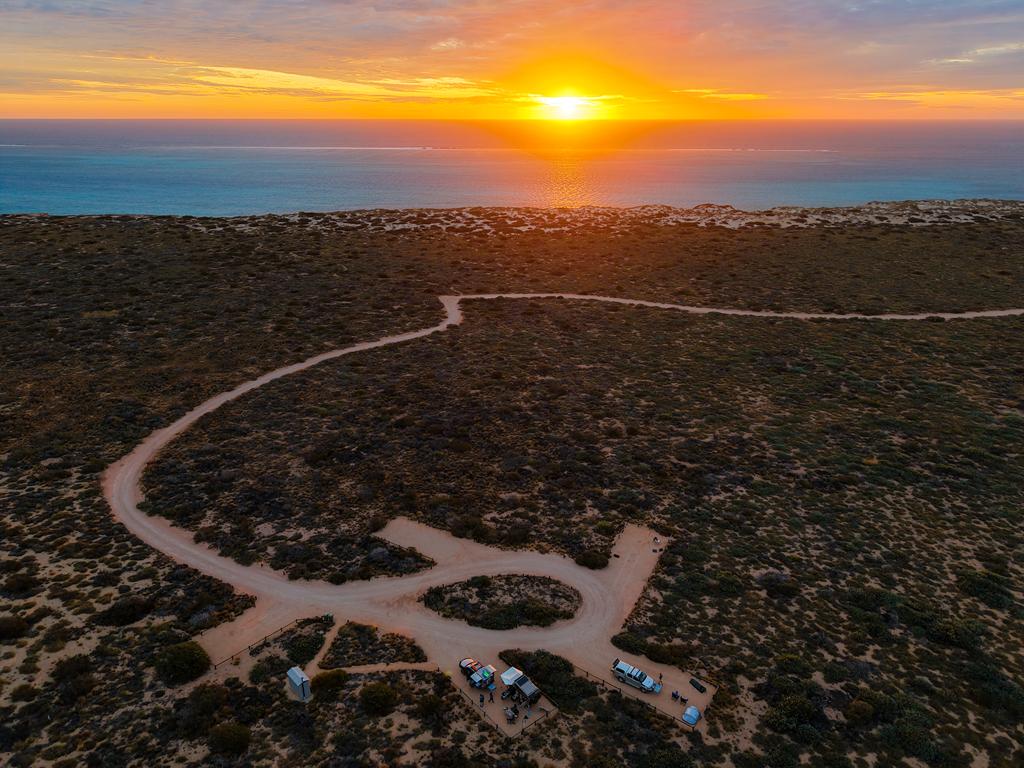
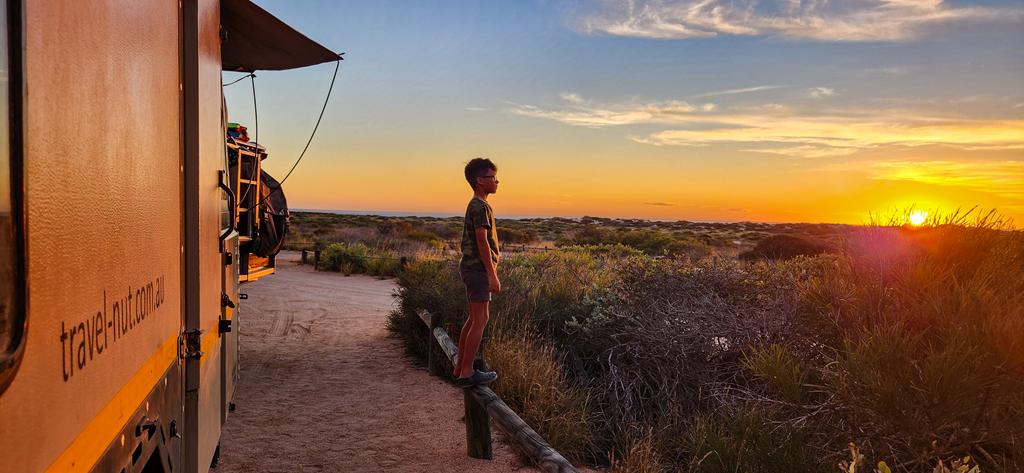
We stayed at Black Moon Cliff, which is 6km south of Warroora station, a small campground, tucked behind the dunes. The campground has only 10 sites, all quite large – some closer to the beach and some behind the second dune.
Black Moon Cliff campground
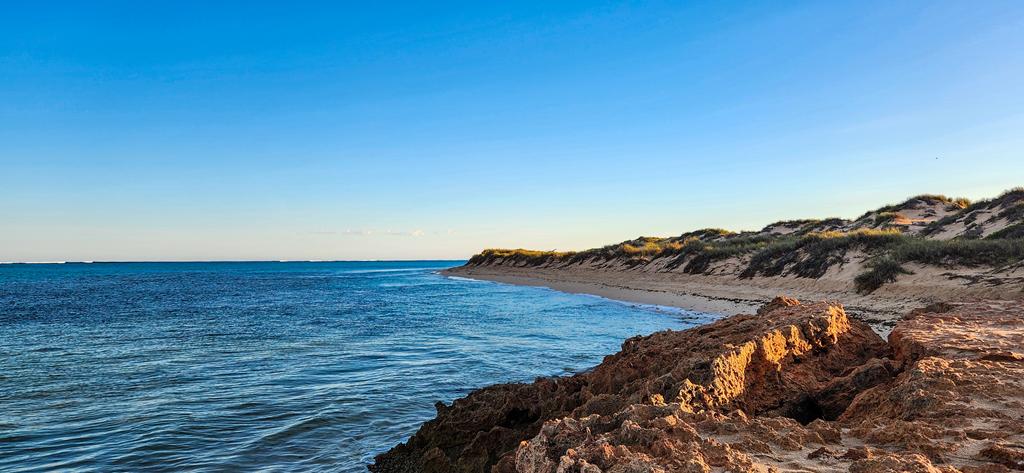
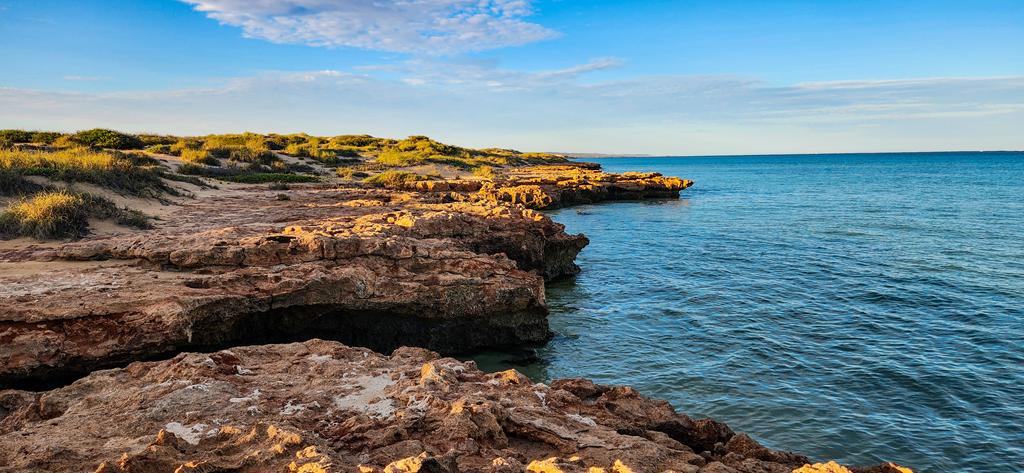
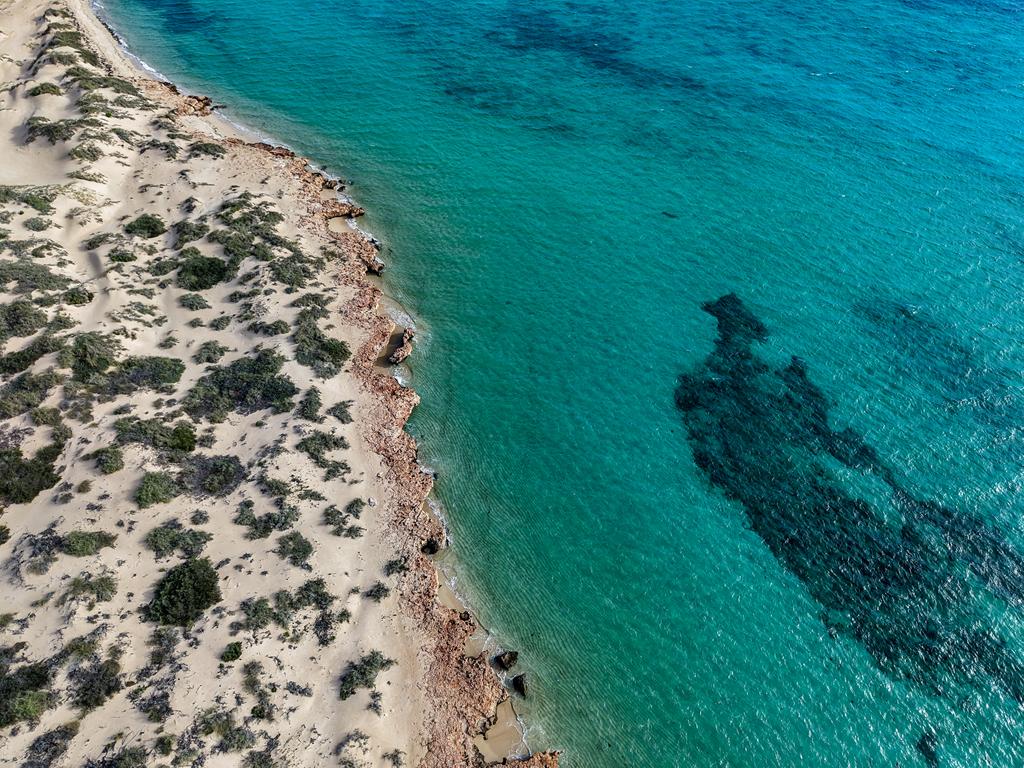
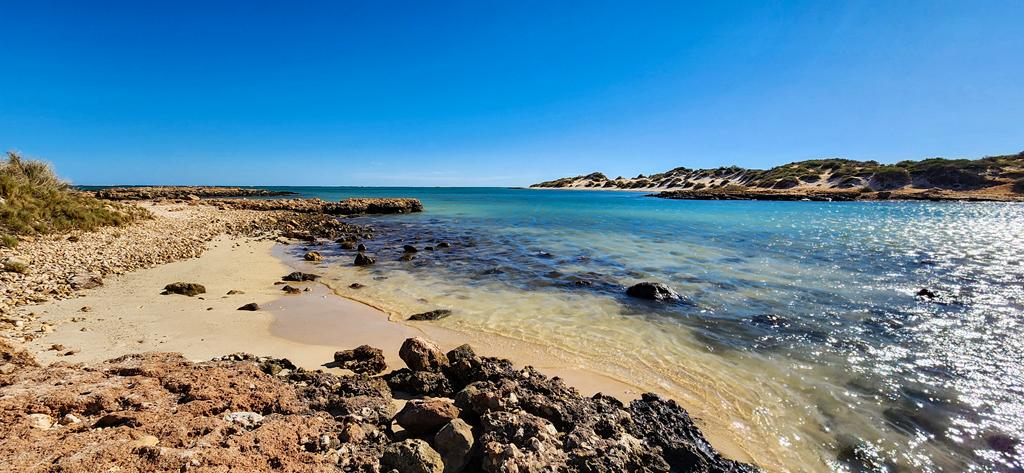
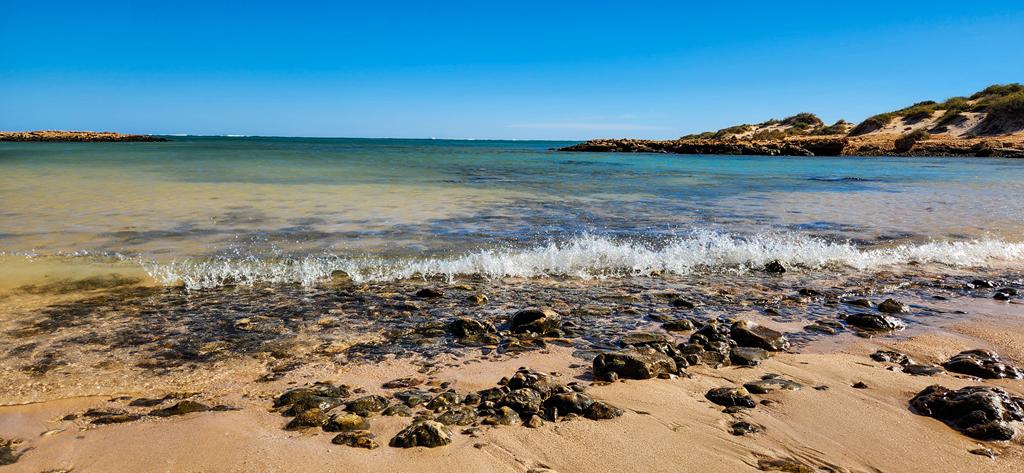
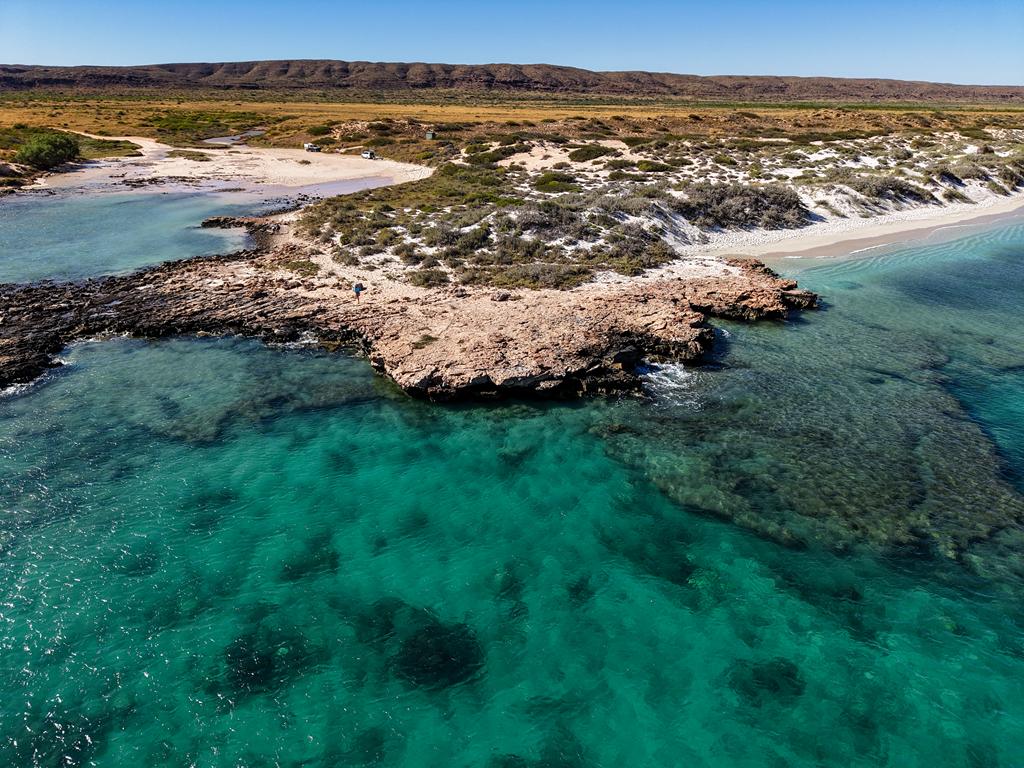
The coastline at Black Moon Cliff looked quite beautiful with rugged outcrops, although the beach had a lot of weeds at the time we visited (April 2022).
Black Moon Cliff beach
Natural beauty at Warroora Coast
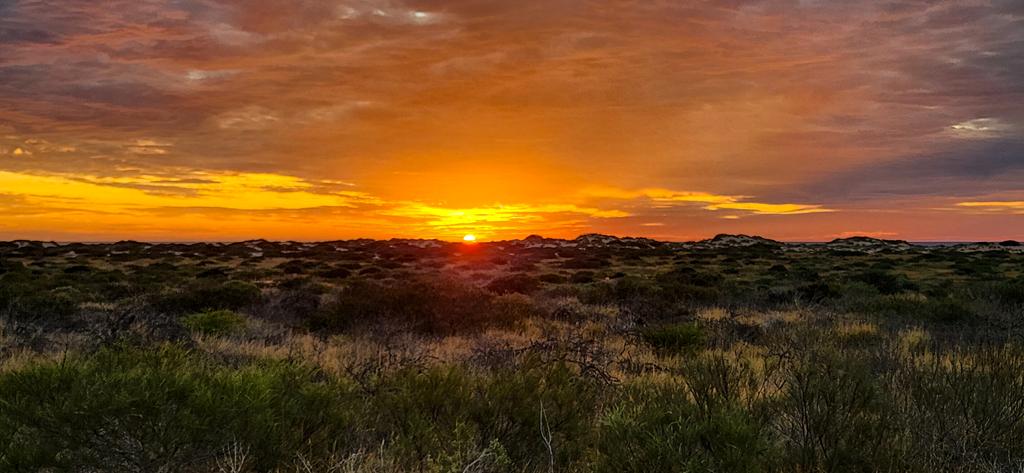
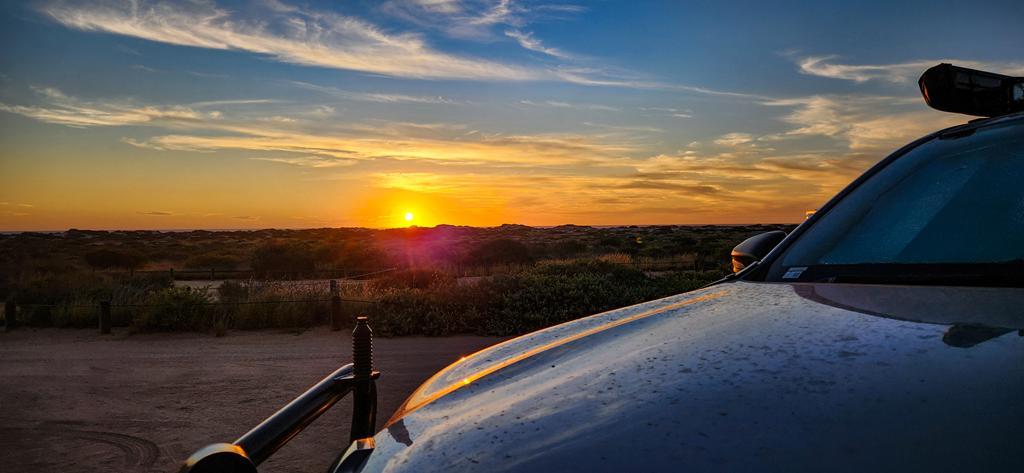
Undeniably the sunsets and sunrises were sensational! Every evening I was awe struck when seeing how the colours and patterns of the sky changed with every second as the sun went down.
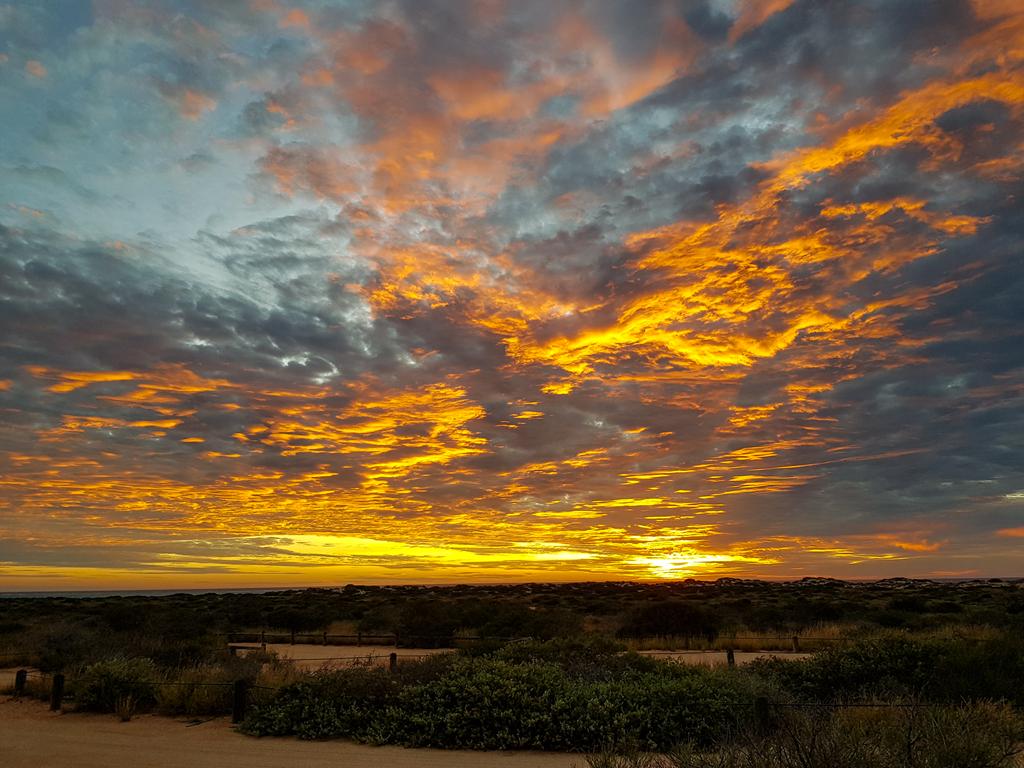
Every evening the setting sun painted the sky differently. No sunset is the same.
Sunset at Black Moon Cliff
As the sun was going down on one side above the ocean, the moon was rising up on the opposite side. Just watching sun and moon can be so therapeutic!
Watching the sun emerge from the horizon in the morning was an equally delightful and exciting experience. New day! What will it bring?
Sunrise at Black Moon Cliff
If you are into bird watching, Warroora Coast is abundant in wildlife. Spotting it though, requires patience and sometimes it is a matter of luck.
Australian bustardZebra finchBirds of Ningaloo – big and small
There are also many wildflowers in the region even outside of wildflower season. We visited this place in April and were still a few wildflowers there.
Flannel bush Solanum lasiophyllumHalgania cyanea – Rough HalganiaHibiscusWildflowers at Ningaloo
There are also plenty of dragon flies in Warroora Coastal reserves which can be tricky to photograph unless they land somewhere. One ended up in our caravan :).
Lots of dragon flies
Lagoon
Lagoon campground is further 6km south from Black Moon Cliff along the Ningaloo Coast. This campground is one of the larger ones (with 20 sites). The road there from the Warroora station is quite rocky, with a couple of hills and rock holes, so you definitely need a 4WD. But once you get to the Lagoon you are rewarded with a fantastic swimming beach. We actually liked the Lagoon better than the Black Moon Cliff campground, where we were based, and we spent a relaxing day at the Lagoon, soaking up experiences and memories.
Lagoon beach along Warroora Coast
Maggies
Maggies campground was a pleasant surprise for us. We would have missed going there, if we didn’t hear about it from someone whom we met while travelling. So, we are passing on the information together with our own experience and memories of this place.
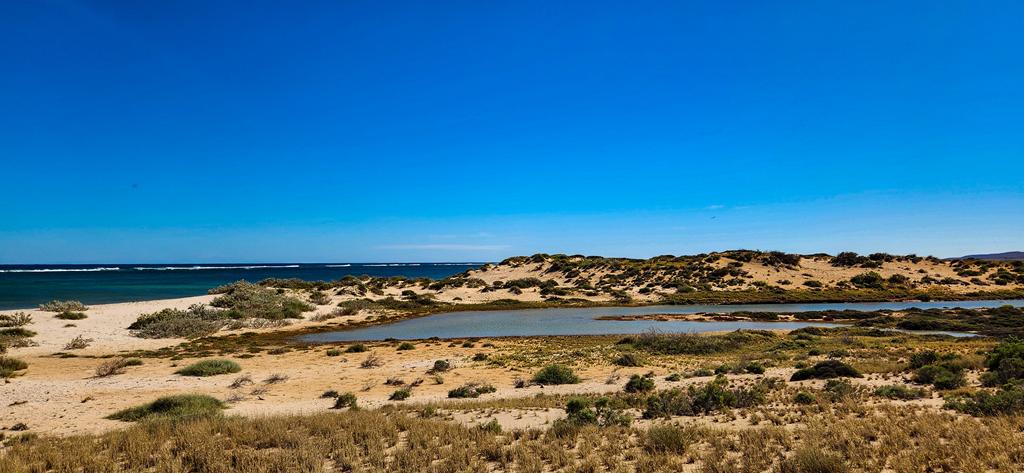
Maggies is a small campground (with only 6 sites), a short detour from the coastal dirt road in the Warroora Reserves. It is tucked away behind the hills and dunes and there are a few slopes and one-way sections of the road there. We wouldn’t have thought of pulling anything there but actually saw a few caravans at Maggies. 4WD is still a must to get there.
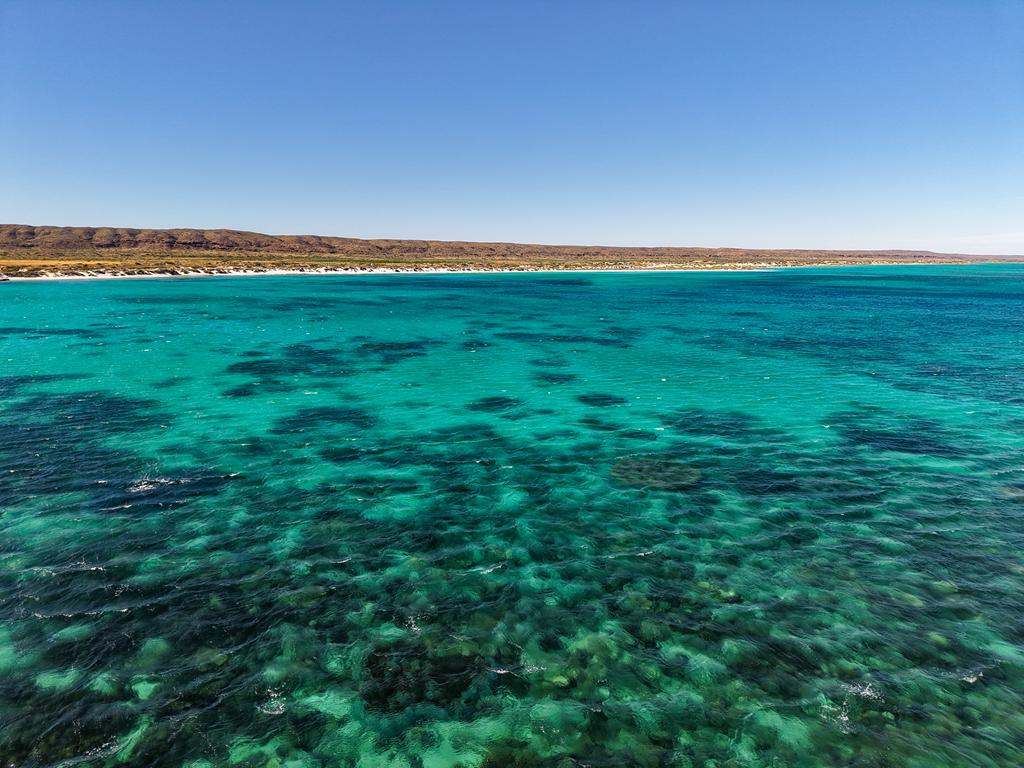
The best thing about this campground was corals and other marine life, as well as rocky formations along the beach.
Rocky shore at Maggies campgroundSome interesting finds near the beach
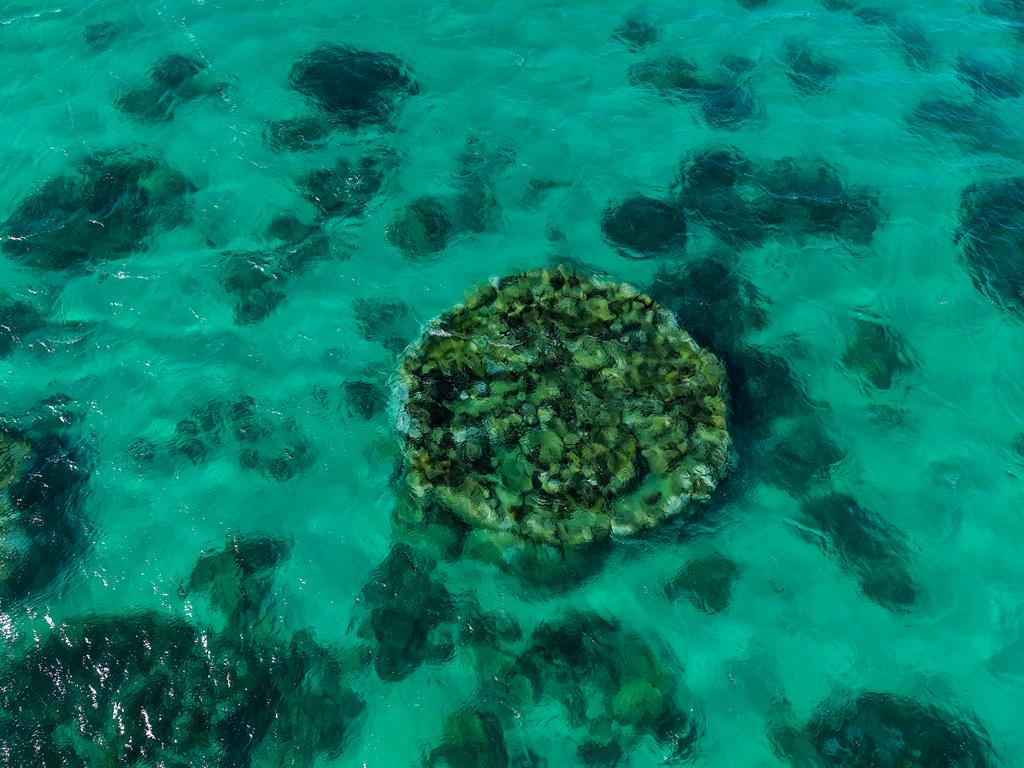
The underwater world at Maggies is amazing. Giant clams, Brain corals, Sea urchins, Blue Chromis are only some of the wonderful marine creatures you can see there.
Brain CoralSea urchinsGiant clamBlue ChromisA school of fish with Brain coralUnderwater beauty at Maggies
To sum up, Warroora Coastal Reserves did not disappoint. Without a doubt, it is the place to visit again.
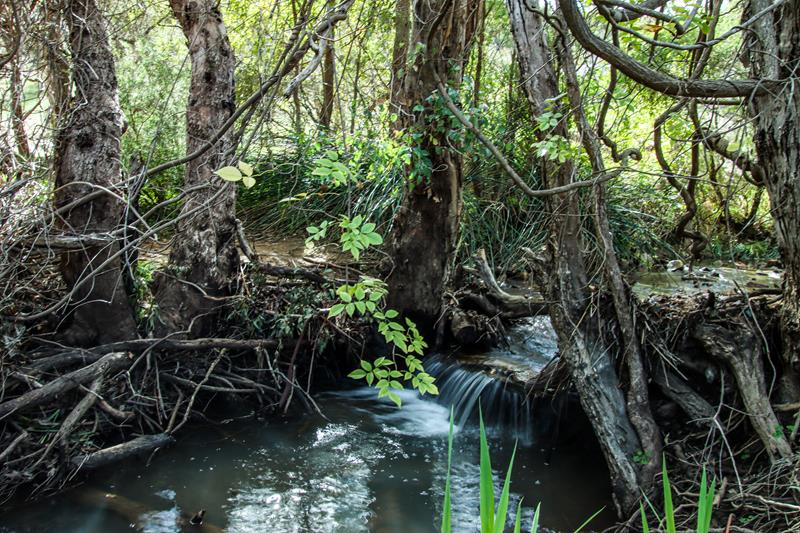
Whistlepipe Gully is a moderate difficulty 3.5km return hiking trail in Mundy Regional Park in Kalamunda, Perth Hills. The trail follows the creek up one way and down the other way. There are many picturesque small waterfalls, cascades and rock pools along the trail, as well as flat rocks to rest or have a picnic.
One of the many small waterfalls
We visited this place in June and enjoyed winter weather, stopping many times to admire nature in its amazing forms, colours and patterns.
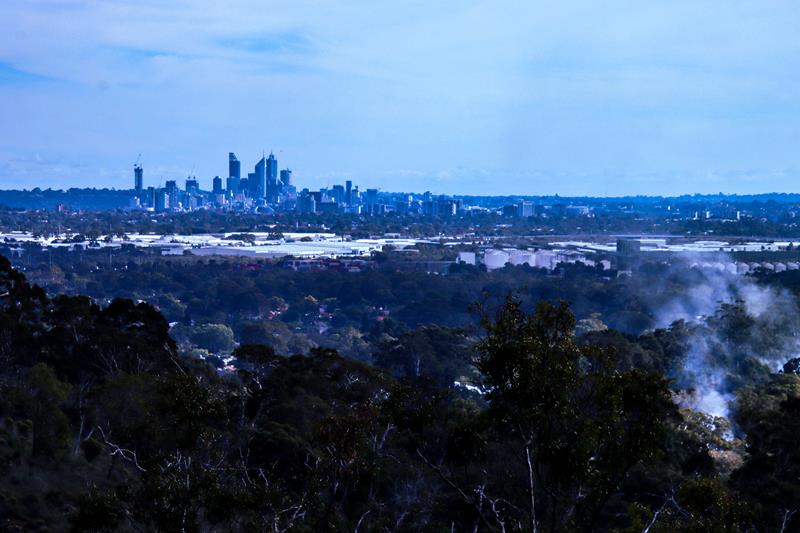
The Whistlepipe Gully track has a few slopes and rocks. From the highest slope you can enjoy the views of Perth city behind the coastal plain.
The view of Perth city from the trail
There is limited parking at the northern end of Lewis Road in Kalamunda and there are no facilities. It is dog friendly and there is no fee to pay to enter.
Looking for the best snorkelling sites at Cape Range? Keep reading. We always loved Cape Range, so travelling there again (the previous trip was in April 2021) was not something unusual. This time we stayed at a different campground and found a new snorkelling spot in addition to our favourite ones.
Oyster Stacks – best snorkelling site at Cape Range #1
There are 3 most popular snorkelling sites in Cape Range National park. Oyster Stacks is one of them. It has always been our favourite. Firstly, the outside reef is only 300m from the shore, so there is a big concentration of corals and other marine life. Secondly, there is hardly any current, so it is quite safe for children and inexperienced swimmers when the water is calm. Thirdly, the corals start right from the beach. So long as you care careful when entering the water because of the sharp rocks, you are straight in a paradise. We must emphasise that you should snorkel only during medium or high tides to avoid damaging corals. The first part of the day is normally the best for snorkeling as there is often some wind in the afternoon.
Oyster Stacks beach
Apart from the corals, Oyster Stacks beach is also known for its beautiful green crabs. This time we also saw a marine snail (I didn’t even know that such creatures exist!)
Green crabMarine snail
South Mandu – best snorkelling site at Cape Range #2
Shhhh… This is a secret spot. We found it was as good for snorkelling as the famous 3 sites in Cape Range National Park, however, it is not advertised anywhere (probably, due to proximity of the privately owned camping ground there). When we arrived in the morning, we had the beach all to ourselves!
South Mandu
The corals are very dense here, only a short distance away from the shore and those few meters before you reach the corals are just pure delight – sandy floor with turquoise clear water.
There is also a “therapeutic” corner, if you go to the right from the snorkelling site. Here there is a patch of red nicely water polished pebbles, which are very pleasant to hold. We spent a good half hour just sitting there – watching the waves and listening to the hissing sound of the water as it was drawn back while passing through the segregation of pebbles. It is an ideal place to de-stress and let any worries melt away. The only downside is 500m walk from the carpark. Although, if you are not into snorkelling, you can have some fun swimming and surfing on the beach right near the carpark.
“Therapeutic corner”
Turquoise Bay – best snorkelling site at Cape Range #3
Turquoise Bay is the most popular snorkeling site in Cape Range National Park. The beach there is stunning with its white soft sand and turquoise waters. It has many times been ranked as one of Australia’s top beaches. With white sandy beaches, crystal clear turquoise waters, amazing corals and other marine life it is an idyllic place. To see corals, park in Drift Snorkel Car Park. Then walk 100 meters or so south of the beach. Swim out and then let the current take you along as you enjoy snorkeling. Care must be taken to exist before the current pulls you out into the ocean (before the sand bar). For that reason, this place is not recommended for weak or inexperienced swimmers. At Oyster Stacks, you can see more colourful fishes and corals. At Turquoise Bay, you will find different types of corals. These corals are mostly large bombies and brain corals. Thus, you will see bigger fishes there.
Turquoise Bay
When the tide comes in, claiming the beach, everyone is forced to move behind the fence 😊.
High tide at Turquoise Bay
Lakeside – best snorkeling site at Cape Range #4
Lakeside is another great snorkeling site in Cape Range NP. It used to be a camping spot as well many years ago. But it got flooded at some point with the water from the creek. The car park has been moved further away and the campground has been closed. Now it is just a picnic area. To reach the snorkeling site, we had to walk 500 meters on the beach. The walk wasn’t really that bad at all. We had our lunch first, so we didn’t need to pull a trolley and carry lots of stuff with us. The corals at Lakeside are mostly big bombies that attract larger fishes. The beach there is very beautiful, even if you don’t snorkel.
Camping at Cape Range
Cape Range National Park is located within the Ningaloo Coast World Heritage area. It is 70km from Exmouth. The park has a few basic campgrounds only meters away from the beach. In April 2021, we stayed at Tulki beach. Exactly a year later, we based ourselves at North Kurrajong. From there, we explored beautiful beaches. Then in Easter 2025 we went to Cape Range again. We stayed at Bungarra campground.
North Kurrajong campground
It is a relatively new campground. It was built an addition to Kurrajong which is a short distance away only steps away from the beach.
North Kurrajong campground
I was surprised that for a small campground (for 10 sites) there were 3 clean and nicely maintained non-flushing toilets.
Very well laid out campground
There is also a large undercover picnic area with a few tables. Overlooking the beach there is a smaller but very popular sunset view undercover table. From there we watched the sun going down over the ocean every night.
Watching sun go down from the sunset view undercover picnic table at North Kurrajong
The campground is accessible via a 2WD short drive from Yardie Creek Road. For $11 per person per night (children are $3 each), it is a great value for a prime location. (Note this price was in 2021. It has gone up to $15 per person.) We had very sweet memories of camping at Cape Range. This is not to mention amazing corals and fishes we have seen. Check the pictures here.
Watching sunrise, sunset and moon
When we camp in the bush, we don’t mind getting up early to see how the sun greets the day and sends the first rays of light into the sky before it is even visible above the horizon.
Jupiter and Venus still shining in the morningAn array of coloursSun is outSunrise at Cape Range
When the sun is rising above the ranges in Cape Range National Park, the opposite side – the beach – is still in its “blue hour” colour. It is quiet and peaceful – a perfect opportunity to spot something interesting.
Blue spotted rayEarly morning walk at the beach
The magical golden hour.
Sunset at North Kurrajong
Looking at the moon and taking pictures of it can be quite fascinating….
And when the sun goes down, it is a great opportunity to try your luck fishing from the beach. North Kurrajong is a recreational zone, so fishing is allowed there.
Fishing at North Kurrajong
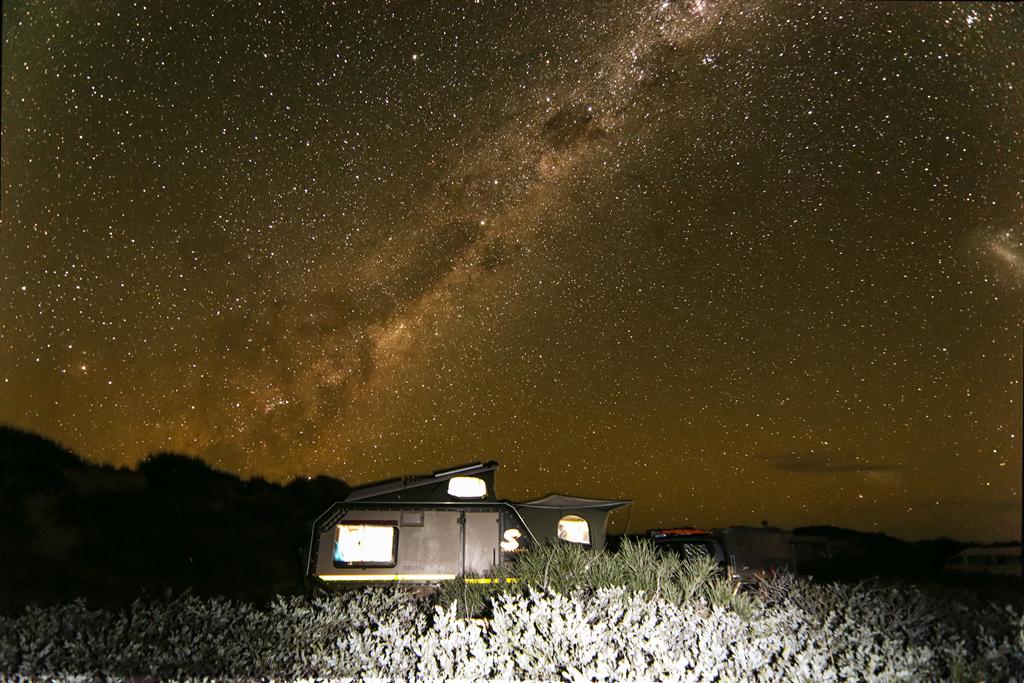
While the boys are fishing, I am taking pictures of the night sky.
Night sky at North Kurrajong
How massive these termite nests are! On the way from Exmouth along Minilya Exmouth Road.
Bungarra campground
Bungarra is the smallest campground in the park with only 5 reverse-in camping spots. Facilities include non-flushing toilet and rubbish bins.
The campground is 600 meters walk to the beach. The beach is mostly rocky and not the best one for swimming. But it is a good place for beach fishing.
The nearby Osprey Bay campground is 10 minutes walk away and is excellent for swimming. We spent 4 nights at Bungarra campground in April 2025, enjoying the basic bush camping with gorgeous sunsets. The camping fees for the campground are $15 per adult per night, $5 per child. This is in addition to national park entry fee for this first night. Dogs and campfires are not permitted.
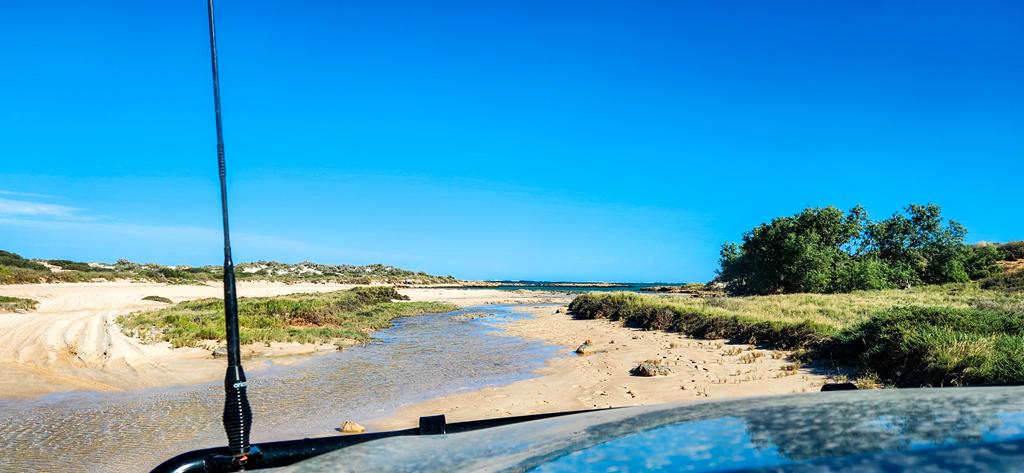
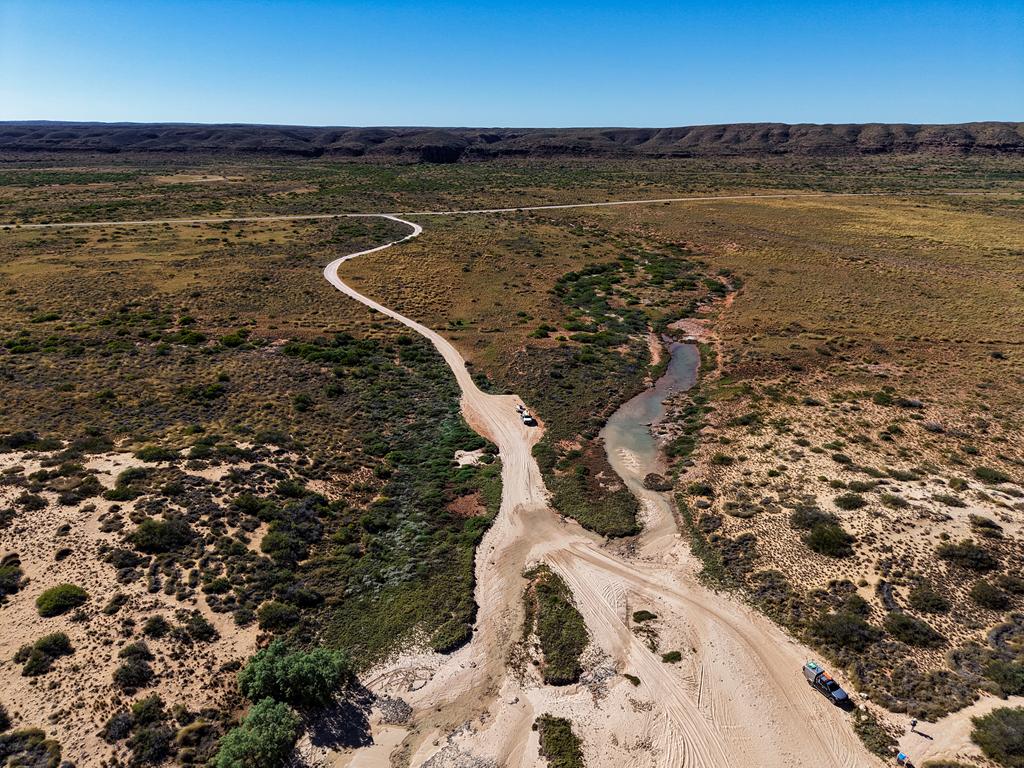
Pilgramunna is one of the less popular beaches in Cape Range National Park. The creek joins the beach. Depending on the conditions, you might be able to pass through. If not, park before the creek. As it was quite shallow when we visited this place in April, we drove through the creek.
We found quite a picturesque beach with rocky outline making it look pretty. There were sandy patches further along the beach. It is considered a snorkeling place although we didn’t snorkel there. Kids were playing with little stones while we surveyed the area.
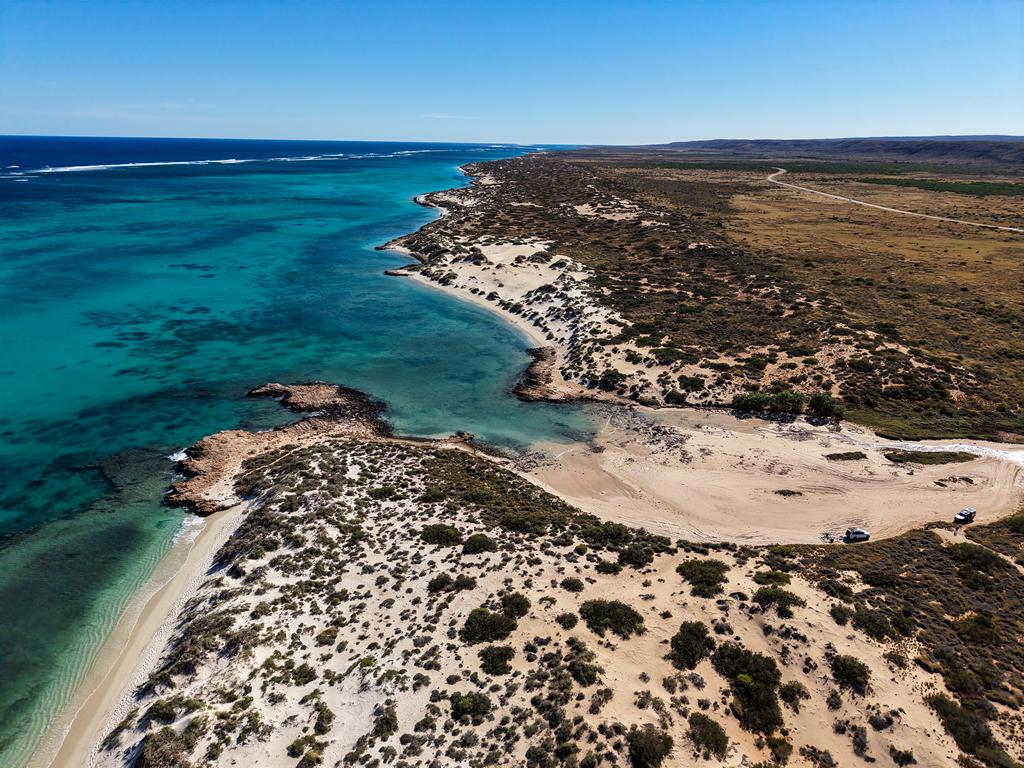
It looked lovely from the bird’s eye view, and we saw a few large bombies further away from the beach. A few vehicles came to launch a boat. It might be a good fishing place too.
Bloodwood Creek is a scenic lookout in Cape Range National Park, along Australia’s Coral Coast.
Yardie Creek
Yardie Creek is at the southern end of Cape Range National Park. It is a popular place for a picnic, swimming in the creek, hiking, as well as boat tours. There is also a campground there. Those who love nature and hiking will enjoy walking along the creek. The nature walk is short and sweet. If you want to challenge yourself, continue further along the creek into the gorge.
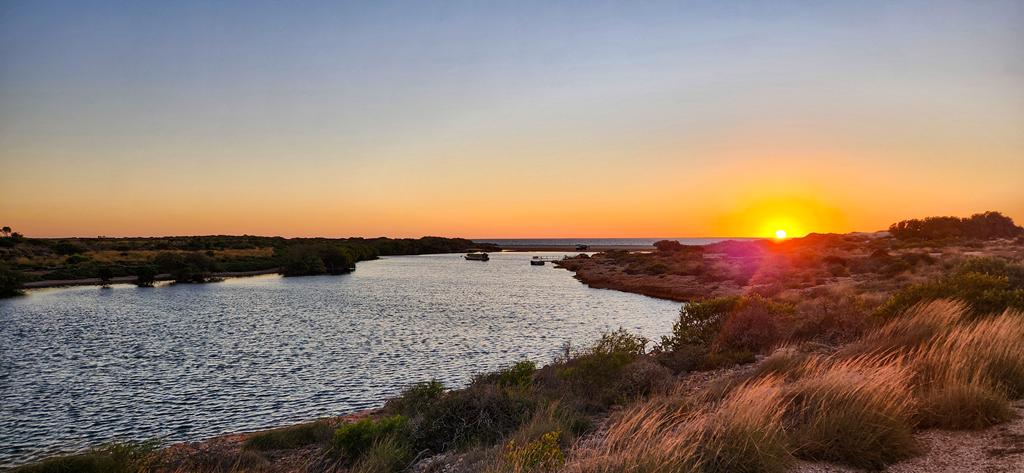
With the temperatures being in high 30s in April, day time hiking was not the best. We came back to Yardie Creek just before the sunset and it was perfect timing. The sunset was sensational.
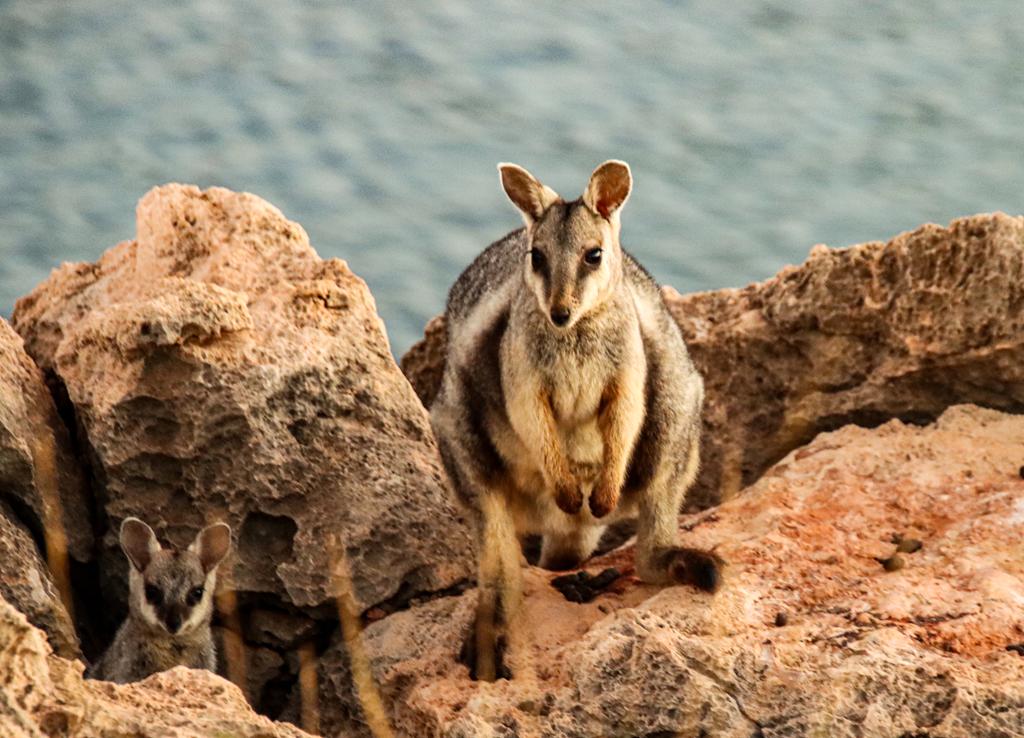
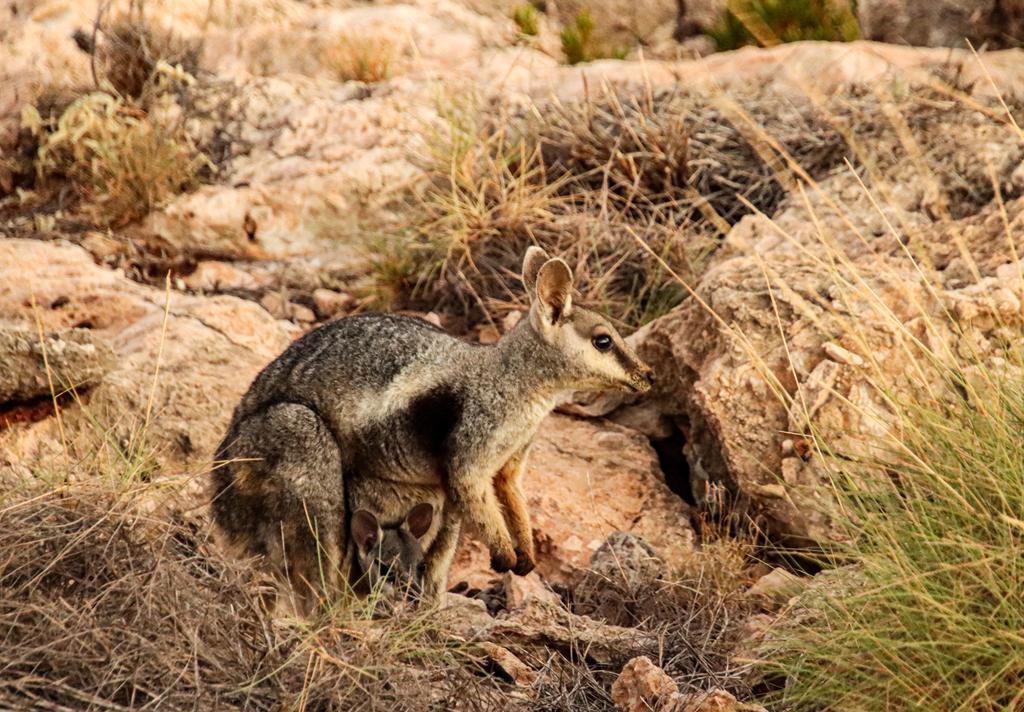
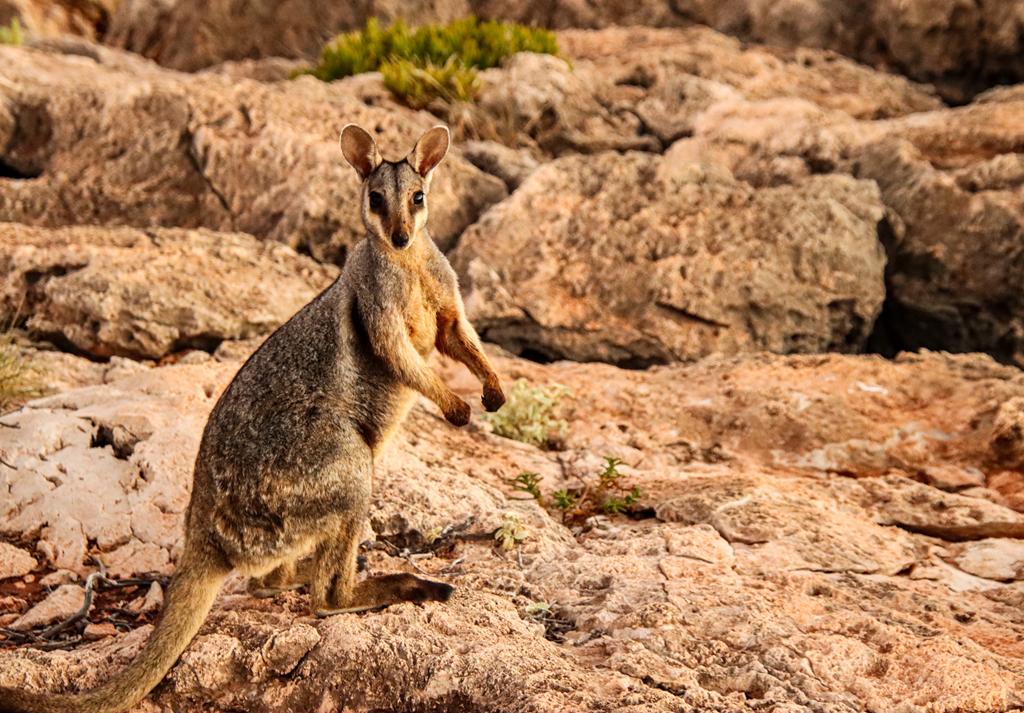
I also had a chance to see threatened black-flanked rock wallabies that only come out at dusk. Initially I didn’t take a camera with me and the photos on the phone were not the best quality. I took a chance to go back to the vehicle to fetch a camera with zoom lens. Were the wallabies still there? Yes, they were!
To provide the best experiences, we use technologies like cookies to store and/or access device information. Consenting to these technologies will allow us to process data such as browsing behavior or unique IDs on this site. Not consenting or withdrawing consent, may adversely affect certain features and functions.
Functional Always active
The technical storage or access is strictly necessary for the legitimate purpose of enabling the use of a specific service explicitly requested by the subscriber or user, or for the sole purpose of carrying out the transmission of a communication over an electronic communications network.
Preferences
The technical storage or access is necessary for the legitimate purpose of storing preferences that are not requested by the subscriber or user.
Statistics
The technical storage or access that is used exclusively for statistical purposes.The technical storage or access that is used exclusively for anonymous statistical purposes. Without a subpoena, voluntary compliance on the part of your Internet Service Provider, or additional records from a third party, information stored or retrieved for this purpose alone cannot usually be used to identify you.
Marketing
The technical storage or access is required to create user profiles to send advertising, or to track the user on a website or across several websites for similar marketing purposes.