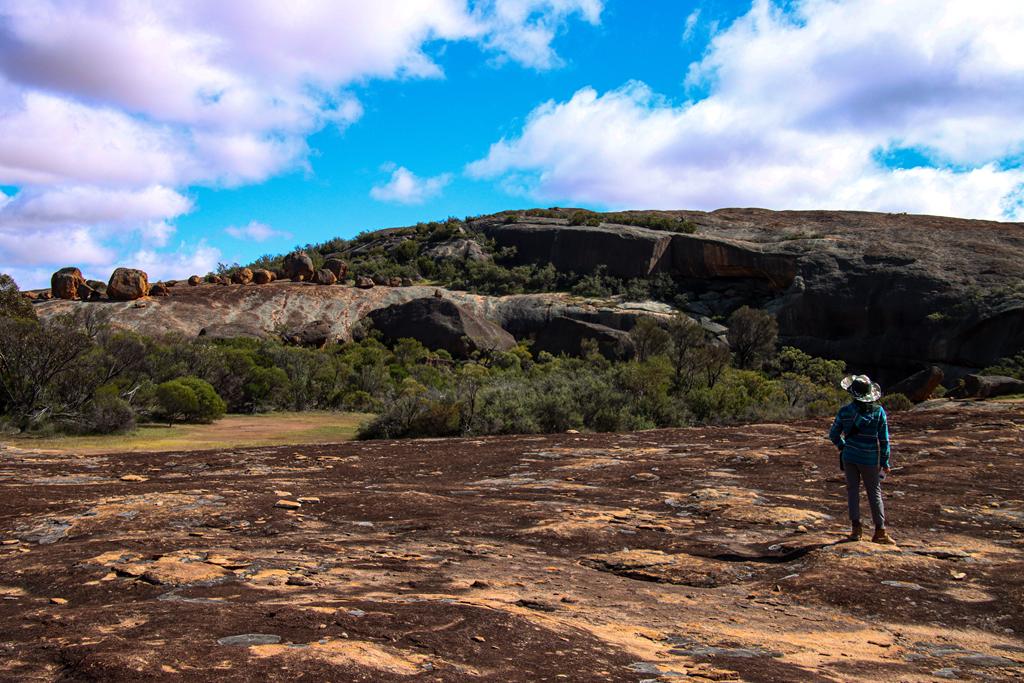
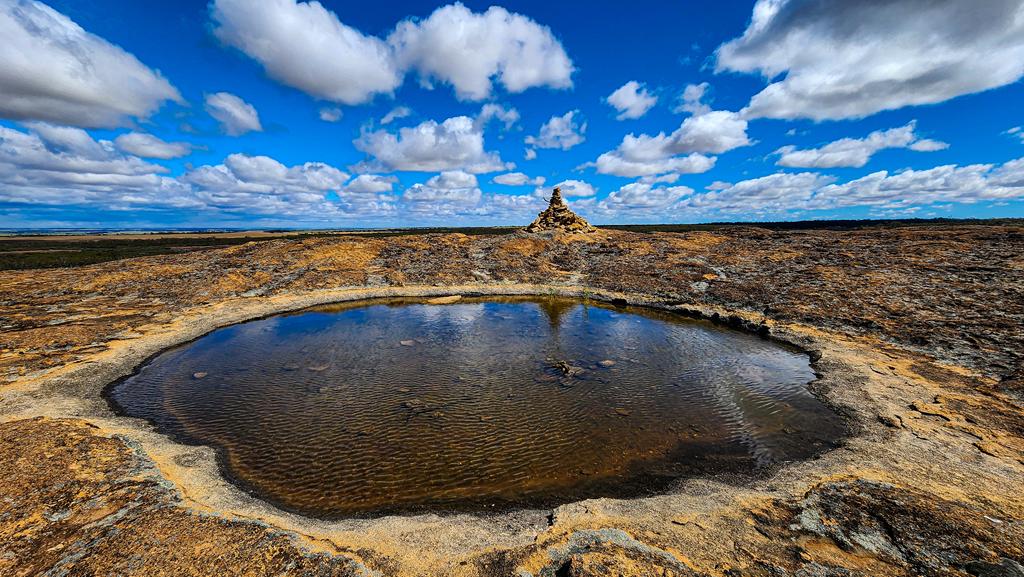
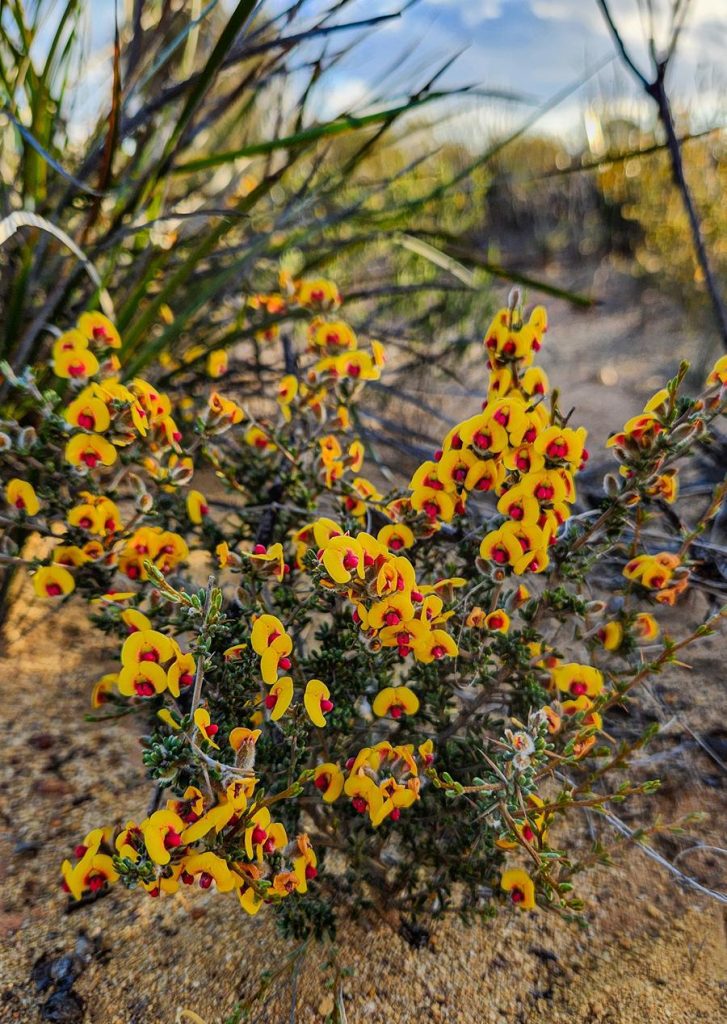
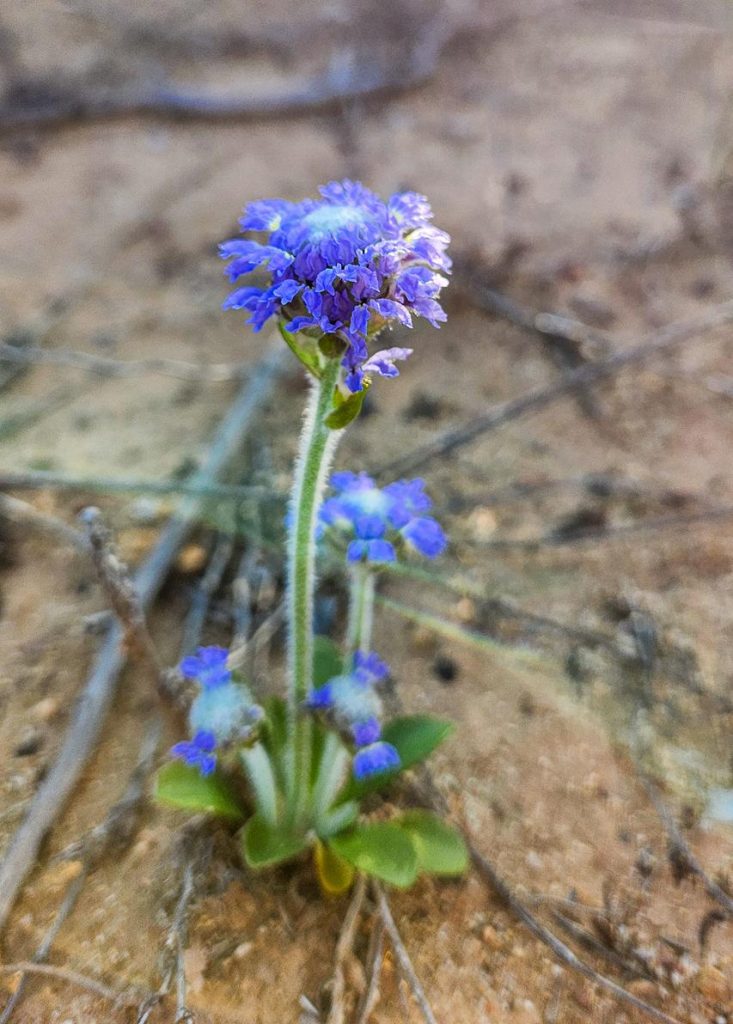
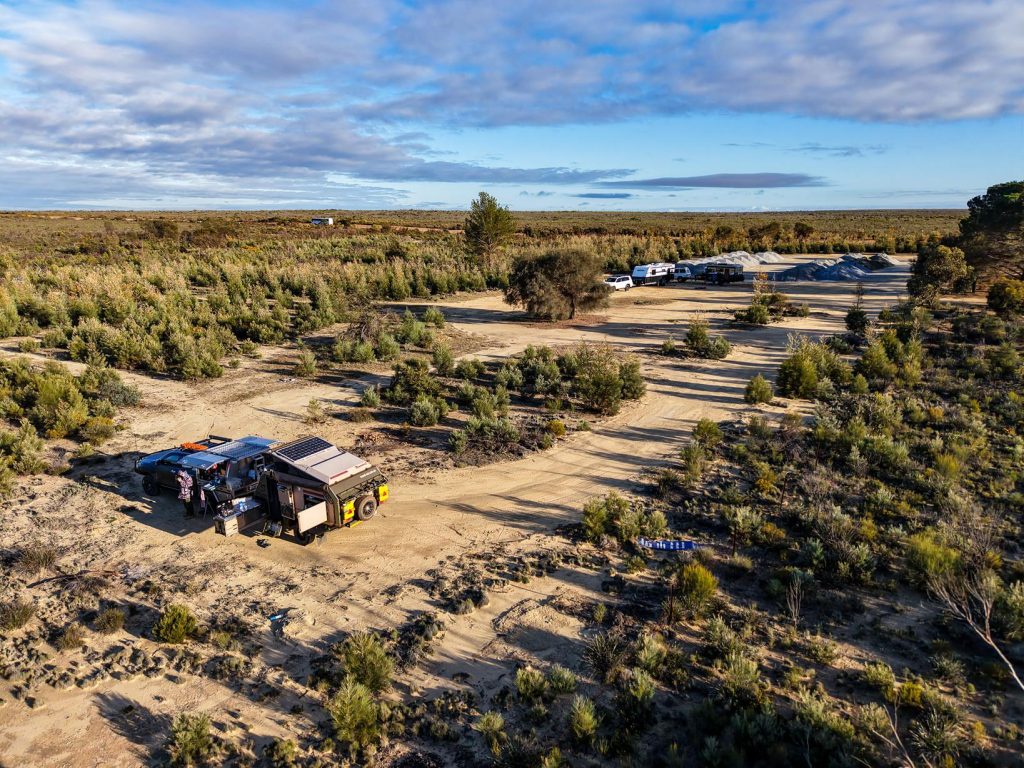
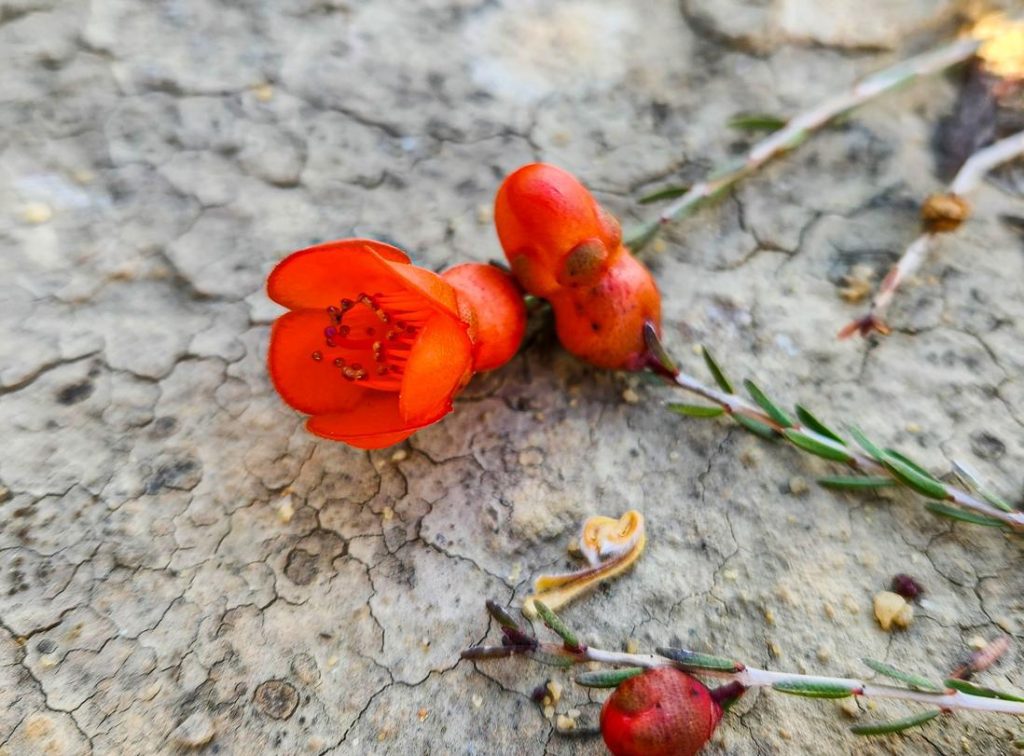
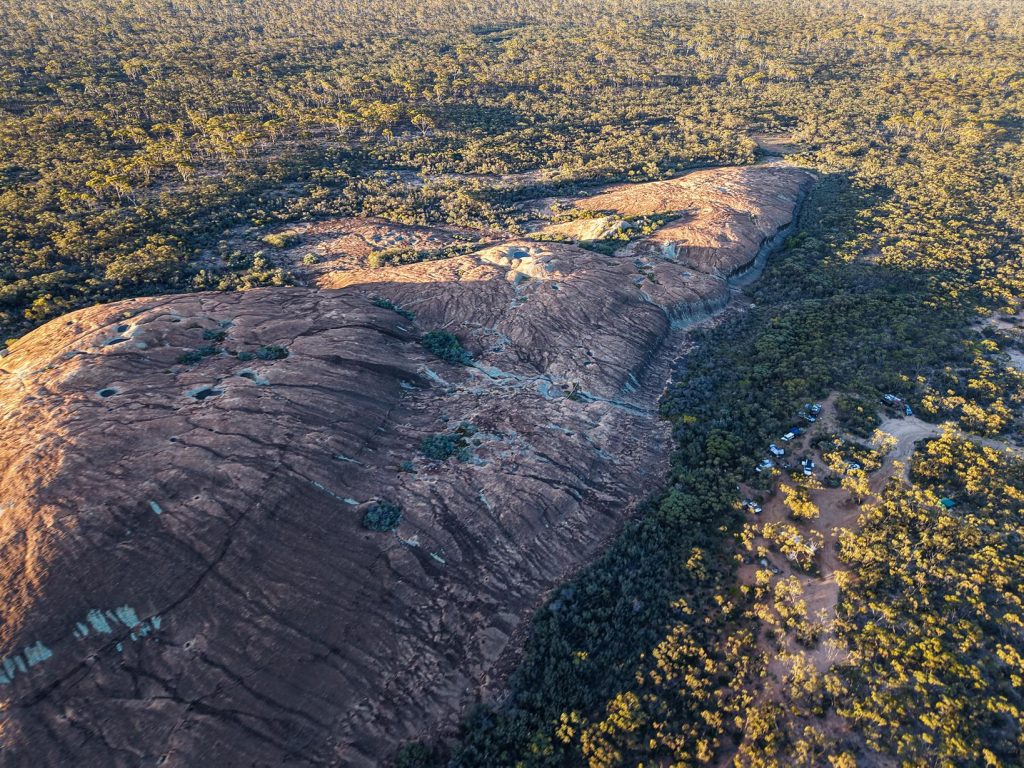
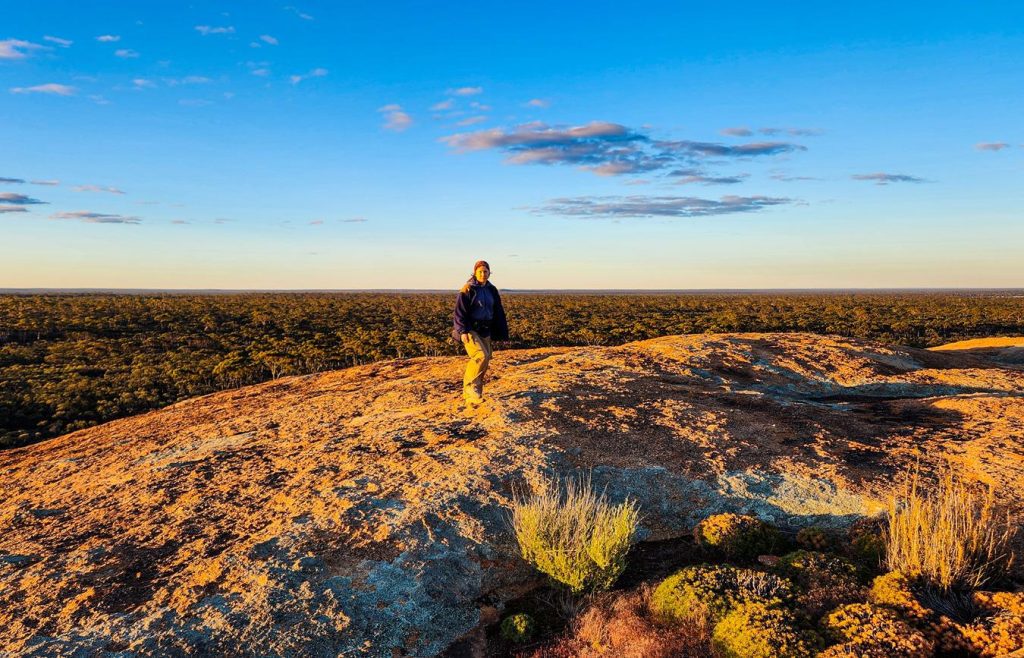
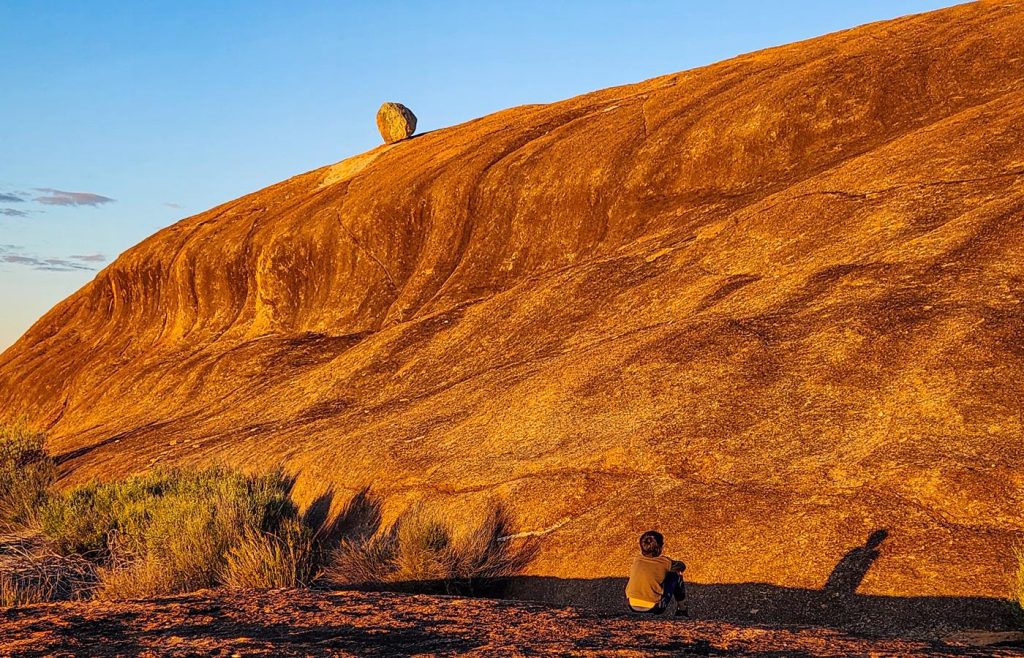
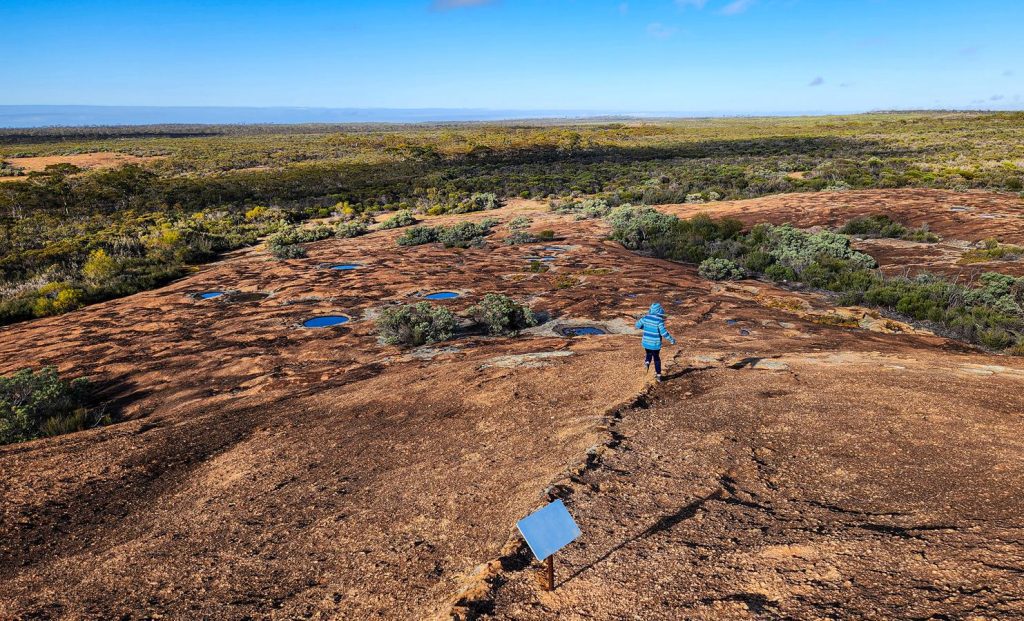
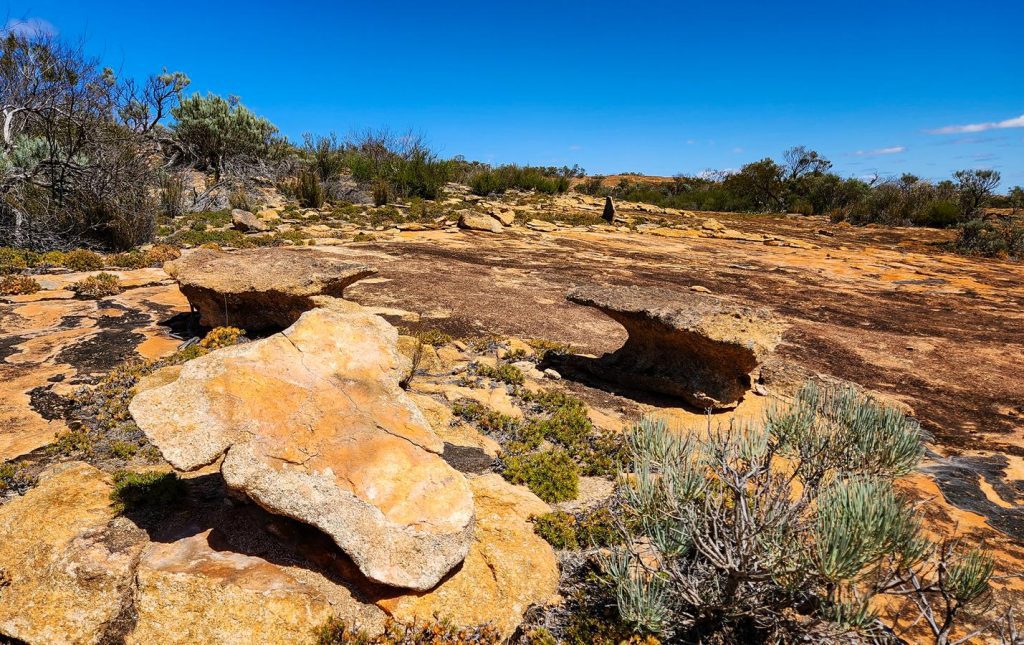
Sandford Rocks Nature Reserve is one of the Wheatbelt’s most significant granite outcrops, offering visitors the opportunity to experience and appreciate nature in its original and unique form. A moderately challenging 2 km loop trail leads to the summit of the rock before finishing at the bird hide.
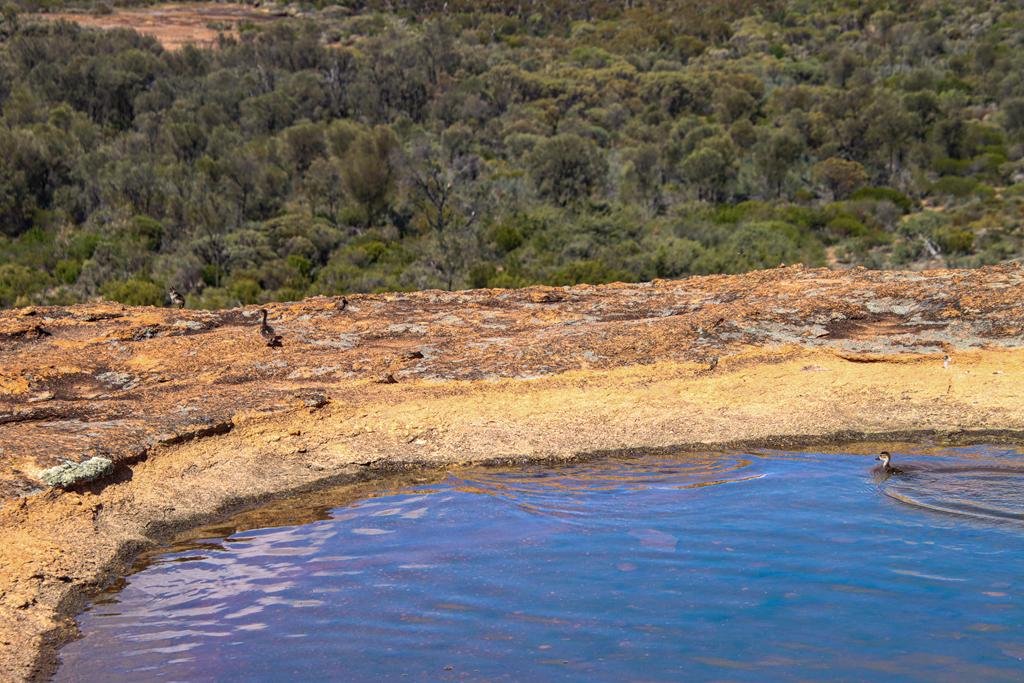
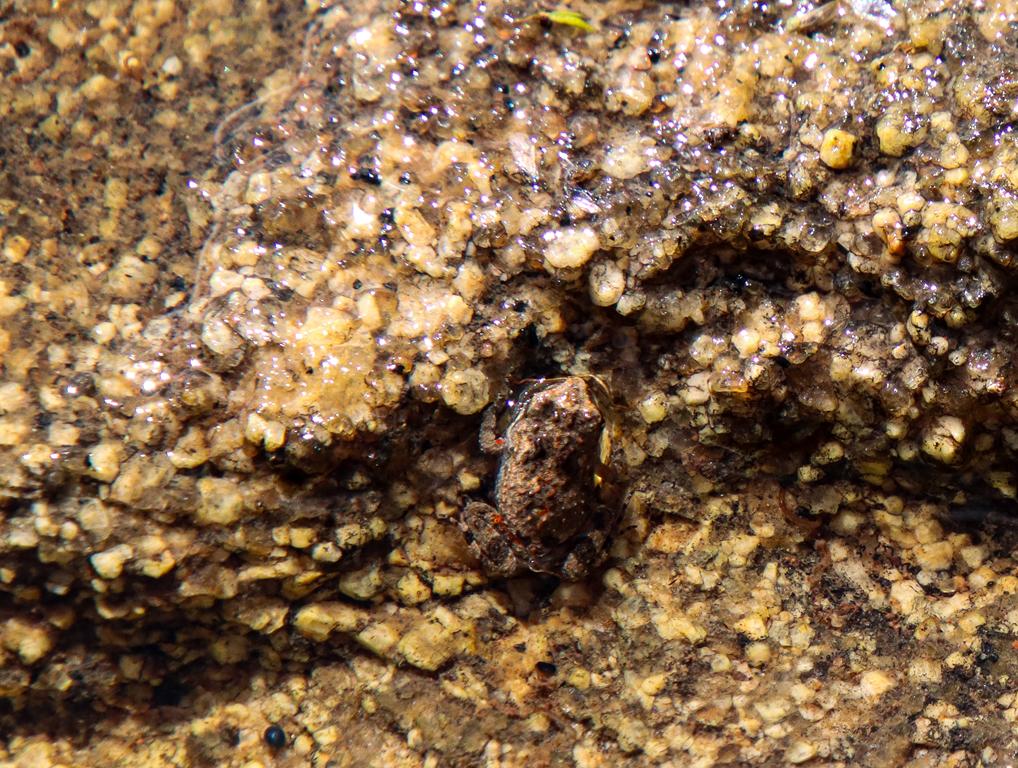
Home to a diverse range of flora and fauna, Sandford Rocks is also a paradise for nature photographers. We spotted several ornate dragon lizards, although they were far too quick for me to capture on camera. One of the highlights was discovering tiny ducklings swimming in a gnamma hole, while our younger son was excited to find a tadpole there as well.
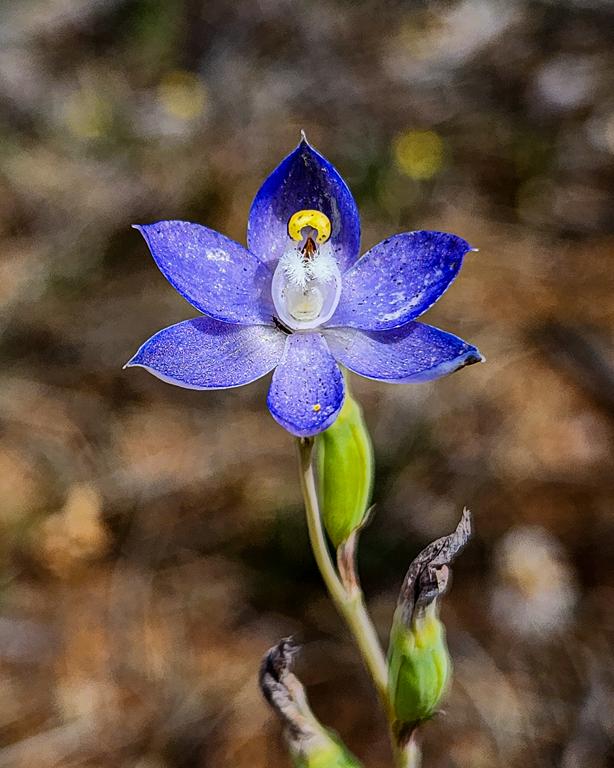
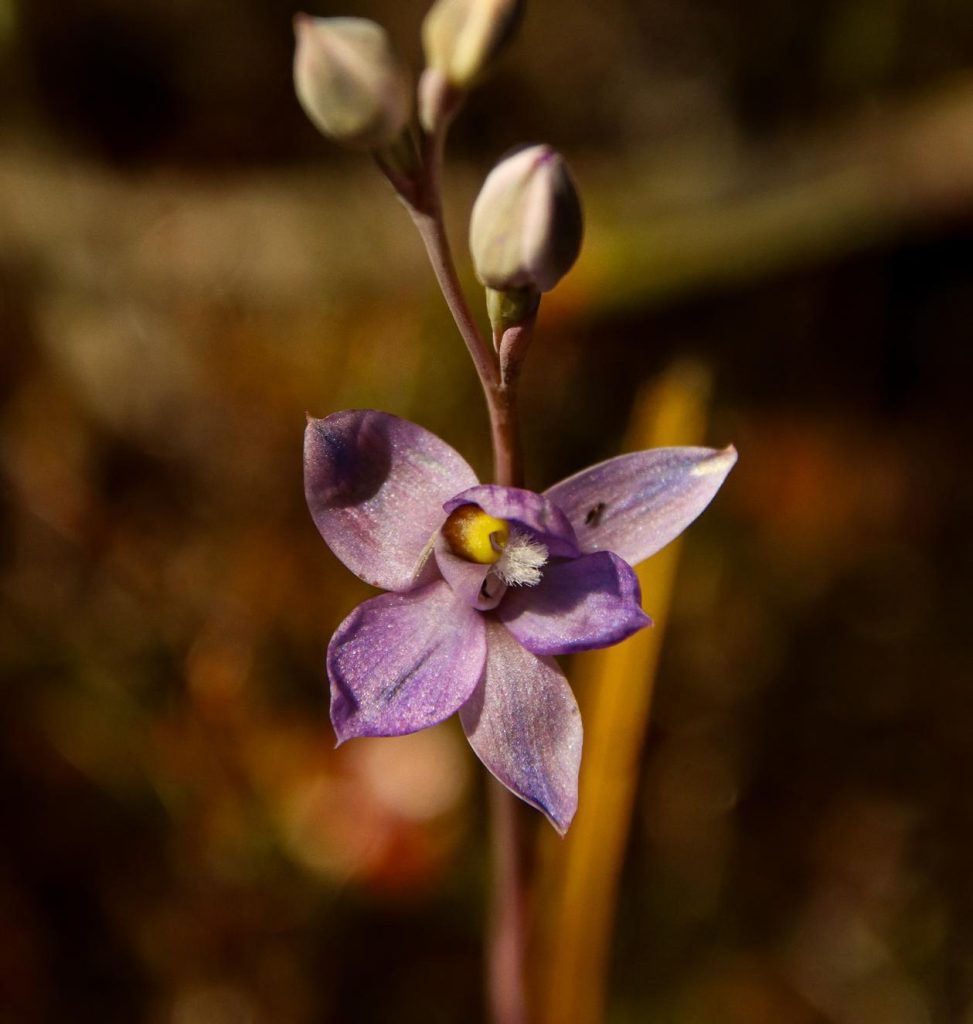
I was particularly delighted to come across a beautiful granite sun orchid Thelymitra petrophila, adding another special moment to our visit.
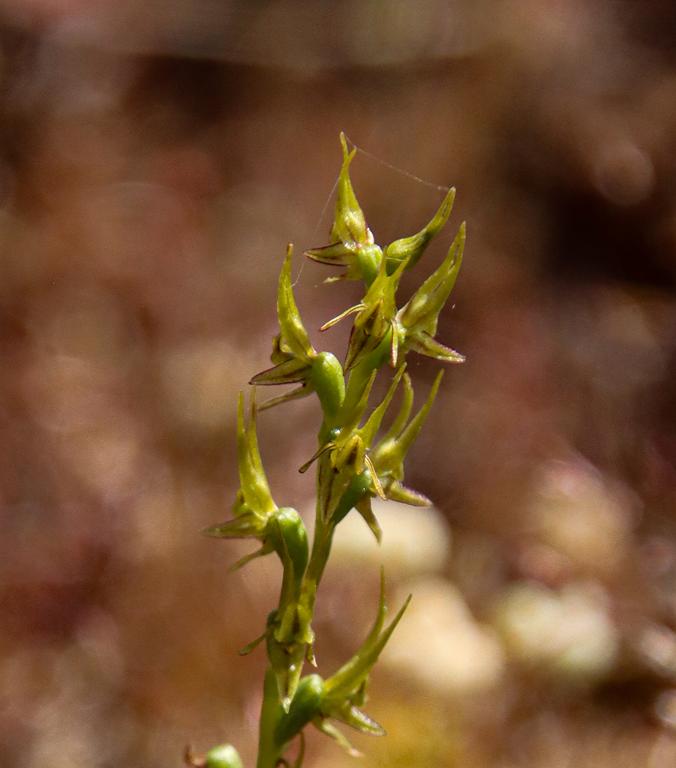
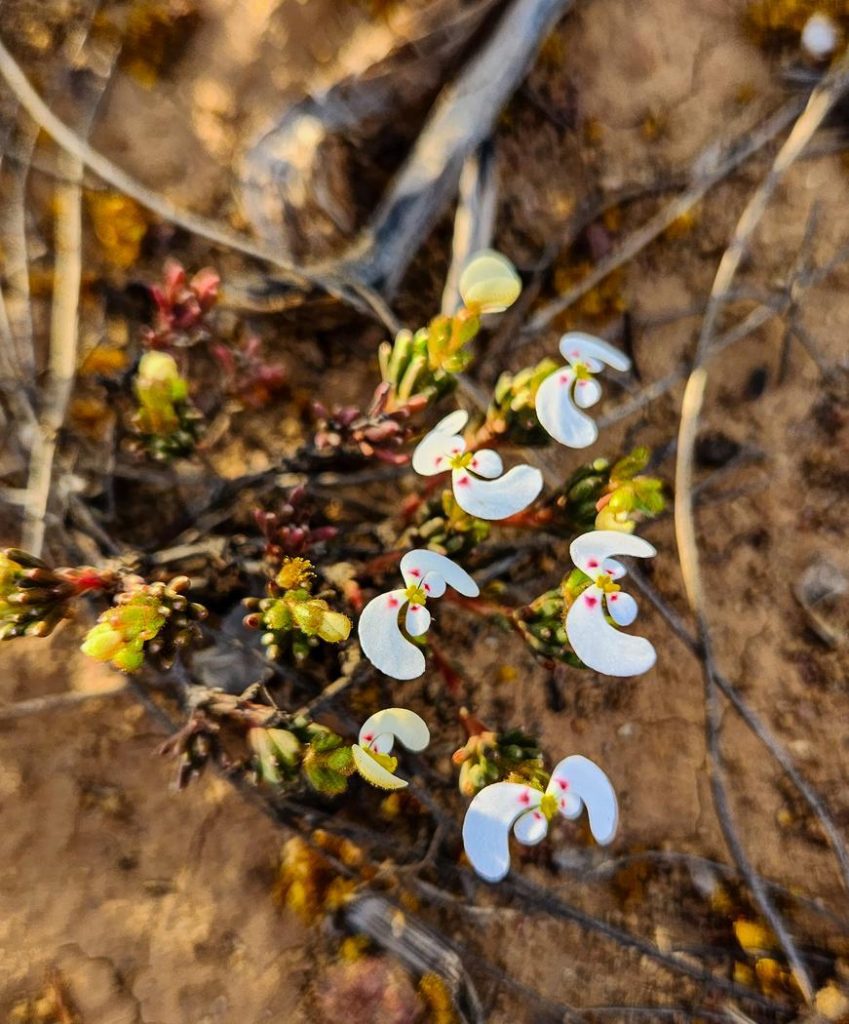
Tiny orchids like Prasophyllum gracile make their home in the shallow soil pockets on top of Sandford Rocks.
In the past Sandford Rocks used to have a name Yorky rocks, as quite a few locals told us.
Sandford Rocks Nature Reserve is located just 10 km north-east of Westonia in Western Australia’s Wheatbelt region. The reserve is easily accessible, with only a short detour from the main road required to reach the site. There are picnic facilities for visitors, making it a pleasant spot to relax and enjoy the surrounding landscape, although there are no toilets.
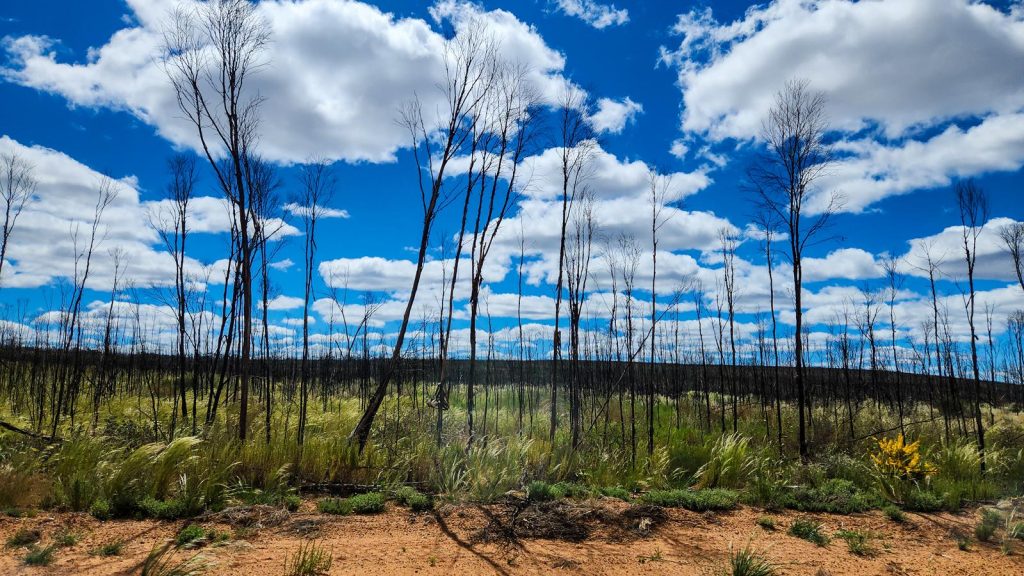
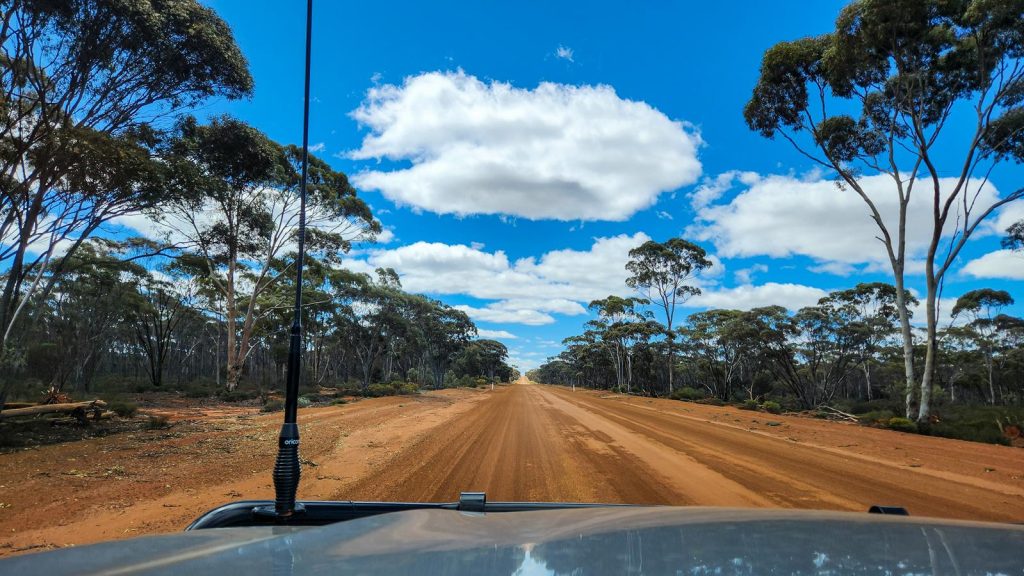
Granite and Woodlands Discovery Trail is a 300km unsealed road that links Hyden and Norseman. It features 16 interpretive sites with walking trails, picnic and camping areas. As you drive along this scenic route, you will see how the scenery changes from section to section – from low heath, to shrubs, to eucalyptus woodlands.
Starting at Hyden
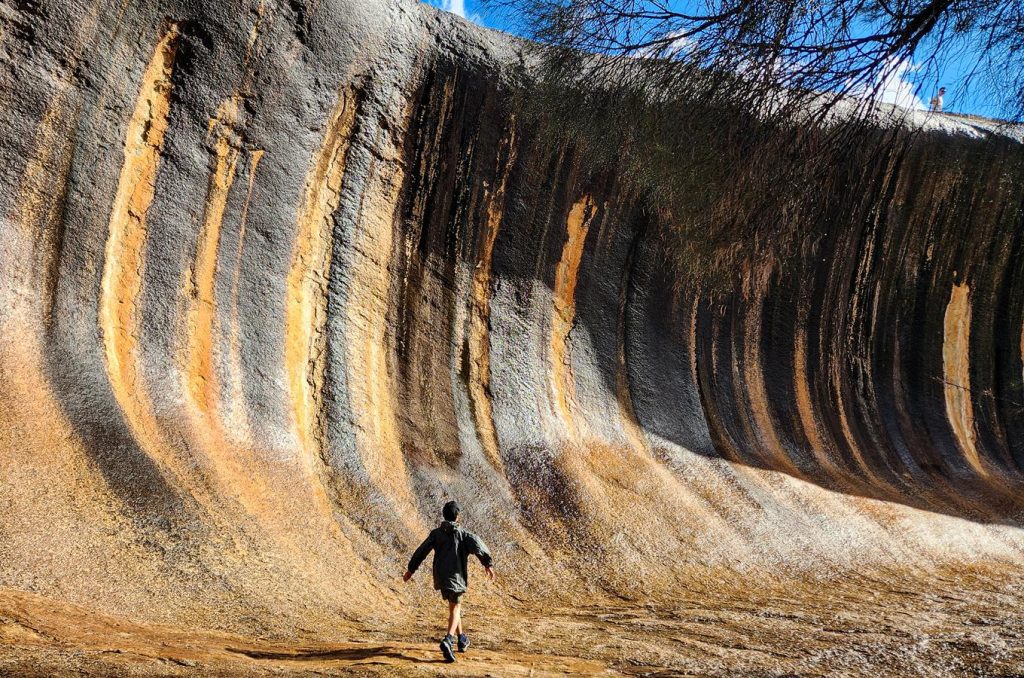
Our journey began in Hyden, where a visit to the iconic Wave Rock felt like a rite of passage. Though we’d been before, it was the first time for our children. It was a moment of shared wonder beneath the ancient wave-shaped granite.
Holland Track Intersection
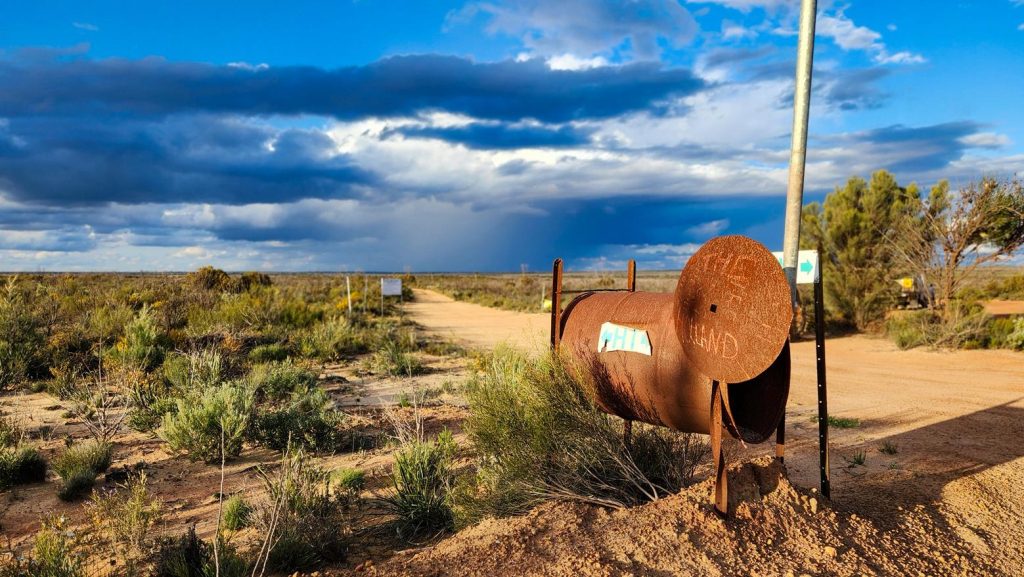
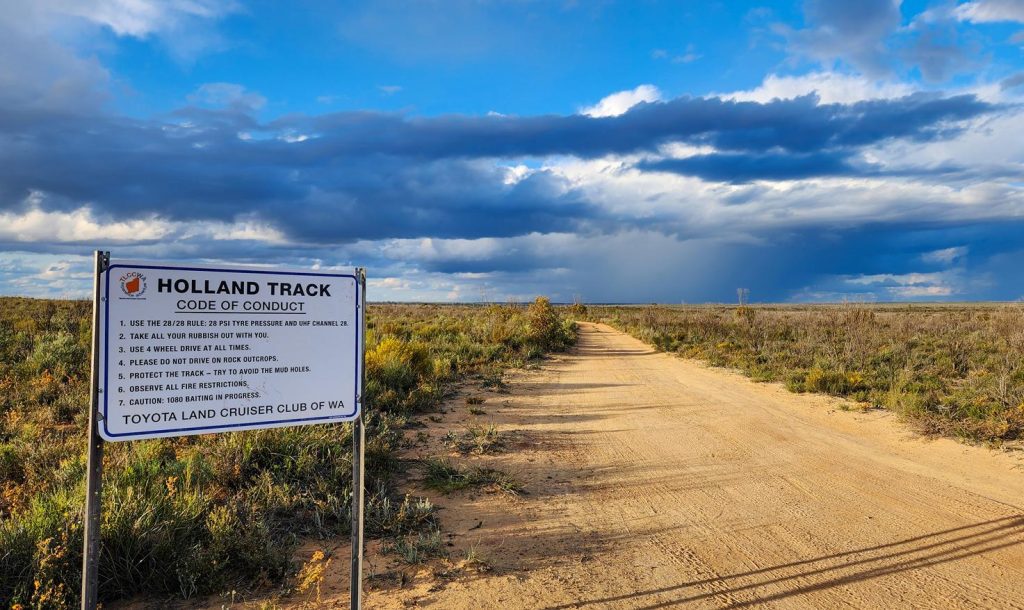
Our first stop along the Granite and Woodlands Discovery Trail was the Holland Track intersection.
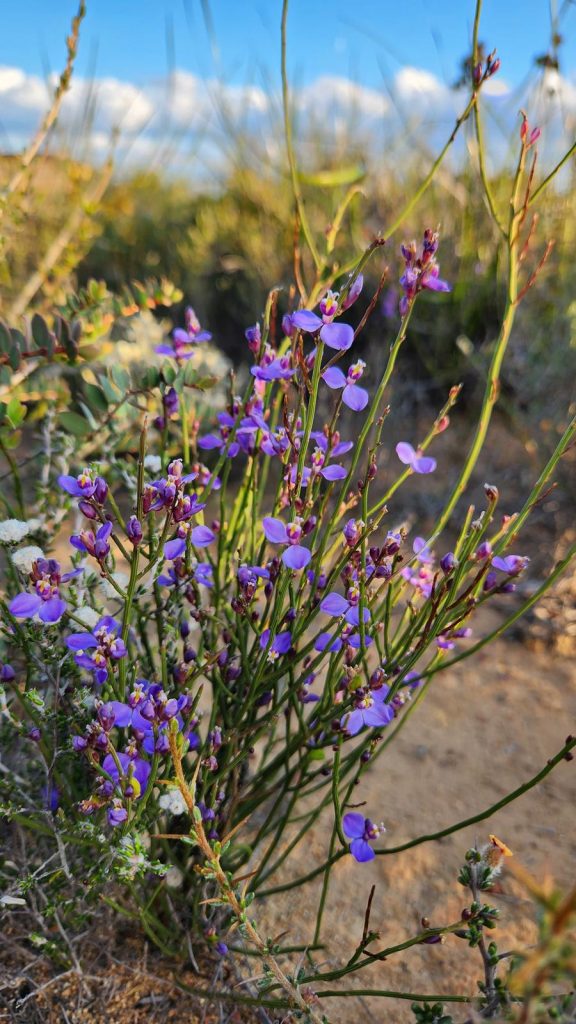
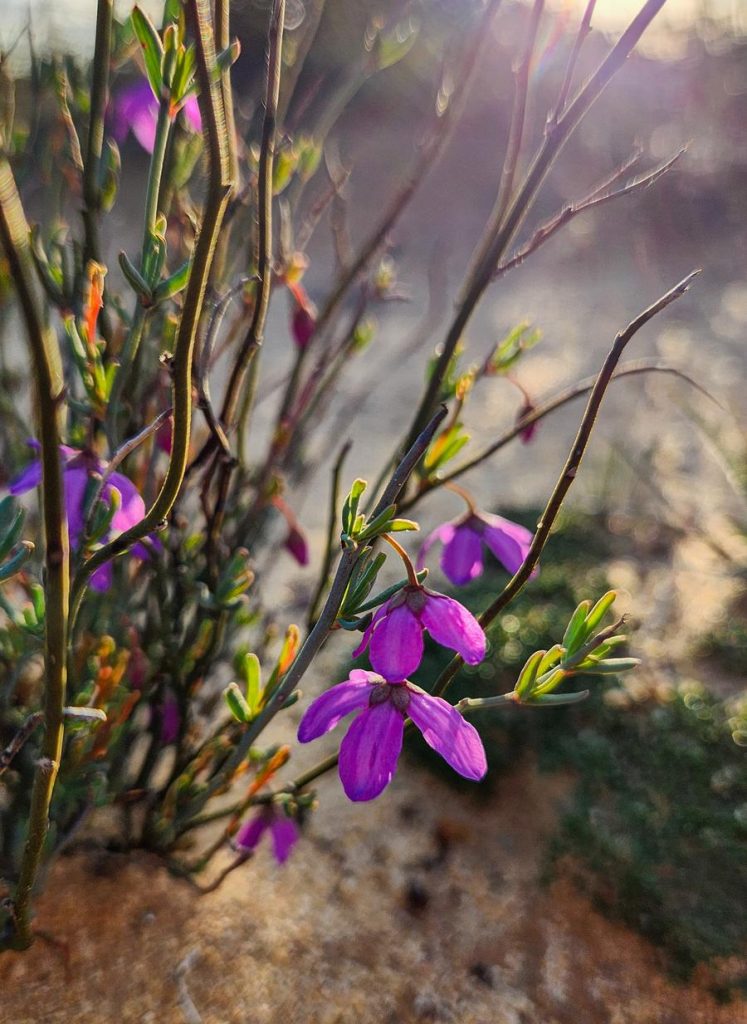
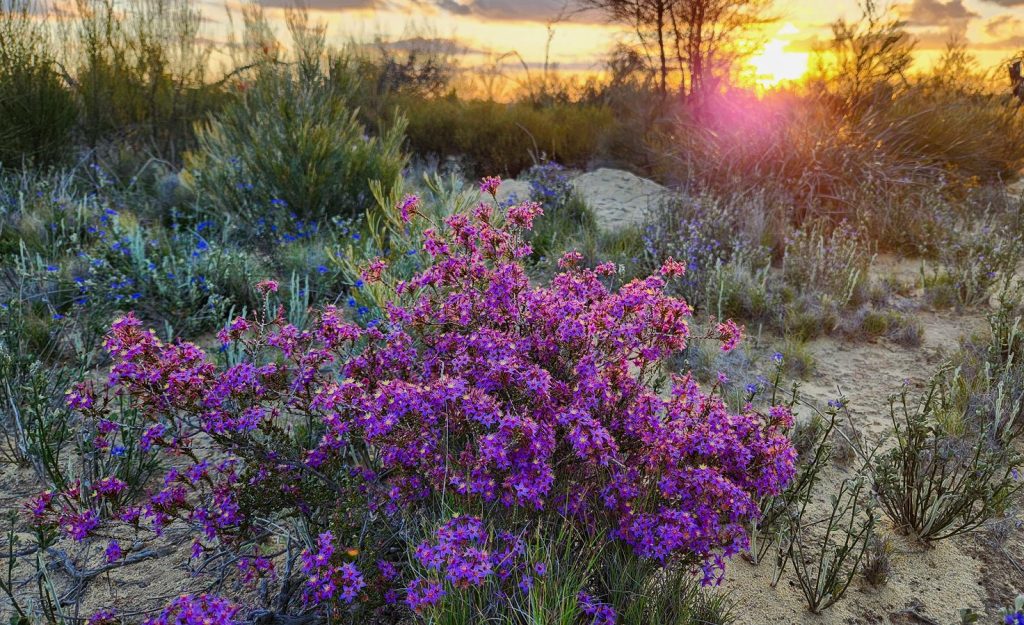
Originally, we’d planned to drive the Holland Track itself, but towing a caravan—even a small off-road one—proved impractical. The entry looked deceptively smooth, but we knew the track beyond was riddled with deep washouts. Instead, we lingered at the interpretive sign, absorbing the history and admiring the wildflowers. What a delicate bursts of colour against the rugged terrain.
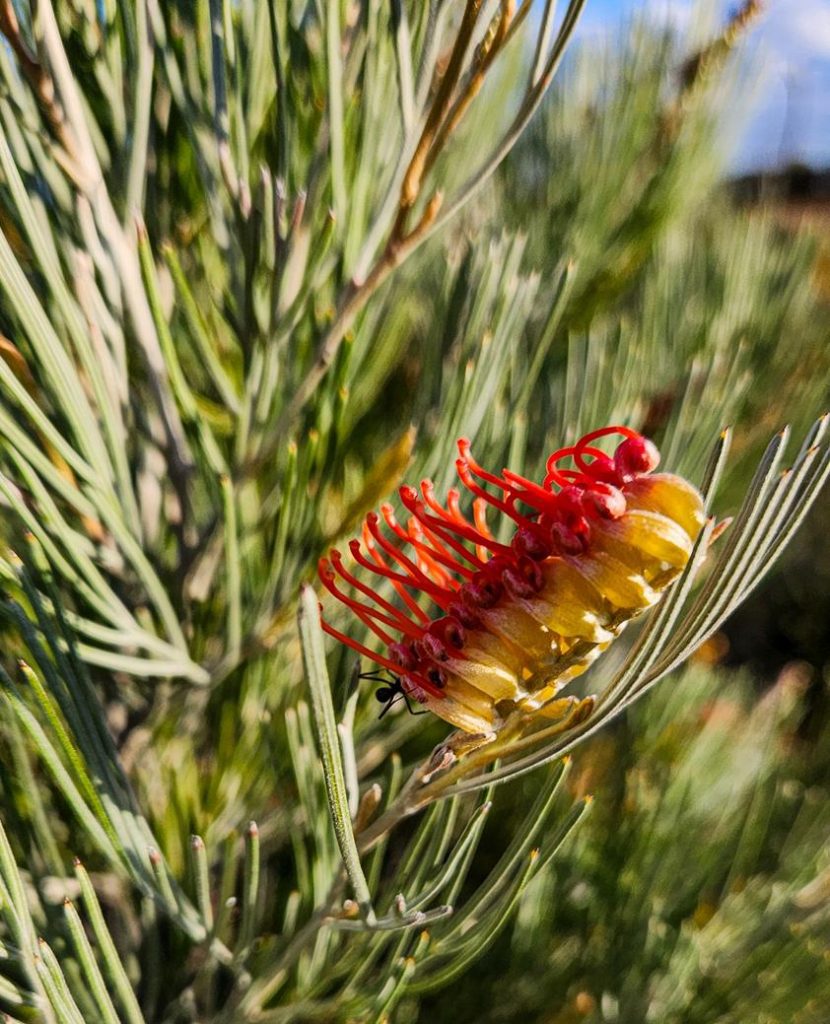
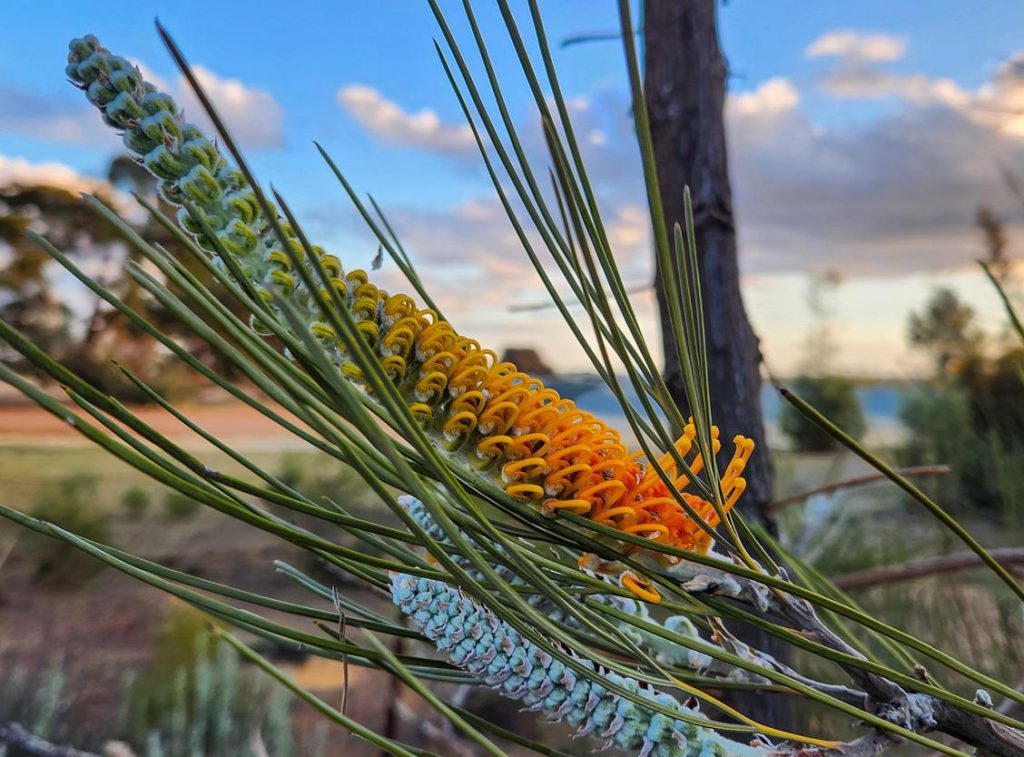
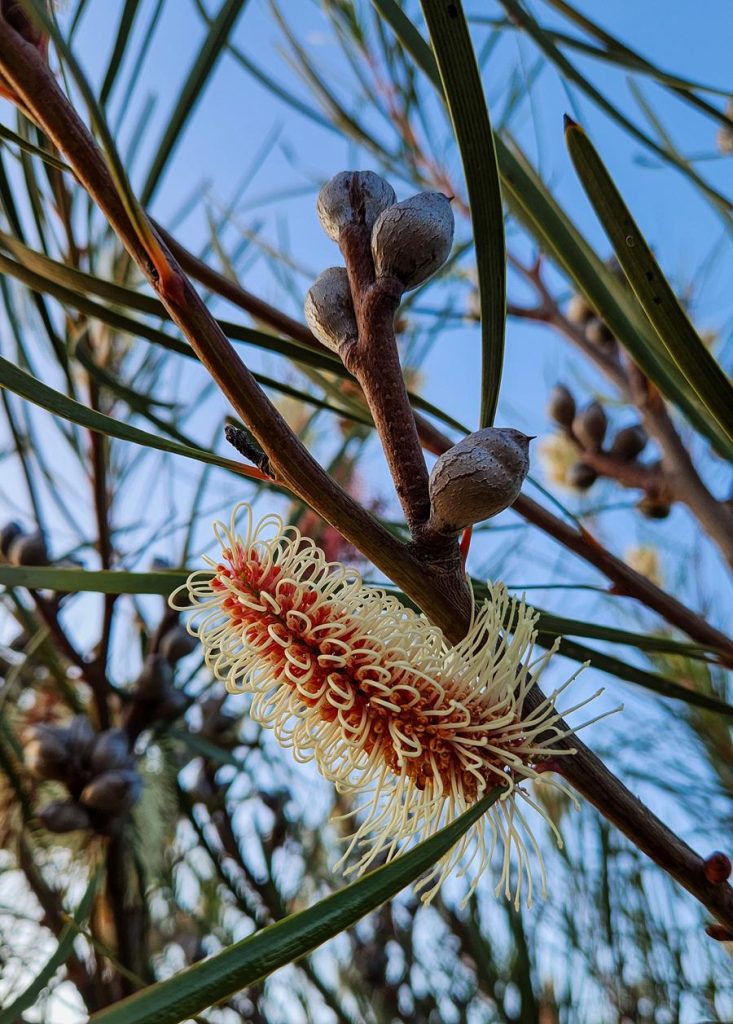
Grevillea excelsior (Flame Grevillea) stood tall and radiant (below left). Striking Hakea francisiana (Emu Tree) was also fascinating to see (below right).
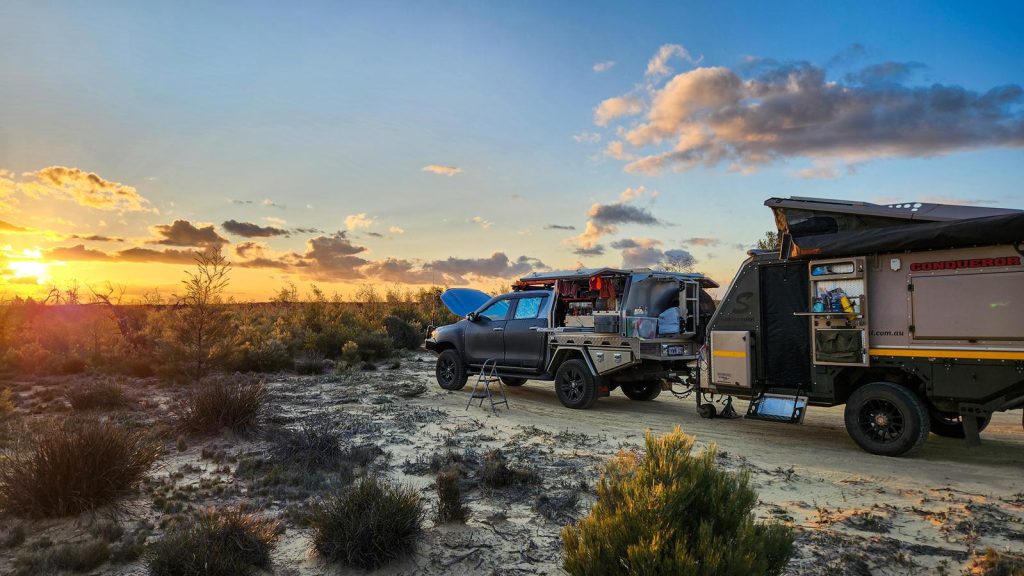
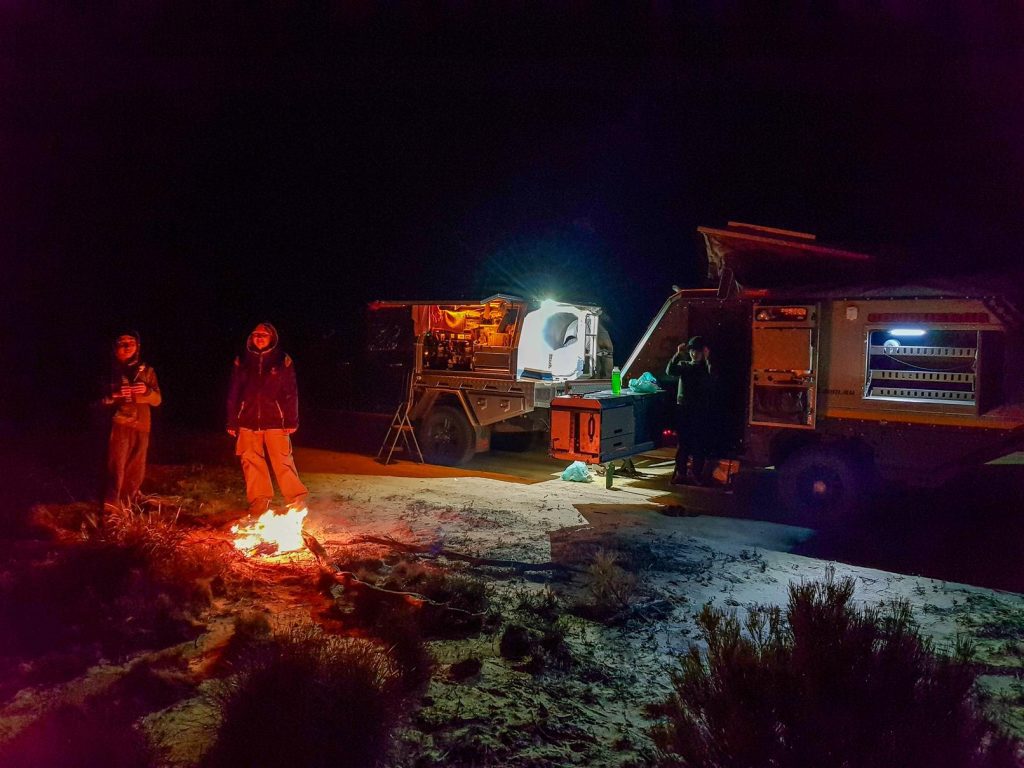
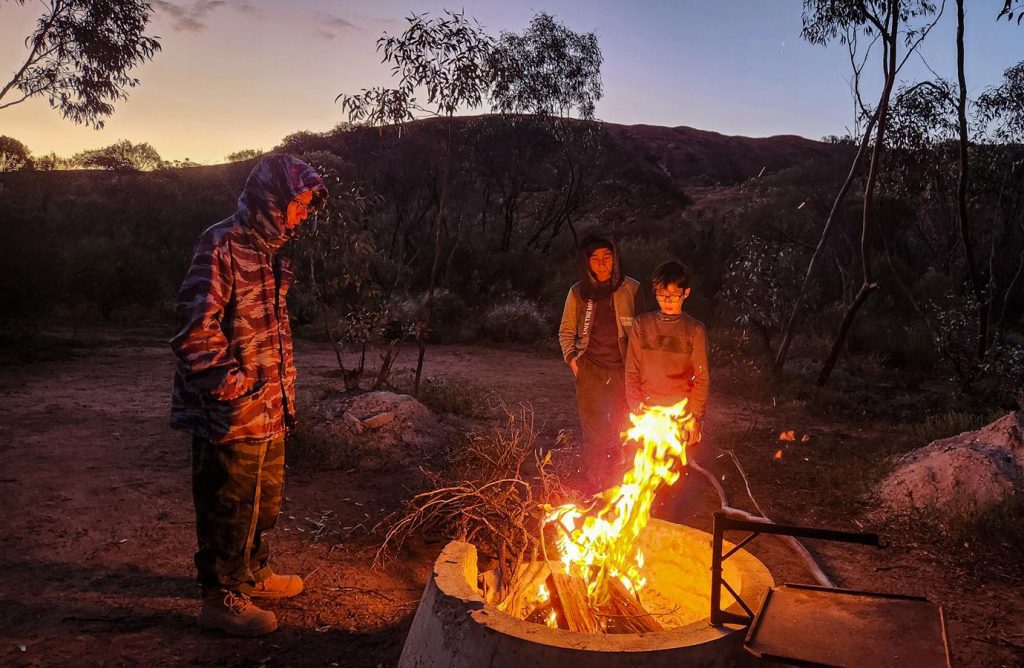
We watched the sun dip below the horizon, its golden light filtering through the foliage, then gathered around a campfire under the stars.
The Breakaways
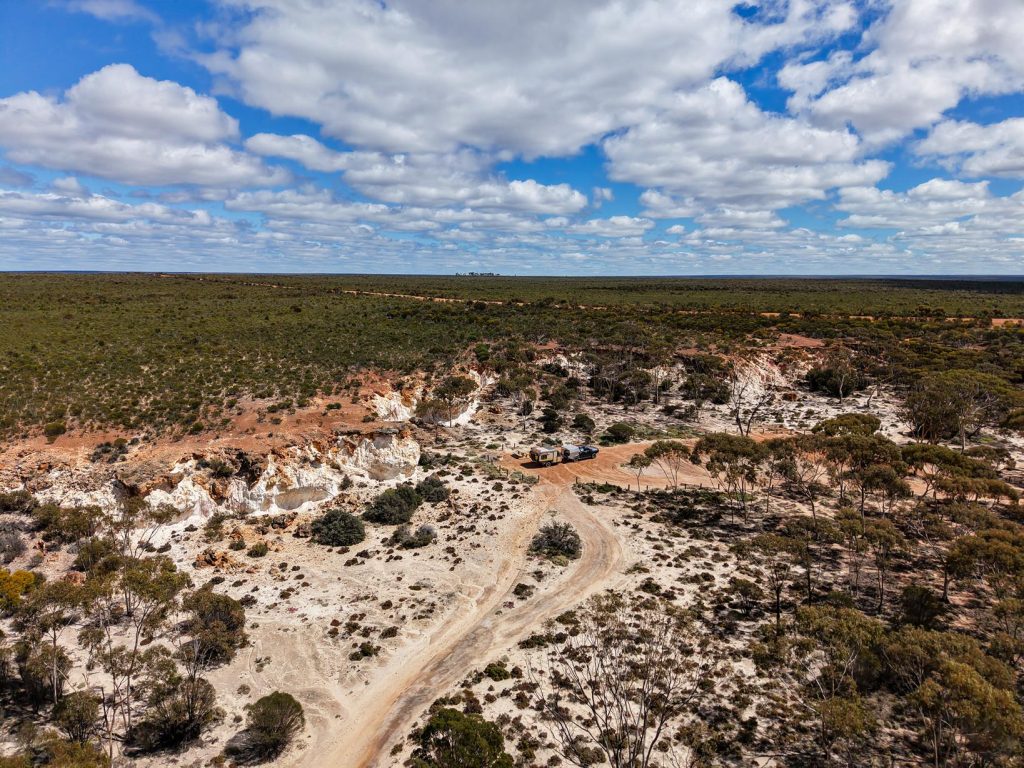
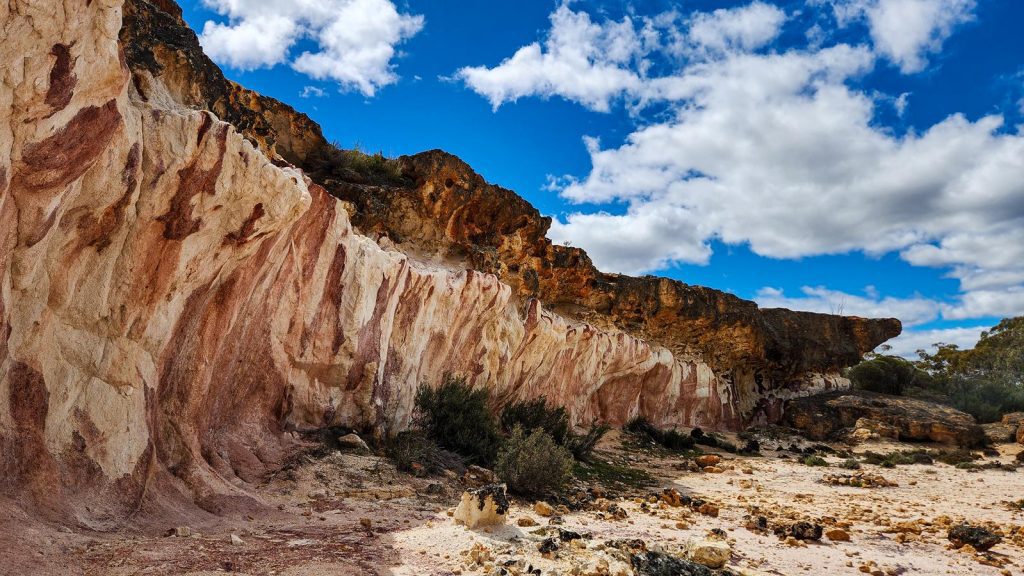
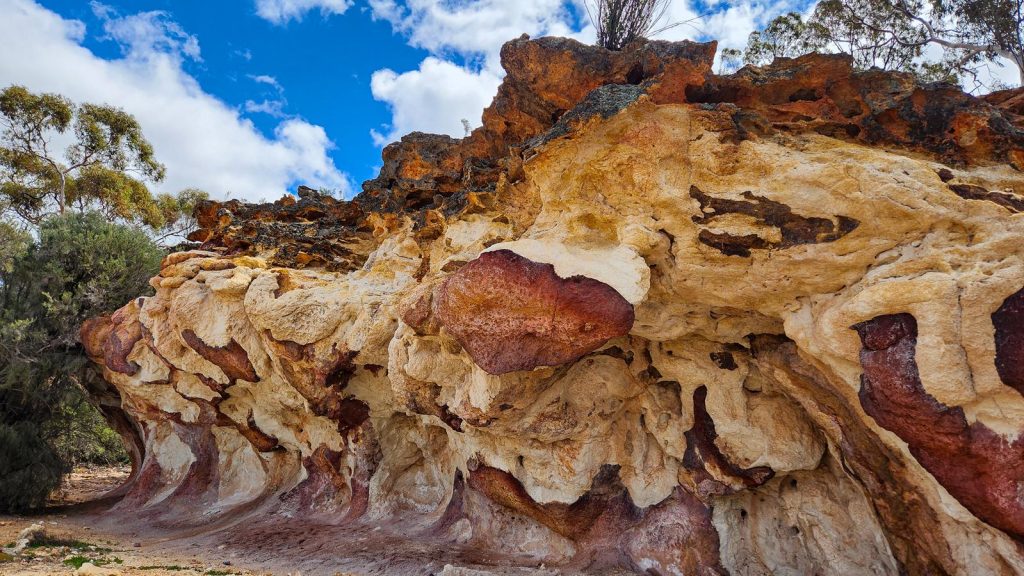
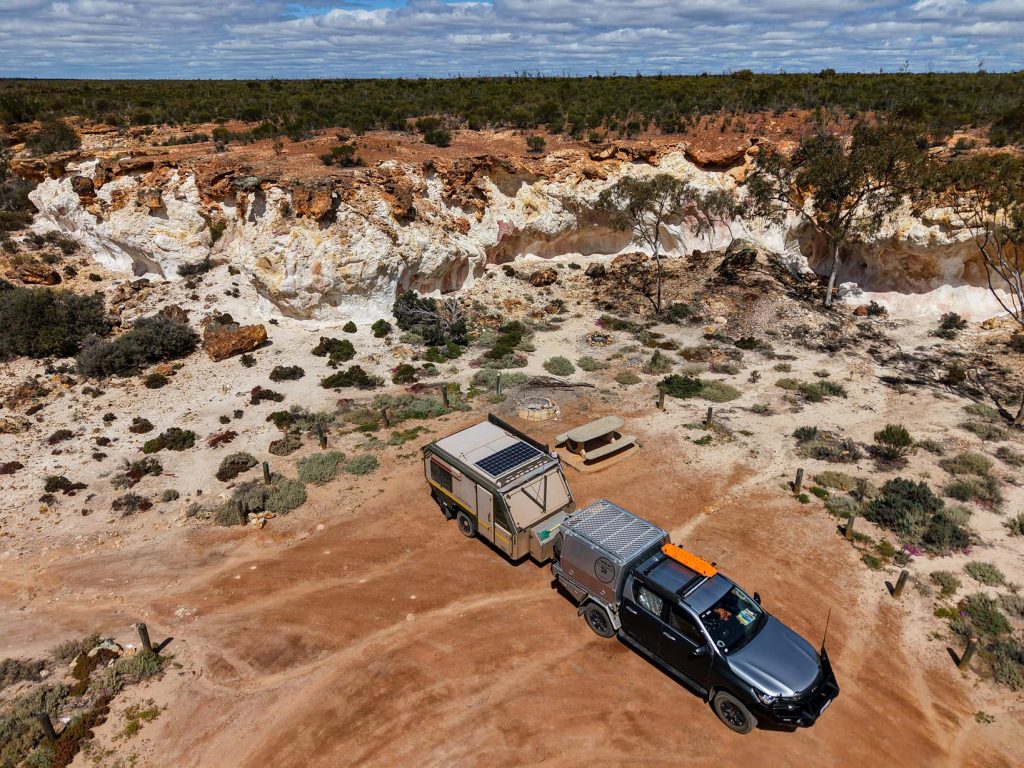
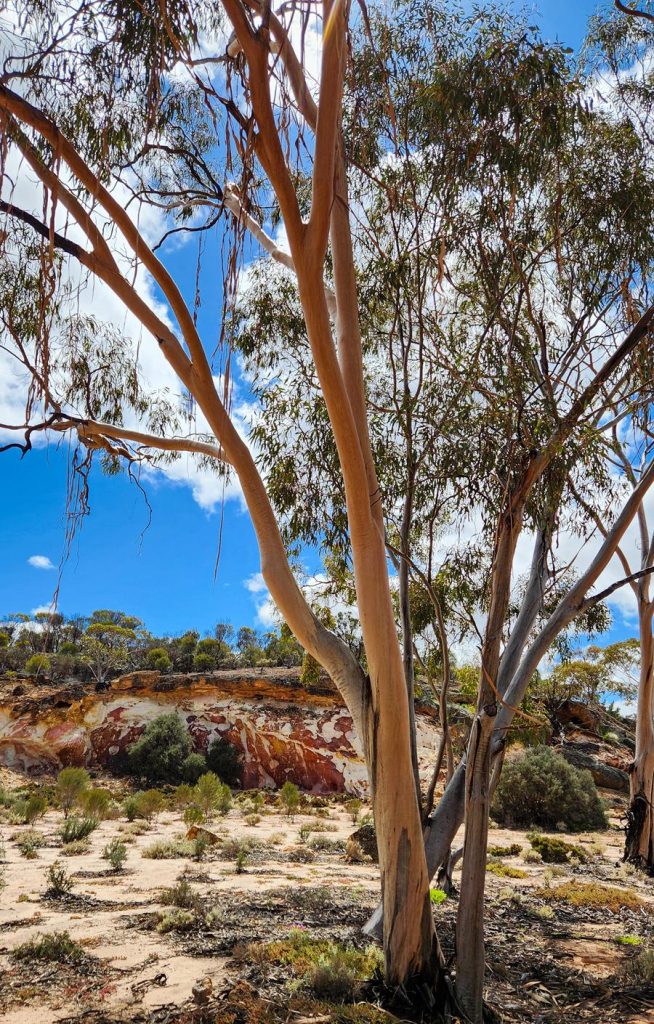
Perhaps the most picturesque stop along the trail, The Breakaways offered a sense of peace and timelessness. The rock formations here are captivating—layered with colour, texture, and quiet mystery. We wandered for hours, tracing the contours of the land and soaking in its stillness.
The site is well-equipped, with a spacious picnic and camping area, tables, fire rings, and a toilet. Though tempted to stay, we chose to continue our journey, carrying the calm of The Breakaways with us.
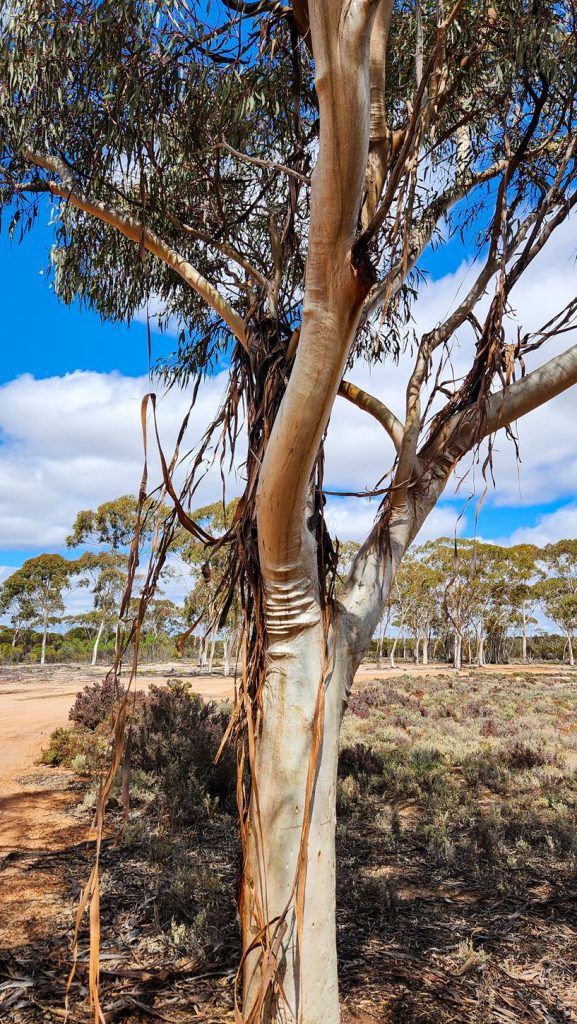
Eucalyptus vittata (ribbon mallet) is a unique eucalyptus tree that sheds its bark in long ribbons that sway gracefully in the wind, composing a soothing bush melody.
McDermid Rock
Our second stop along the Granite and Woodlands Discovery Trail (Hyden–Norseman Road) was McDermid Rock, site #9 on the trail. This striking granite outcrop is a wonderful place to pause—whether for a wander, a picnic, or an overnight stay.
The site is well-equipped with a toilet, picnic tables, and fire rings, making it both scenic and practical.
You can climb McDermid Rock and explore the surrounding area via a 1,271-meter interpretive trail. The walk begins with a steep ascent but soon levels out into an easy and enjoyable loop, dotted with informative signs that highlight the area’s natural and cultural history.
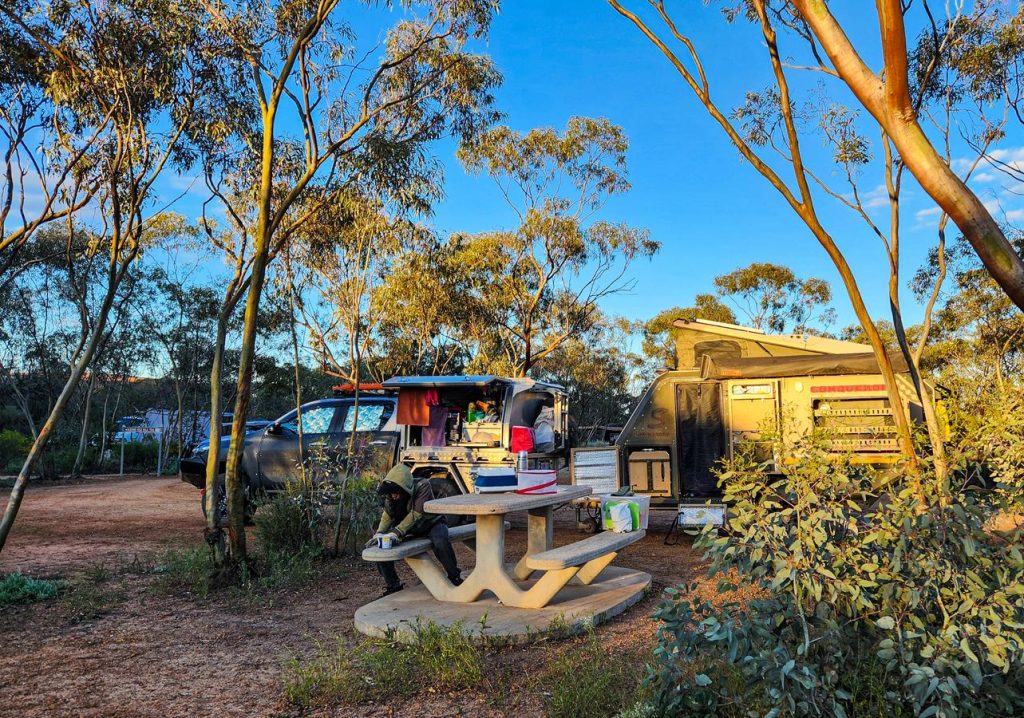
We camped there during the September school holidays, and while it was a popular spot, we arrived early enough to secure a great site. We loved our time at McDermid Rock—scrambling over the granite, soaking in the views, and gathering around a campfire under the stars.
Lake Johnston
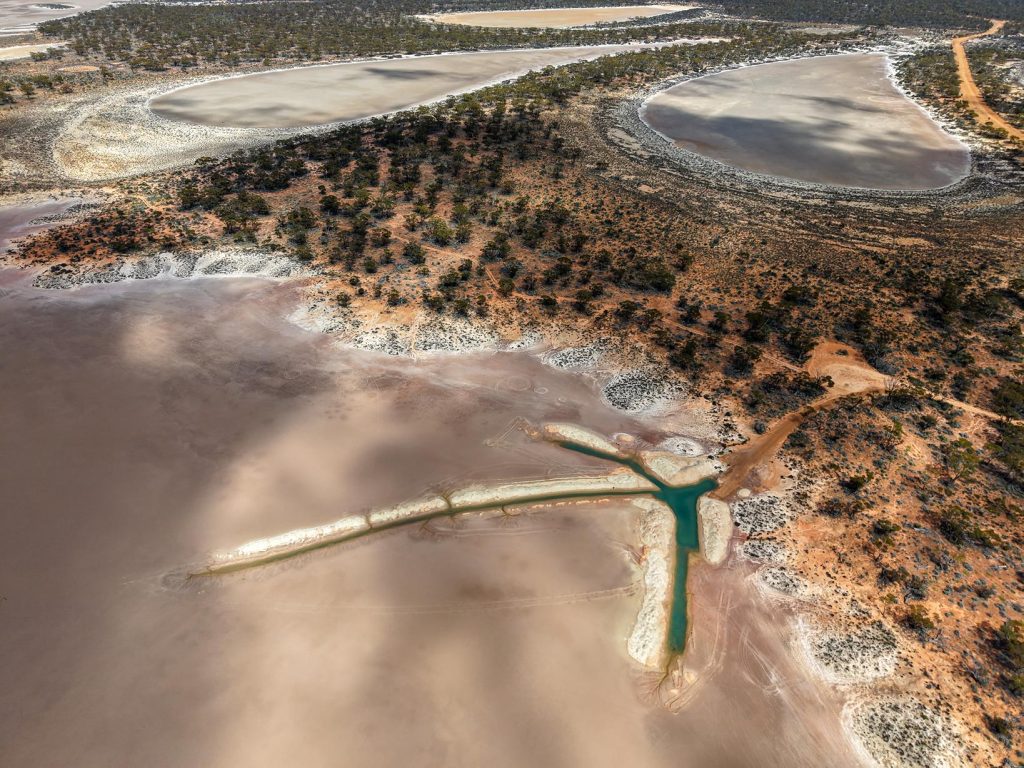
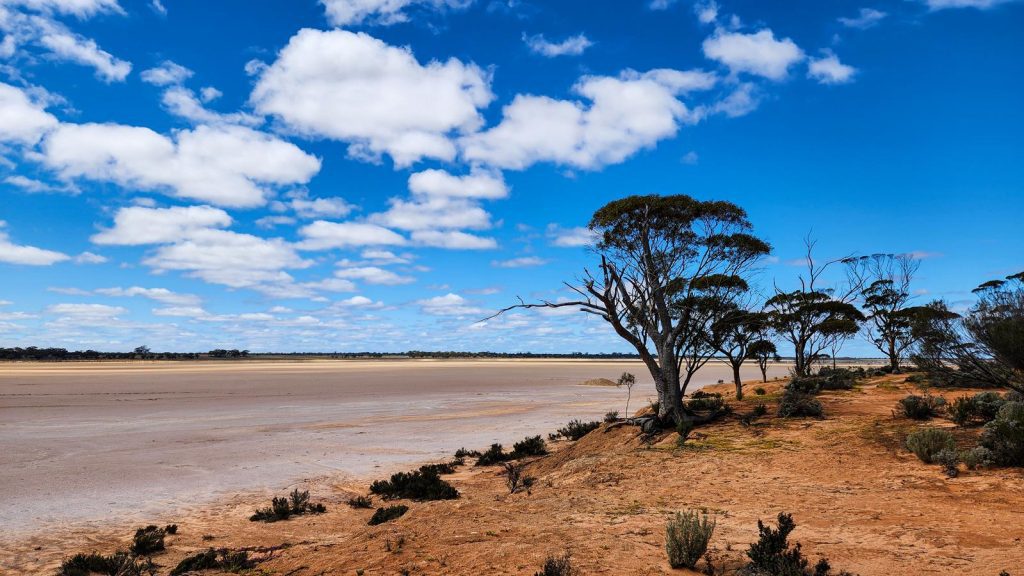
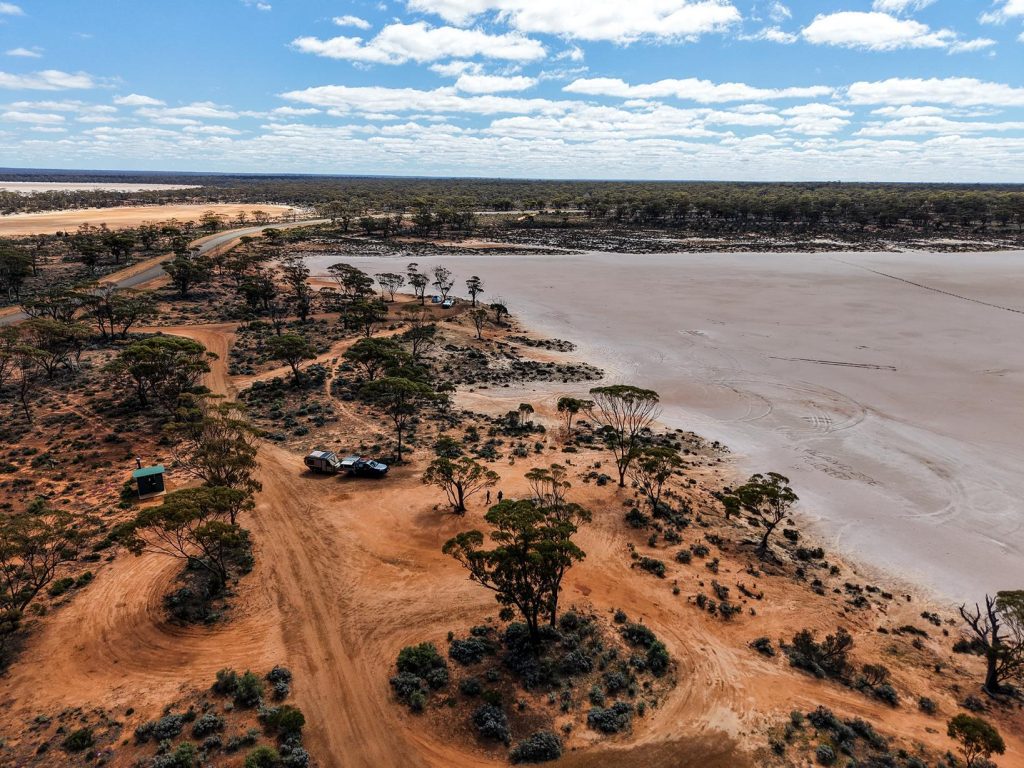
Lake Johnston is site #10 on the Granite and Woodlands Discovery Trail. It is a striking salt lake.
This tranquil spot offers a small but welcoming area for picnicking or camping, complete with a toilet and picnic table. It’s an ideal place to pause, take in the expansive views, and enjoy the serenity of the landscape.
Disappointment Rock
Our journey along the Granite and Woodlands Discovery Trail concluded at Disappointment Rock. Though there are no facilities here, the area features a scenic 1.9-kilometre hiking trail that traverses the rock and includes 17 interpretive signs offering insights into the local geology and ecology.
We didn’t have time to complete the full walk, as my main focus was spotting an open granite sun orchid (Thelymitra petrophila). After encountering many closed blooms, it was a true delight to find one fully open—thanks to the keen eyes of my youngest son.
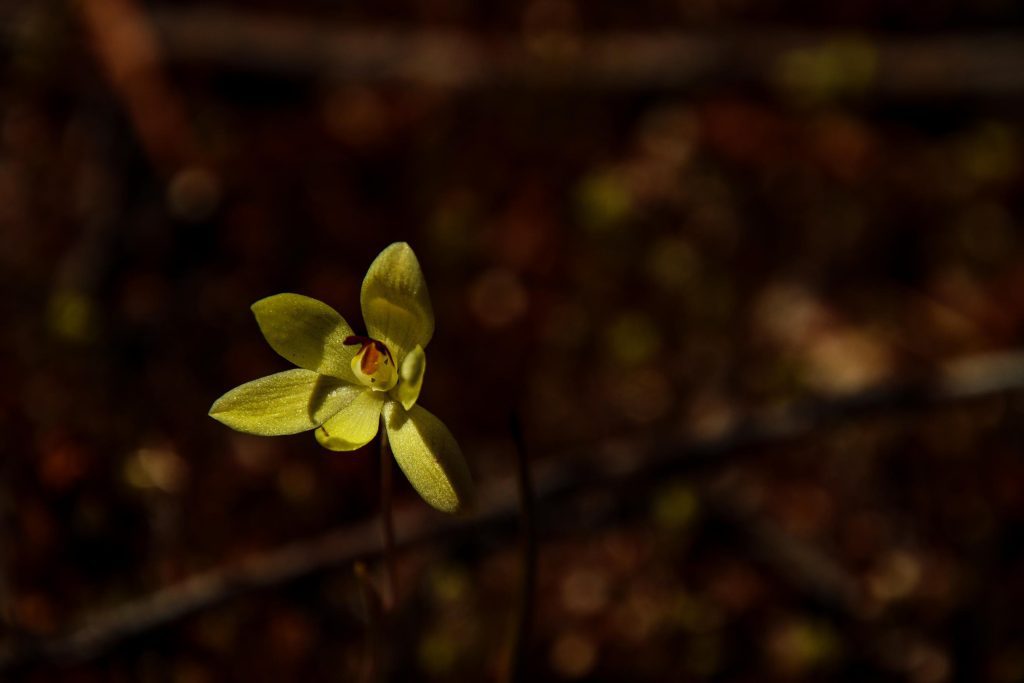
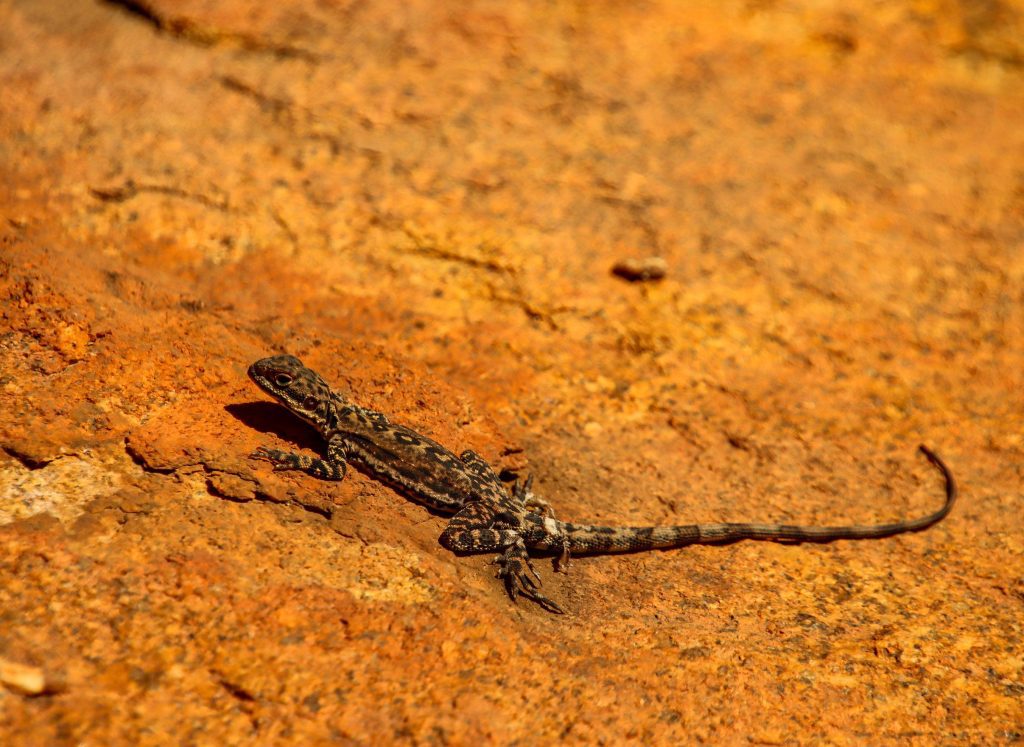
Along the way, we also spotted a few lemon-scented sun orchids (Thelymitra antennifera) and were treated to the sight of numerous Ornate Crevice-Dragon lizards basking in the sun.
Ornate Crevice-Dragon lizards were abundant at Disappointment Rock (below).
Manage Cookie Consent
To provide the best experiences, we use technologies like cookies to store and/or access device information. Consenting to these technologies will allow us to process data such as browsing behavior or unique IDs on this site. Not consenting or withdrawing consent, may adversely affect certain features and functions.
Functional Always active
The technical storage or access is strictly necessary for the legitimate purpose of enabling the use of a specific service explicitly requested by the subscriber or user, or for the sole purpose of carrying out the transmission of a communication over an electronic communications network.
Preferences
The technical storage or access is necessary for the legitimate purpose of storing preferences that are not requested by the subscriber or user.
Statistics
The technical storage or access that is used exclusively for statistical purposes.The technical storage or access that is used exclusively for anonymous statistical purposes. Without a subpoena, voluntary compliance on the part of your Internet Service Provider, or additional records from a third party, information stored or retrieved for this purpose alone cannot usually be used to identify you.
Marketing
The technical storage or access is required to create user profiles to send advertising, or to track the user on a website or across several websites for similar marketing purposes.