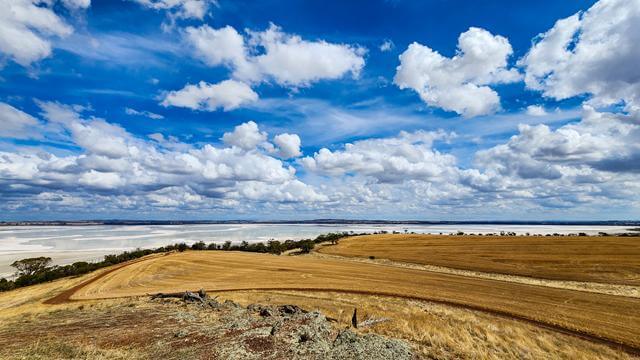
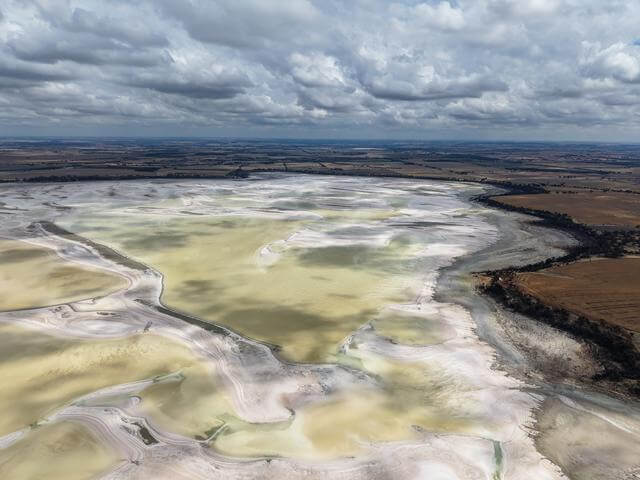
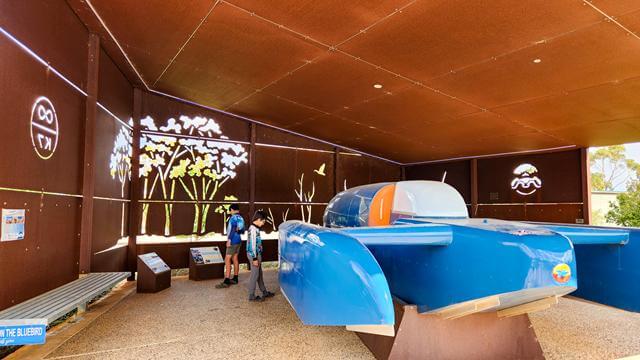
Dumbleyung, like many Wheatbelt towns, is steeped in history. This South Wheatbelt community is known for two standout features. One is Lake Dumbleyung. The other is the Blue Bird — the speedboat in which Donald Campbell set a new world water‑speed record on Lake Dumbleyung in 1964. To this day, he remains the only person to break both the World Land Speed Record and the World Water Speed Record in the same year.
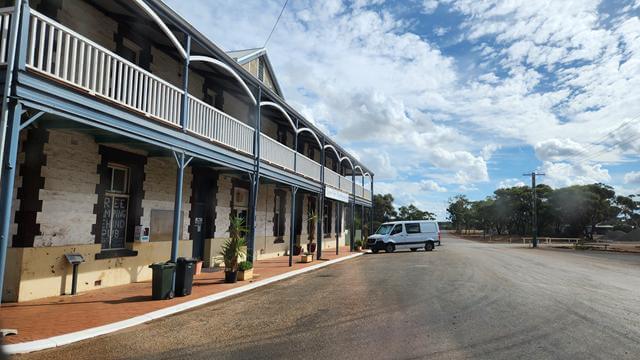
As we drove through town, we noticed a sign in the window of the local pub offering free camping, along with free showers and toilets. It sounded like an incredibly generous deal. We assume the idea is that you buy dinner or at least a drink in return. We didn’t try it ourselves, but definitely made a mental note. If you’re passing through and need an overnight stop, it’s worth checking out.
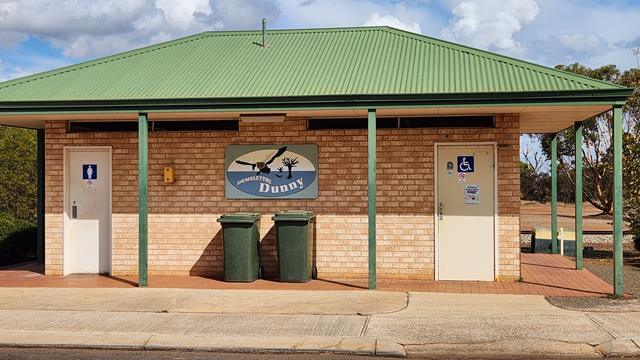
And of course, the “Dunny” sign caught my eye — not every loo comes with its own painted artwork 😊.
Lake Dumbleyung
Lake Dumbleyung is the main attraction in the town that shares its name. It’s the largest natural inland lake in Western Australia, and its water levels shift dramatically depending on seasonal rainfall. Because the lake is so vast, its depth varies too. Some sections remain as salty flats, while others hold substantial water. In good years, the lake can reach depths of around 4.5 metres. Fittingly, the name Dumbleyung comes from the Aboriginal word dambeling, meaning “large lake”.
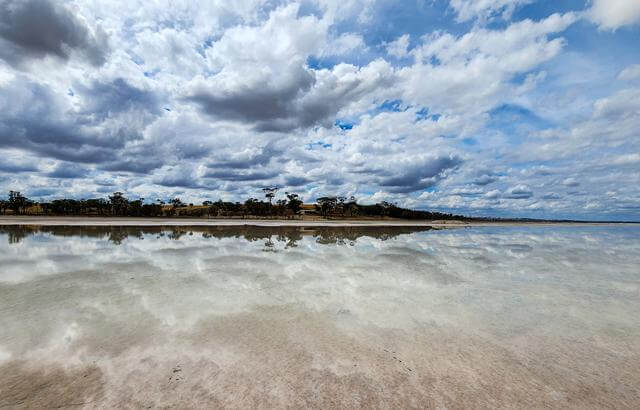
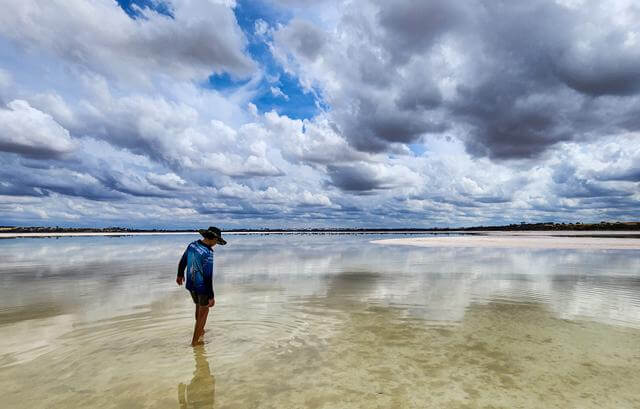
Today, most of Lake Dumbleyung is protected as a nature reserve, supporting local wildlife. When water levels allow, parts of the lake are also used for recreational activities. Visitors will find excellent picnic facilities, including toilets, tables, and non‑drinking water. Camping isn’t permitted, but it’s a lovely spot to stop for a picnic.
While the picnic area sits at the lower end of the driveway, a short climb leads to Pussy Cat Hill Lookout and the Donald Campbell Memorial.
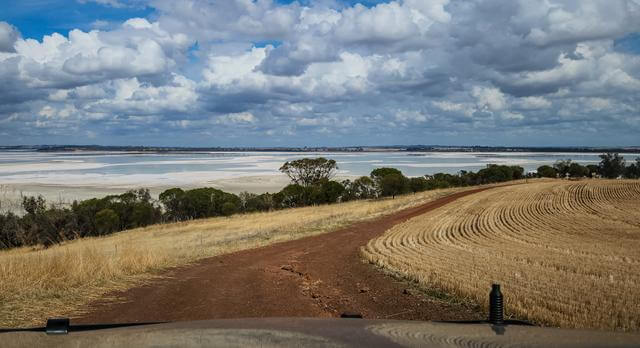
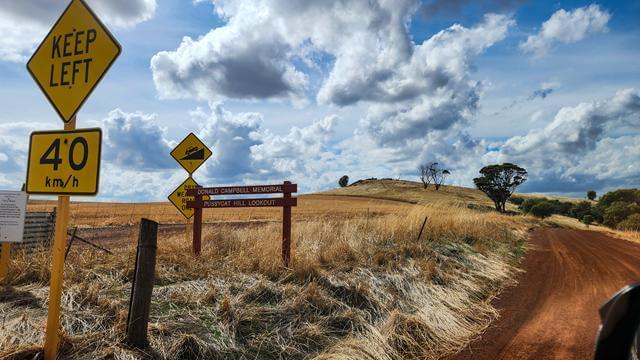
From the top, you’re rewarded with sweeping views across the lake and surrounding landscape.